


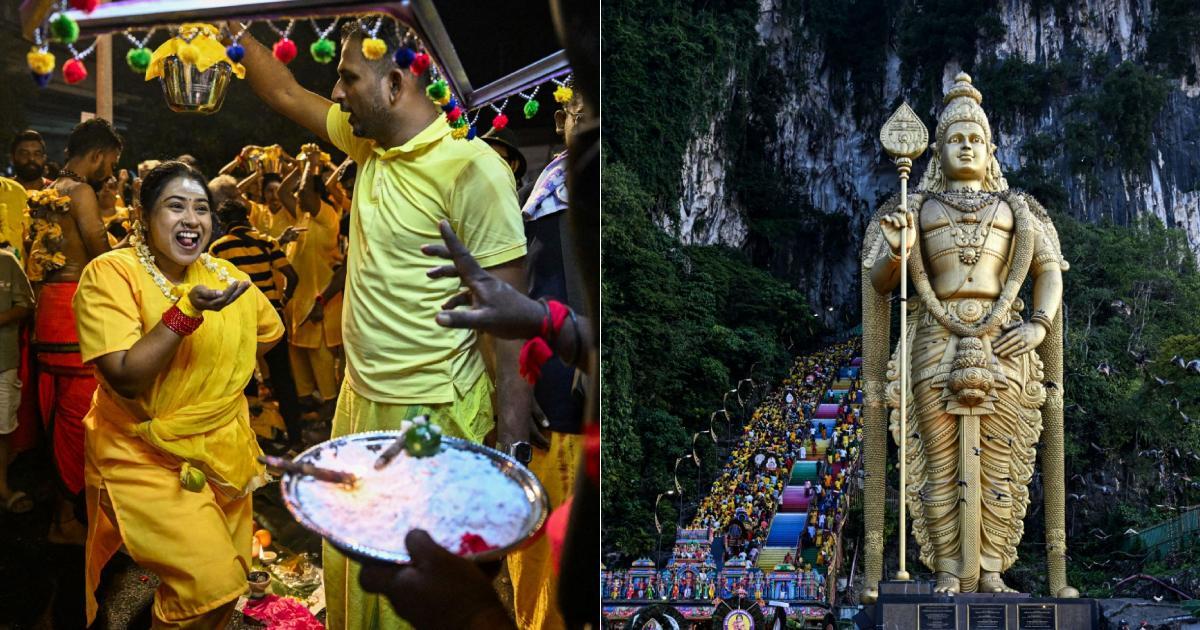
 Cover image via Mohd Rasfan/AFP
Follow us on Instagram, TikTok, and WhatsApp for the latest stories and breaking news.
Every year, crowds gather at Batu Caves, Waterfall Hilltop in Penang, and other hilltop Hindu temples in Malaysia
You hear the "Vel Vel" chants, see devotees carrying towering kavadis, and watch the slow climb of thousands of barefoot pilgrims.
But behind the spectacle, the word 'Thaipusam' itself reveals the festival's meaning, and when it's meant to happen.
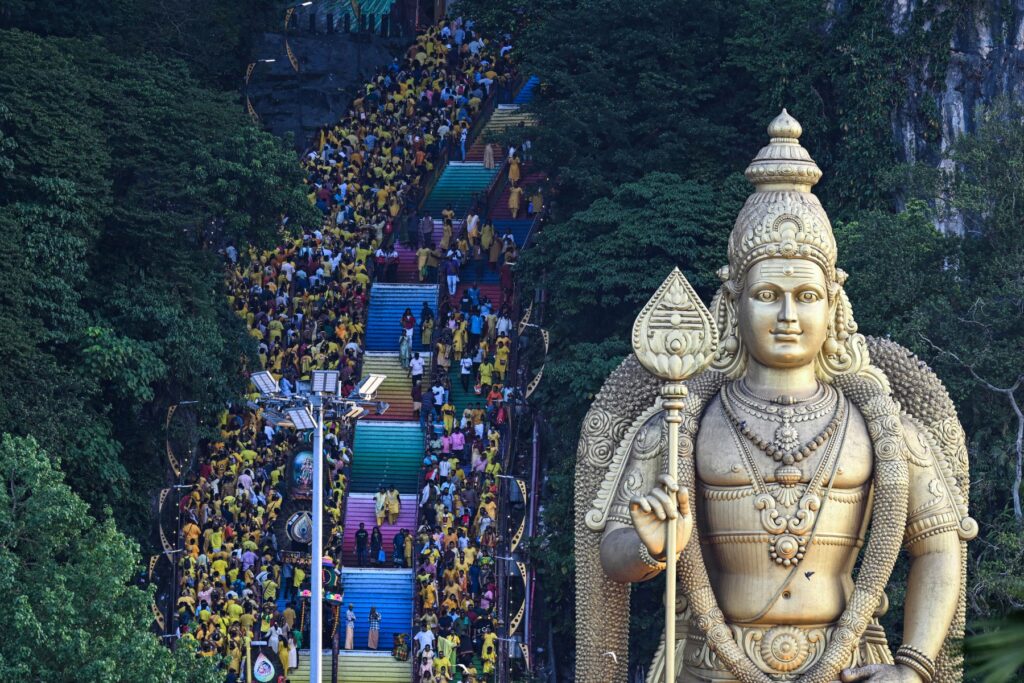
Hindu devotees climb the 272 steps to the Batu Caves temple to make offerings during the Thaipusam festival at Batu Caves on 11 February, 2025.
Image via Mohd Rasfan/AFPThaipusam is a portmanteau, a blend of two Tamil words
The name comes from: Thai/Tai (தை), meaning the 10th month of the Tamil calendar, and Pusam (பூசம்), meaning the star.
Together, they mark a very specific moment in the Hindu calendar: the Tamil month of Thai, when the Pusam star reaches its highest point under a full moon.
This celestial alignment determines the date of Thaipusam every year.
'Thai' is seen as a month of new beginnings
Thai is the tenth month of the Tamil calendar, usually falling between January and February. Culturally, it's also when Pongal, the harvest festival, is celebrated — in 2026, on 15 January — marking the end of the harvest season and the start of a new cycle.
A well-known Tamil proverb says, "Thai Pirandhal Vazhi Pirakkum", meaning, "With the birth of the month of Thai, a new way will open."
Because of this, Thai is closely associated with hope, renewal, and doors opening to better paths ahead.
'Pusam' is one of the most auspicious stars
Pusam (known as Pushya in Sanskrit) is one of the 27 stars used in Hindu astrology and is traditionally considered the most auspicious of them all.
Its symbol is a cow's udder, representing nourishment, generosity, and sustaining life. Astrologically, it's linked to Jupiter (wisdom) and Saturn (discipline), ideas that show up strongly in Thaipusam practices, where devotees take on physical hardship, such as carrying the kavadi, body piercings, and climbing the hill, in pursuit of spiritual growth.
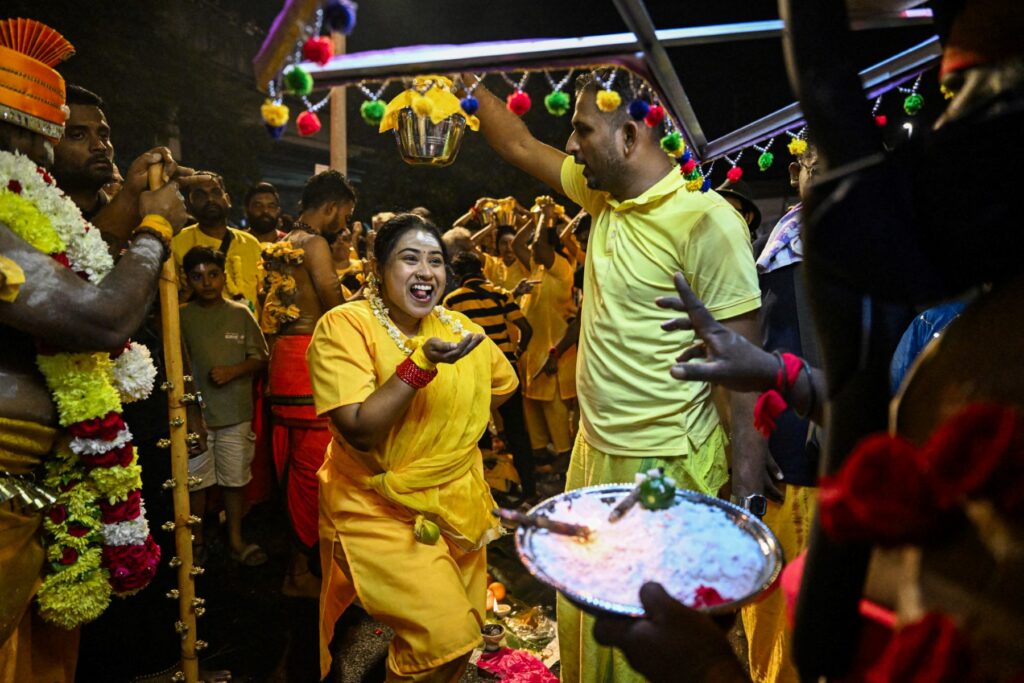
A female Malaysian Hindu devotee reacts in a state of trance before making her way towards the Batu Caves temple during the Thaipusam festival at Batu Caves last year.
Image via Mohd Rasfan/AFPThaipusam is observed when the Pusam star is at its peak during the full moon of the Thai month
In Hindu belief, the full moon represents a high point of cosmic energy, making it an especially powerful day to fulfil vows, seek blessings, and ask for spiritual strength.
While the name tells us when Thaipusam takes place, tradition holds that on the fifth day of the Skanda Sashti festival, Goddess Parvati gifted her son, Lord Murugan, the divine spear known as the Vel to defeat the demon Soorapadman, a symbol of ego and ignorance, which is why the festival is celebrated.
The Vel itself is deeply symbolic, with its broad head representing expansive knowledge, its long body signifying focus, and its sharp tip representing clarity of mind.
That's why the Vel features prominently during Thaipusam, from hand-held spears to body piercings, as a reminder of wisdom overcoming inner darkness.
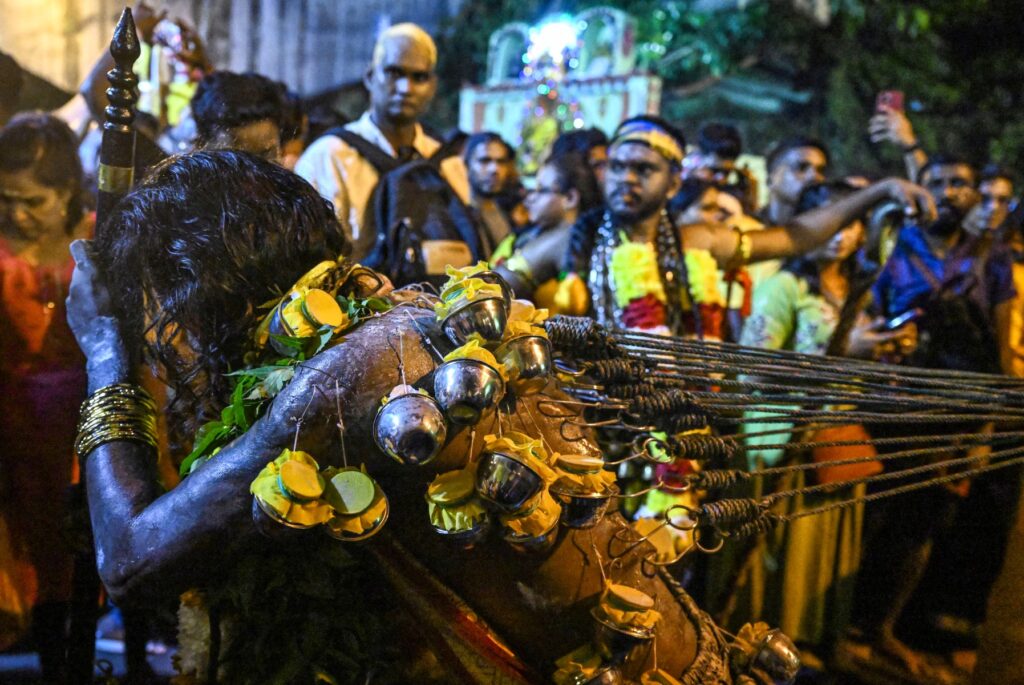
A Malaysian Hindu devotee reacts in a state of trance with his back pierced with hooks before he makes his way towards the Batu Caves temple during the Thaipusam festival at Batu Caves last year.
Image via Mohd Rasfan/AFPSo what does Thaipusam really mean?
At its core, the festival is:
A date fixed by stars and moon
A month linked to renewal
A ritual of discipline and devotion
And a story of light defeating ignorance
So the next time you see devotees climbing Batu Caves or the Arulmigu Balathandayuthapani Temple in Penang, remember it's a moment where human devotion meets discipline, and thousands of Malaysians are celebrating the triumph of wisdom over ignorance.
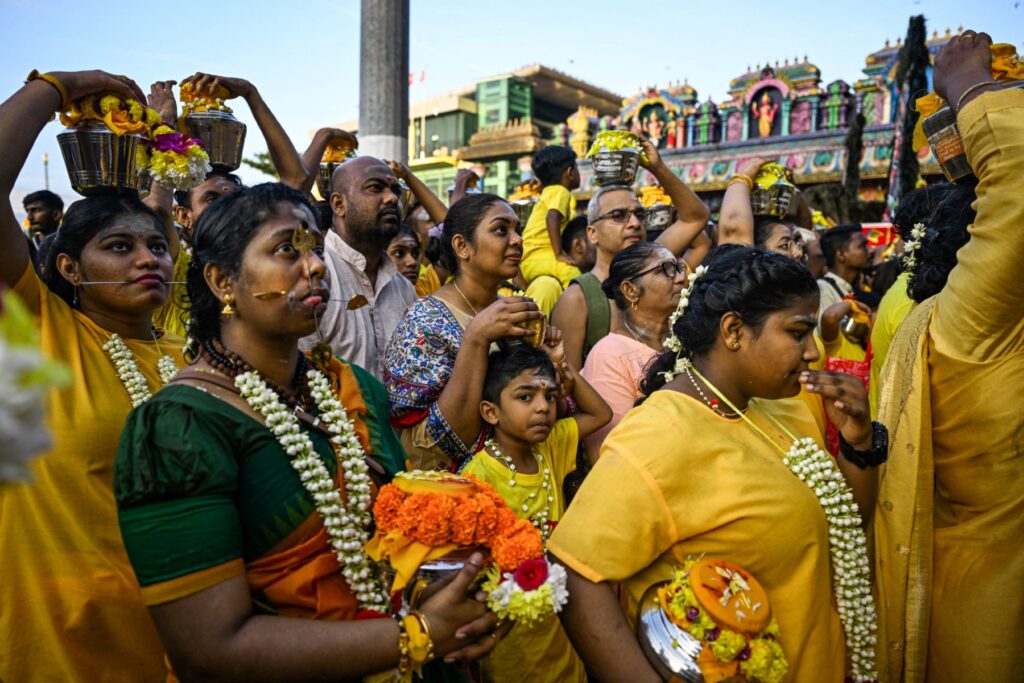
Malaysian Hindu devotees make their way towards the Batu Caves temple with their tongues pierced with Vels during the Thaipusam festival at Batu Caves last year.
Image via Mohd Rasfan/AFP