


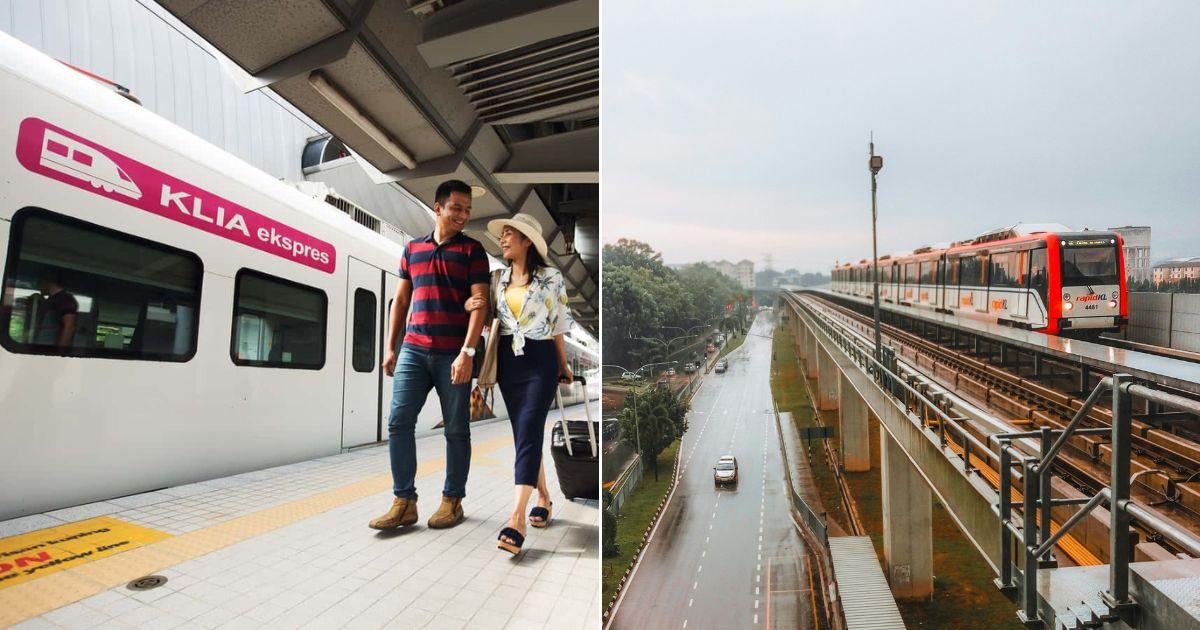
 Cover image via
If you're planning a trip to Malaysia, getting around is surprisingly easy thanks to its affordable and efficient public transport system
Whether it's planning your journey from the airport to the city centre or navigating the bus and train system in various cities, here's everything tourists need to know about using public transport in Malaysia.
Travelling from the airport to the city:
Most international travellers arrive via Kuala Lumpur International Airport (KLIA and KLIA2). The fastest way into the city is KLIA Ekspres, a non-stop train to KL Sentral that takes around 28 minutes.
Alternatively, airport buses like SkyBus or Aerobus offer budget-friendly rides between RM10 and RM15. E-hailing apps like Grab or taxis are available directly from the airport and usually cost between RM65 and RM100 depending on traffic and time of day.
In other cities like Penang or Kota Kinabalu, airport transfers are equally straightforward.
Kuala Lumpur (KLIA and KLIA2):
Other Cities:
- Penang: RapidPenang Bus 401E to George Town
- Langkawi: Grab or taxi (no public buses)
- Kota Kinabalu: Use Grab or local minivans

Image via KLIA2
A simple guide to Kuala Lumpur's train system:
Malaysia's capital has one of the most connected urban train networks in Southeast Asia. The LRT (Light Rail Transit), MRT (Mass Rapid Transit), and Monorail systems make it easy to move around Kuala Lumpur and nearby suburbs. Key stations like KL Sentral, Bukit Bintang, and Masjid Jamek link up various lines.
Trains generally operate from 6am to 11.30pm daily. For added convenience, tourists can purchase a Touch 'n Go card or a MyCity Pass, which offers unlimited rides for one or three days.
The KTM Komuter is another useful rail service, especially for trips to Batu Caves or Seremban.

Image via Kuala Lumpur Map 360

Image via MKAZ
Types of rail in Kuala Lumpur:
- LRT and MRT: Good for urban travel
- Monorail: Short-distance travel in KL city centre
- KTM Komuter: Suburban areas like Batu Caves
Pro-tip: Use the MyRapid PULSE app for route maps and service updates.

Image via Rifki Kurniawan/Unsplash
Getting around with buses in major cities:
Public buses in Malaysia are reliable and cost-effective, though they might not always run on time in smaller towns. In Kuala Lumpur, the RapidKL bus network covers most districts and connects with major train stations. The Go KL City Bus, a free service, is great for tourists and passes through attractions like the PETRONAS Twin Towers, Bukit Bintang, and Central Market.
Other cities like Penang have similar services. RapidPenang offers comprehensive routes across the island and mainland, Causeway Link buses are ideal for travel between Johor Bahru and Singapore, while Panorama Melaka connects to major tourists spots in Melaka.
Pro tip: Use Moovit or Google Maps for real-time bus schedules.

Image via Wikimedia Commons
For intercity travel, you can choose from a wide network of long-distance buses. Here are some of the popular ones:
Malaysia has a wide network of long-distance buses that connect major cities like Kuala Lumpur, Penang, Melaka, Ipoh, and even cross-border destinations like Singapore and Hat Yai in Thailand.
Popular bus terminals include Terminal Bersepadu Selatan (TBS) in KL, Penang Sentral, and Melaka Sentral. Buses are generally punctual, comfortable, and come with air-conditioning.
Tickets can be booked online through platforms like redBus, BusOnlineTicket, and Easybook, especially during weekends or public holidays when services tend to sell out fast.
Popular routes:
Alternatively, you can travel intercity via the Electric Train Service (ETS). For a slight premium, you can enjoy a comfortable ride with air-conditioned coaches, onboard facilities, and scenic views along the way.

Image via KLIA2

Image via BERNAMA
Catching ferries and boats to islands:
Malaysia's islands are well connected by ferry services. Travellers heading to Langkawi can catch ferries from Kuala Kedah, Kuala Perlis, or Penang, while those visiting Tioman or Redang typically depart from Mersing or Tanjung Gemok.
In Penang, the Penang Ferry now operates only for foot passengers, offering a scenic route between Butterworth and George Town. Boats and speedboats are common in Sabah and Sarawak, especially for visiting rural villages and diving spots like Mabul or Sipadan.
Always check ferry schedules in advance as departure times may change due to tide conditions or weather.

Image via Wikimedia Commons
All in all, travelling around Malaysia with public transport is fairly simple. Before your trip, make sure you prepare these essentials for seamless travel.
For tourists planning to use public transport frequently, the Touch 'n Go card is an essential purchase. It can be used on buses, trains, toll highways, parking, and even selected shops. Cards and reloads are available at 7-Eleven outlets, train stations, and convenience stores.
Where you can use Touch 'n Go:
- MRT, LRT, Monorail, KTM trains
- City and intercity buses
- Parking lots and tolls
- Selected taxis and retail shops
Where to buy and reload Touch 'n Go:
- 7-Eleven
- Petrol stations
- Train station counters
Besides that, downloading these apps will make getting around Malaysia easier:
- Grab: For ride-hailing
- Moovit: Real-time public transport directions
- MyRapid PULSE: KL transit updates and route planning
- Google Maps: Excellent for walking and train/bus routes
- redBus, Easybook: Book long-distance buses and ferries
- KTMB Mobile: Book ETS and KTM Komuter trains

Image via Touch 'n Go

