


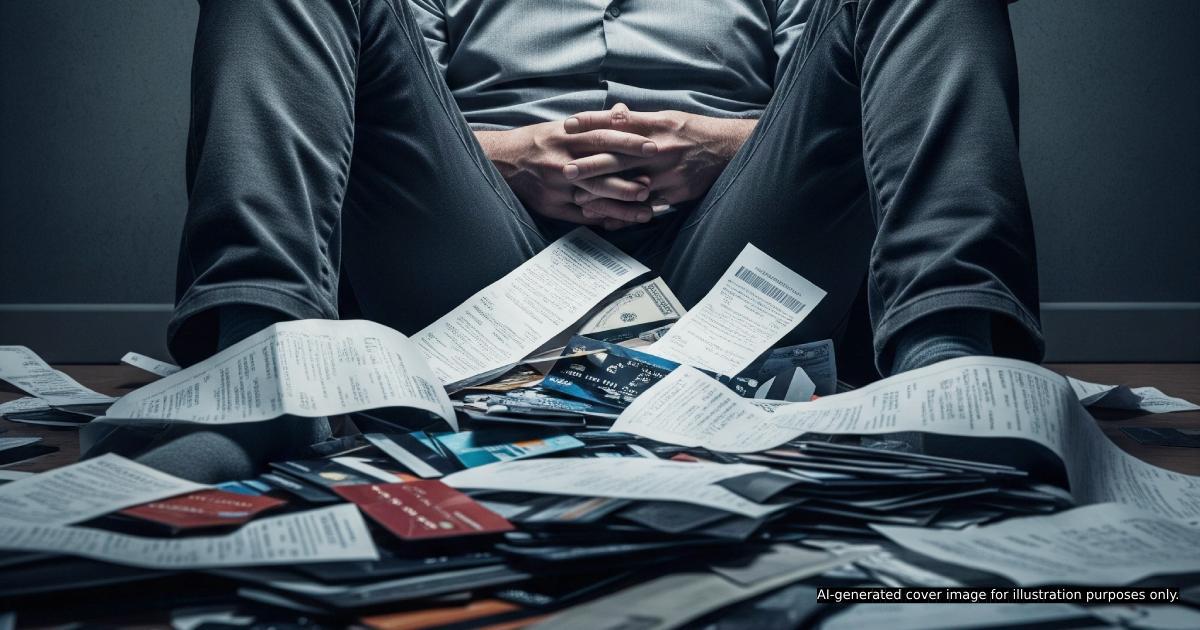
 Cover image via Gemini (SAYS)
Follow us on Instagram, TikTok, and WhatsApp for the latest stories and breaking news.
This story has been edited for length and clarity. The Redditor, who goes by @PaleontologistThin27, shared his story on r/MalaysianPF and answered follow-up questions from SAYS directly.
For seven years, a 38-year-old Malaysian, who shared his story on Reddit, lived what he now calls a "fantasy"
The reality?
This illusion of endless affordability ultimately plunged him into a staggering RM300,000 debt, accumulated through casual credit card use and everyday conveniences like food delivery.
His journey from financial fantasy to stark reality, and eventually to recovery through AKPK (Credit Counselling and Debt Management Agency), serves as a powerful cautionary tale for many Malaysians navigating modern consumerism.
His debt didn't come from one big mistake, but from nearly seven years of unchecked, irresponsible spending
It started subtly around his early 30s, when his salary began to climb.
"That's when the thought crept in, 'Hmm, I don't want Huawei, I want iPhone this time,'" he told SAYS.
This seemingly minor shift opened the floodgates to years of unchecked, irresponsible spending. Holidays were paid for with credit cards, while personal loans funded new games, consoles, and laptops.
A significant portion of his debt came from excessive food delivery.
"At times, I was racking up RM2,000 a month on my credit card just for the food," he admitted.
He has since discovered that popular food delivery platforms can inflate prices by "as much as 40% per item compared to buying in the shop", making convenience shockingly expensive.
The financial hole deepened as he took out "higher personal loans to cover my existing debt, which only made it snowball further".
The allure of status and distorted needs
He attributes a significant part of his spending to the pervasive influence of marketing, social media, and a subtle form of peer pressure.
"I felt I needed to keep up with trends, especially when I saw friends or influencers buying the latest gadgets, going on holidays, or driving new cars," he told SAYS.
"I felt an intense fear of missing out, or FOMO."
His perception of "needs" became severely distorted.
"I convinced myself that a lot of wants were actually needs," he explained.
This included annual phone upgrades, justified as "needed for work" despite his old phone being perfectly functional. He even acquired an "RM10,000 gaming laptop using full credit", only to use it for non-high-performance mobile games.

AI-generated image used for illustration purposes only.
Image via Gemini (SAYS)Ignoring the red flags: From anxiety to rock bottom
The warning signs were evident but consistently overlooked. He confessed to habitually making "only minimum payments on my credit cards every month," always believing he would catch up next month.
He also began avoiding checking his outstanding balances, knowing the numbers were too daunting to confront. He noted the surprising ease with which he was offered high credit limits, receiving two credit cards with RM100,000 spending limits even when he was only earning RM8,000.
The "fantasy" abruptly ended when his debt became unmanageable.
"I knew I needed help when my monthly repayments started going to RM10,000 for each credit card and personal loan that I had," he stated.
He felt "choked", unable to cover basic living expenses.
The mental toll was severe, marked by anxiety attacks and sleepless nights.
"It literally felt like death hanging over my head," he described, often unable to lie down in bed, feeling compelled to keep moving to stave off panic.
According to him, he was "literally one step away from declaring bankruptcy and costing my family the house and car".
"I knew I had hit rock bottom. I had no pride left, only shame."
AKPK: A path to recovery
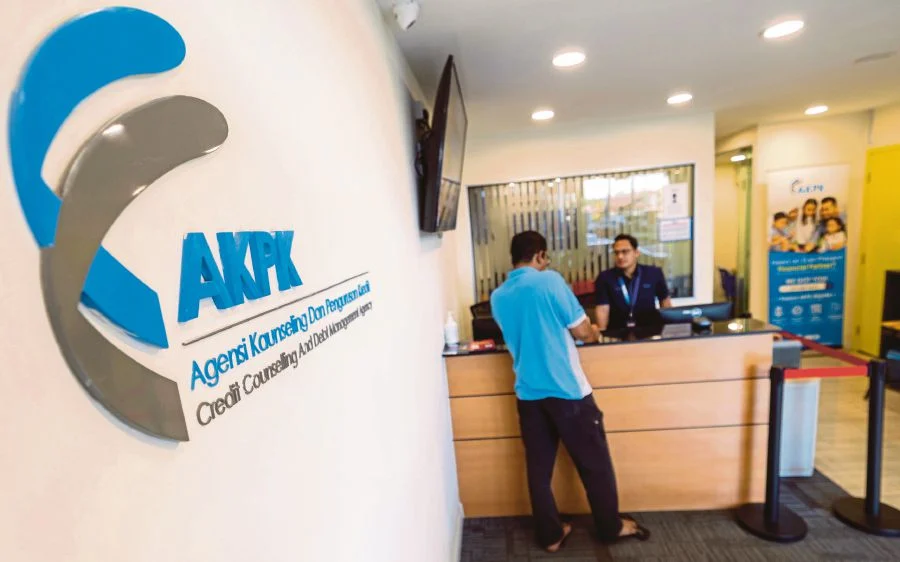
In his desperation, he discovered AKPK.
The application process proved "very straightforward".
He submitted his debt details, including credit cards and personal loans from various banks, through AKPK's official website. Within a week, AKPK provided him with a restructured repayment plan.
The relief was immediate and immense.
His monthly debt repayment — previously almost RM10,000 — plummeted to RM2,800.
"So I freed up cash flow to pay even more back," he noted.
He is now on a 10-year plan, making direct payments to AKPK, which then distributes the funds to his creditors. He actively aims to shorten this period by contributing extra whenever possible.
The AKPK programme comes with stringent rules, though.
He can only use cash and is barred from applying for any new lending facilities, including credit cards, personal, car, or housing loans.
While he anticipates a cooling-off period after his debt is settled before he can apply for new credit, he views this forced discipline as a crucial step in his recovery.
"My CCRIS (Central Credit Reference Information System) record has definitely taken a hit, but that's a consequence I fully accept," he admitted.
The unexpected freedom of no credit
Under the AKPK programme since last November, his lifestyle has undergone a radical transformation.
"I'm actually happy that there is a positive side to this, that I have changed my spending habits drastically since I now cannot use any credit," he shared.
The most challenging aspect to relinquish wasn't a material possession, but "the illusion of status and acceptance". Yet, this sacrifice brought unexpected peace.
He now finds relief in "only spend[ing] within my means using the cash that I actually have". The temptation to use credit has vanished, a direct result of the programme's rules.
His daily routines have profoundly changed:
- He uninstalled the popular food delivery apps, calling it a "MAJOR saving".
- He's adopted a healthier diet, consuming "fruits only for breakfast and a piece of bread for dinner".
- He has stopped buying games, phones, and other devices.
- He has ceased spending money on mobile games entirely.
Using only his debit card has forced him to be mindful.
"It helps stop me from buying things I don't need because I don't have the safety net of credit anymore," he shared.
He now practises delayed gratification out of necessity.
"If I only have RM2,000 to spend, will I spend it on food for the month or a new phone? I mean the answer is obvious, so this is in a way, forcing me to only focus on my necessities and save."
He has rediscovered simple joys, like cooking at home and taking walks instead of going to the mall, which eliminates temptation.
During his AMA on the subreddit, he admitted that his wife's awareness of his situation and her support have brought him to a "peaceful spot" mentally.
His sole motivation now is witnessing his "debt slowly coming down with each repayment".

AI-generated image used for illustration purposes only.
Image via Gemini (SAYS)Lessons for a financially healthier Malaysia
While he doesn't blame banks for extending credit, he told SAYS that he now views credit facilities as a "loaded gun" — something that requires immense responsibility and a clear understanding of interest rates.
"The banks made it easy, but ultimately, the fault lies with my poor financial planning and lack of discipline. Credit facilities aren't inherently 'evil'," he said.
He intends to use credit only for urgent needs, like hospital bills, never again for personal purchases or holidays, once his debt is cleared.
Reflecting on his experience, he shared that he believes Malaysia needs to integrate "real-life money skills earlier, maybe as part of the school curriculum".
This includes essential topics like budgeting, compound interest, and how loans and credit cards truly work. These, he argues, should be fundamental knowledge, "not something you learn the hard way (through actual debt)".
He also advocates for more free community workshops and outreach by banks to encourage individuals to seek help before their financial situations spiral out of control.
"So many of us only seek help like AKPK when it's already too late," he confessed.
According to a March report, over 1.4 million people have turned to AKPK for help — the majority of them burdened by credit card debt.
In 2024 alone, about 200,000 people reached out to AKPK — a steep increase compared to the yearly average of 66,000 over the previous 17 years.
When asked if he could tell his younger self anything, he shared that it would be "live within your limits"
"Focus on what you can afford that truly meets your needs. A Xiaomi phone can serve you just as well as an iPhone. And never, ever underestimate the power of compound interest and outstanding debt.
"If you're constantly borrowing from one source to pay another, or if you feel scared to check your finances, that's a huge sign you need to take action immediately," he shared.
His story stands as a powerful testament: while accumulating debt can be easy, the path to recovery demands immense discipline, humility, and a willingness to confront reality. But as he's discovering, true financial freedom and peace of mind are within reach.
