


 Cover image via
Follow us on Instagram, TikTok, and WhatsApp for the latest stories and breaking news.
Most of us only think about our credit score when we're finally ready to take a big step

Most of the time, it's when your applying for a car loan or getting a mortgage. But your credit score isn't just numbers in a database, it's simply a breakdown of how responsibly you've been handling your credit.
Your financial behaviour is recorded by several reporting bodies, and banks use these reports to assess whether you're a low-risk or high-risk customer. A strong score usually means easier approvals and better interest rates.
So, here's how to check your credit score through every credit agency:
1. CTOS
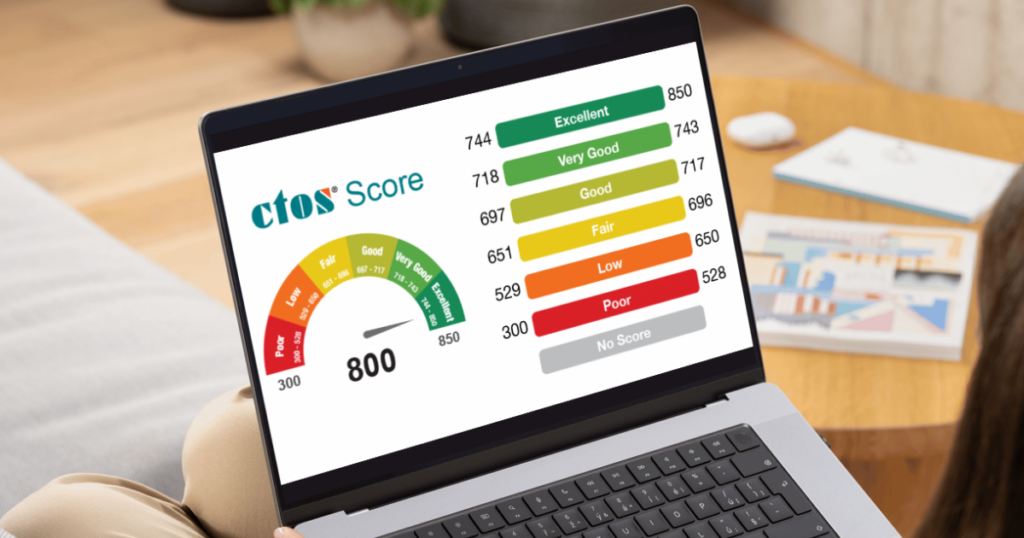
CTOS is the easiest place to start because it's the most commonly referenced by lenders. Their scoring system ranges from 300 to 850, with higher numbers meaning lower credit risk and vice versa.
The score is calculated using multiple factors:
- Payment behaviour: Whether you pay your loans on time
- Outstanding credit: Any unsettled debts that you have
- Credit mix: How many types of loans you have
- Credit enquiries: How often you apply for loans/credits
- Negative listings: Red flags recorded by reporting agencies
Many banks subscribe to CTOS, so this score is often used as a quick risk indicator before reviewing deeper records like CCRIS.
You can register for a free CTOS account on their website or app using your IC and email. The free version includes your basic profile, some payment history, and any litigation or bankruptcy listings. For the full score and detailed report, you'll need a paid subscription. Prices change, so verify latest rates on their site.
2. Central Credit Reference Information System (CCRIS)

The CCRIS is run directly by Bank Negara Malaysia, and it compiles your loan repayment data from all financial institutions on a monthly basis, making it the most comprehensive and accurate reflection of your financial behaviour.
Unlike CTOS or RAMCI, CCRIS does not give you a score. It simply shows you the facts: how much you owe, how timely you pay, and whether any accounts have been restructured. Banks combine this data with their internal scoring models when assessing your loan.
You can get your CCRIS report for free through eCCRIS, Bank Negara Malaysia's online portal. First, you'll need to verify your identity, either through an online verification method or by visiting a BNM office. Once your account is activated, just log in, select your report, and download it instantly. The CCRIS report updates every month and shows your full 12-month repayment history across all banks.
3. RAMCI or Experian

RAMCI, now operating under Experian Malaysia, is another major private credit reporting agency that offers the Experian i-Score (300–800). While it shares some similarities with CTOS, it uses its own scoring algorithm and may include behavioural insights not found in CCRIS.
RAMCI collects both public information and data from its participating financial partners. Your RAMCI report typically includes your credit exposure, repayment trends, outstanding debts, trade references, and any negative items such as late payments or legal actions. Many lenders use it as a secondary layer of evaluation to cross-check CTOS and CCRIS findings.
To check your RAMCI (Experian) score, head to the Experian Malaysia website and create an account using your IC. You can then choose from their paid report packages, which include your Experian i-Score, debt exposure, and any negative records. After payment, your full report becomes available for download through your dashboard.
What to look out for when reading your credit reports

Start by checking your personal details — any mistake could affect future loan approvals. Then, look through your repayment timelines. Spot any late payments you don't recognise? Dispute them if necessary through the reporting agency.
If your score is lower than expected, it might be due to overutilised credit cards, recent loan applications, or missed payments. Don't worry, these can improve over time with consistent repayment and careful credit use.
Most Malaysians only check when they need financing, but it's recommended to review your reports at least twice a year

This helps you spot fraudulent activity, identify errors, and make adjustments before submitting any loan applications.
Monitoring your score also gives you insight into your financial habits. Make sure you're never late to repay your debts and your credit score should be perfectly fine!
