


 Cover image via Canva Teams
Follow us on Instagram, TikTok, and WhatsApp for the latest stories and breaking news.
This article was last updated on 1 April 2026.
According to job search portal Indeed, the average fresh grad salary in Malaysia is currently RM2,994 (previously RM3,079)
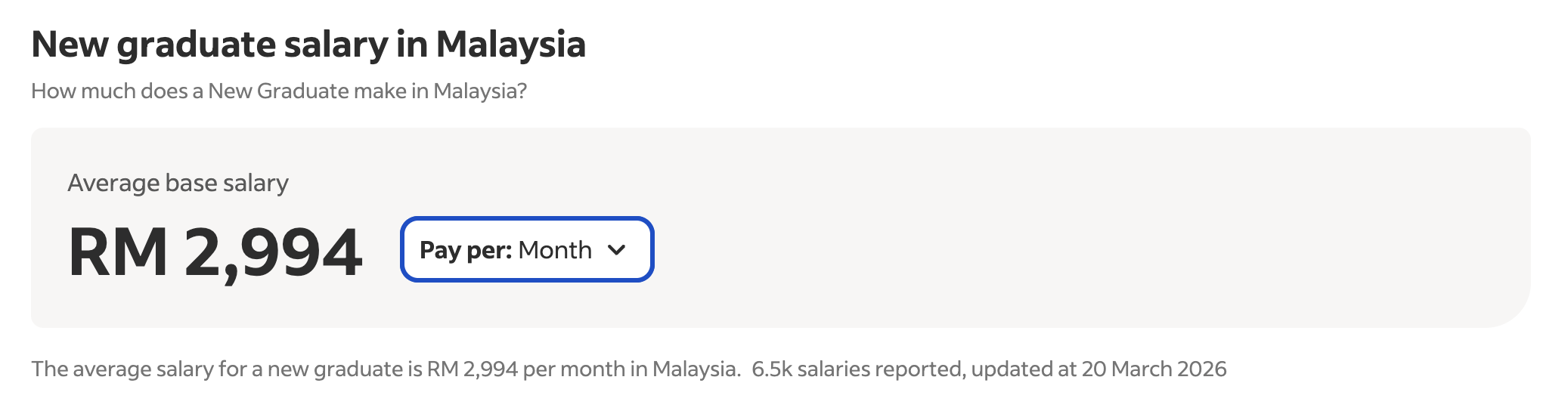
In a separate Reddit thread, most commenters agreed that fresh grads typically take home somewhere between RM2,500 and RM3,500. Some users commented that it was possible to earn upwards of RM4,000 in certain fields, or with overtime (OT).
But for those just stepping into the working world, the big question that remains is this: "Is RM3,000 considered a good starting salary?"
The short answer is, it depends.
The first thing to consider is the industry you're entering
For industries like IT, engineering, and finance, RM3,000 may be below the average.
In healthcare or education, it can be considered reasonable, while in creative industries, it's actually slightly above typical entry-level pay.
| Job Type | Starting Pay (RM) | Why This Pay? |
|---|---|---|
| Engineering | 2,800 – 3,800 | Steady demand in manufacturing, construction |
| IT | 3,000 – 4,200 | Entry roles in software development and support |
| IT in Fintech | Up to 5,500 | Premium for fintech hires due to sector boom |
| IT Super Skills (AI, Cyber, Data) | +700 extra/mo | Skills shortage drives RM700/month extra for specialised grads in these high-demand areas |
| Finance & Accounting | 2,800 – 3,500 | Reliable pay in banking and audit roles; Big 4 financial services often at higher end |
| Healthcare | 3,200 – 4,800 | Nurses, pharmacists, and support roles; private hospitals pay toward upper range |
| Doctor/Dentist Housemanship | 3,000 – 5,000 | Permanent Medical Officer positions and specialised roles can start significantly higher |
| Law (Chambering/Pupillage) | 2,500 – 3,000 | Market stipends exceed KL Bar minimum (RM1,350); varies by firm size and location |
| Teaching | 2,200 – 3,000 | Teaching roles stable but lower; international schools edge higher with better perks |
| Hotels & Tourism | 2,300 – 2,800 | Entry-level service jobs; quick promotions to management boost long-term earnings |
| Creative & Media | 2,400 – 3,000 | Competitive field; freelance or content gigs often supplement base pay |
| Public Sector | About 2,250 | Grade 9 entry fixed low but offset by pensions, job security, and allowances |
| Charities/NGOs | 2,300 – 2,800 | Modest base pay; growth via impact roles and grants |
ㅤ
Public sector fresh graduate starting salaries are generally lower than private sector salaries. For example, entry-level public servants at Grade 9 start at around RM 2,250 per month. However, public sector jobs often come with long-term benefits that private sector roles may lack.
Similarly, in the non-profit sector, starting salaries tend to be lower than the private sector averages. But for some, the meaningful working environment may make up for it.
The next thing to think about is where you are located
Indeed provides a snapshot of how your entry-level salary could range based on where you're actually working:
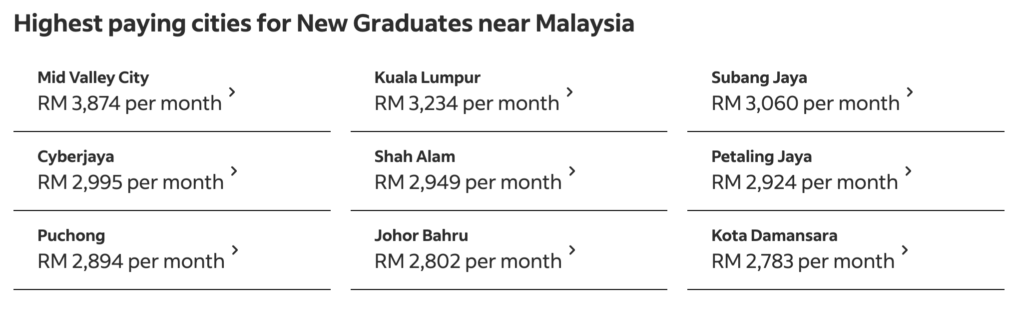
It's also important to consider that a RM3,000 salary might be comfortable in a smaller city, where rent, food, and transport don't eat up as much of your pay. But in Kuala Lumpur, the same amount can feel tight once you factor in higher living and commuting costs.
That's why it's worth weighing these considerations when applying for jobs or thinking about relocation. Another path to explore is landing a remote role with a big company, while enjoying the lower cost of living in a smaller town.
For fresh grads, many of them solely focus on the salary itself, but there is more to consider
If you are earning RM3,000, the first thing you should take note of is that you are not bringing home RM3,000 in cash. After EPF, SOCSO, and EIS deductions, you are looking at around RM2,650.
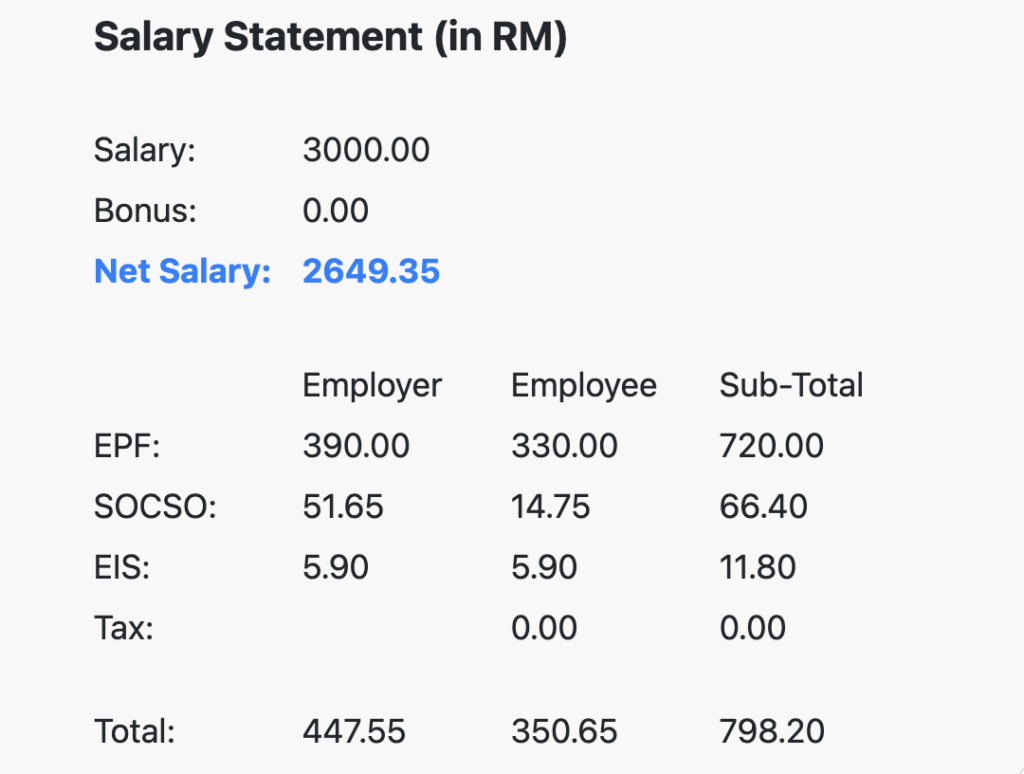
What this means is additional perks and allowances provided by your company can actually make a huge difference.
Some of the most common perks include:
- Hybrid/Remote schedule: You could save hundreds on commuting and accommodation
- Flexi-benefits: These could include claims for glasses, gym passes, and other lifestyle benefits
- Allowances: For mobile, transport, gadgets, and more
- Insurance: Some companies provide more than just the basic health insurance, including health checkups, specialist coverage, and maternity benefits
This is why you should not only look at your take home salary, but also the benefits that come with it.
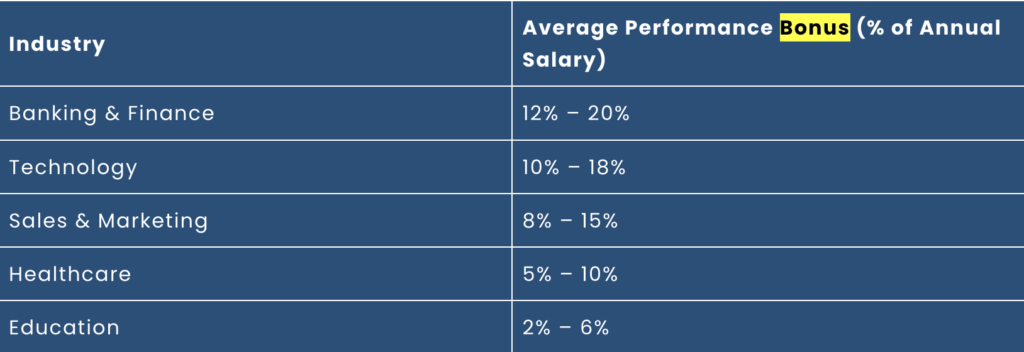
Another important thing to keep in mind is that not every industry pays out performance bonuses at an equal rate
According to FastLane Recruit, those in the banking and finance industries are more likely to receive a higher bonus:
All in all, you'll need to decide for yourself whether RM3,000 is a good enough starting pay
Remember, beyond the salary offer, consider your expenses, total benefits, and long-term job prospects before making your decision.
For more #career tips:
- 5 Flexible Part-Time Jobs For Students That Pay At Least RM100 A Day
- This Ex-SIA Stewardess Left Her High-Flying Career To Find Success As A Nasi Lemak Hawker
- New Data Reveals Malaysian Students Are Sticking To Familiar Career Choices
- What To Do If Your Boss Doesn't Pay Your Salary On Time In Malaysia
