


 Cover image via
Follow us on Instagram, TikTok, and WhatsApp for the latest stories and breaking news.
Happy 25th birthday to the website that basically graduated us
Where would we be without Wikipedia? If you're a student in Malaysia, an office worker in KL, or just someone who likes to win arguments, you owe a lot to Jimmy Wales and his band of volunteers.
On 15 January 2026, Wikipedia officially turned 25 years old.
Think about that for a second. In "Internet years", 25 is basically ancient. Most of the websites we used back in 2001 are long gone or have turned into weird, ad-filled shells of their former selves. But Wikipedia? It's still there, still ad-free, and still the first place we go when we need to know why cats are afraid of cucumbers, or what's happening with the 1MDB case.
Even though many of us use it regularly, there are some truly bizarre and impressive things happening behind that "puzzle globe" logo.
Here are five facts that might make you appreciate those "Please donate RM15" banners a little more:
1. It would take you 38 years to read the entire English version
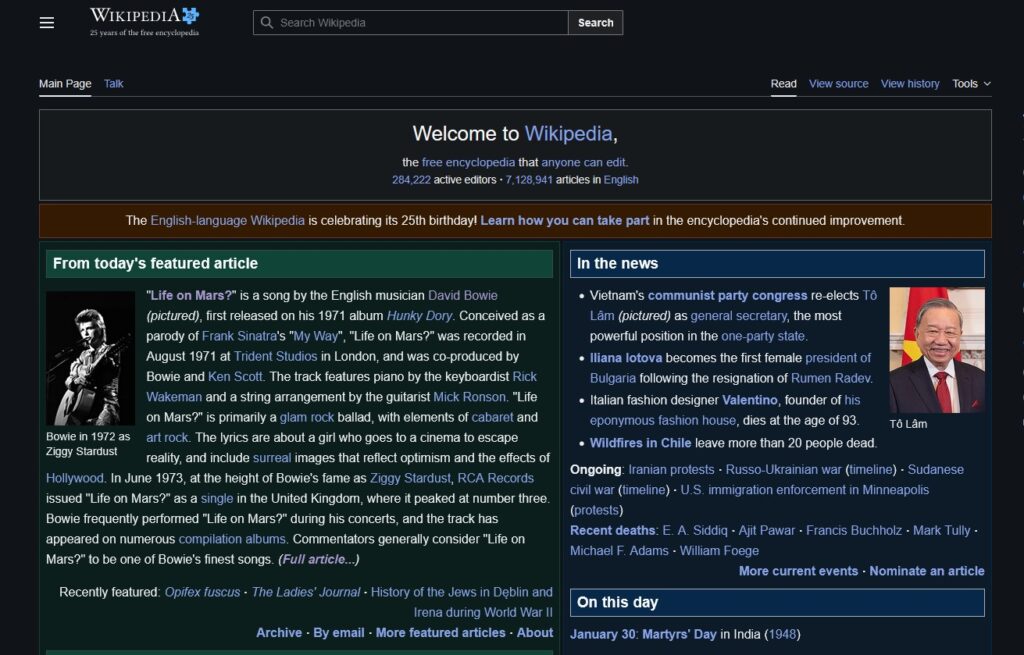
As of its 25th anniversary, the English Wikipedia has over seven million articles and a staggering five billion words. If you decided to quit your job tomorrow and read every single article back-to-back without sleeping or eating, it would take you roughly 38 years to finish.
By the time you're done, you'd be nearly four decades older, and there would probably be another 10 million articles waiting for you. It's a bit of a reality check on just how much human knowledge has been archived there.
2. All roads lead to… Philosophy?
This is a classic "glitch in the matrix" that still works in 2026. Pick any random Wikipedia article, click the first non-italicised link in the main text, and repeat.
According to data, about 97% of the time, you will eventually end up on the page for "Philosophy". It is like the website has its own built-in existential crisis.
No matter if you start with "Nasi Lemak", "Public Transport in Malaysia", or "Taylor Swift", the path of human knowledge eventually spirals back to the deep questions of existence.
We tried it ourselves, starting from topics such as the stealth-action video game Splinter Cell, football, and even the Wikipedia entry for Wikipedia. We all ended up at Philosophy.
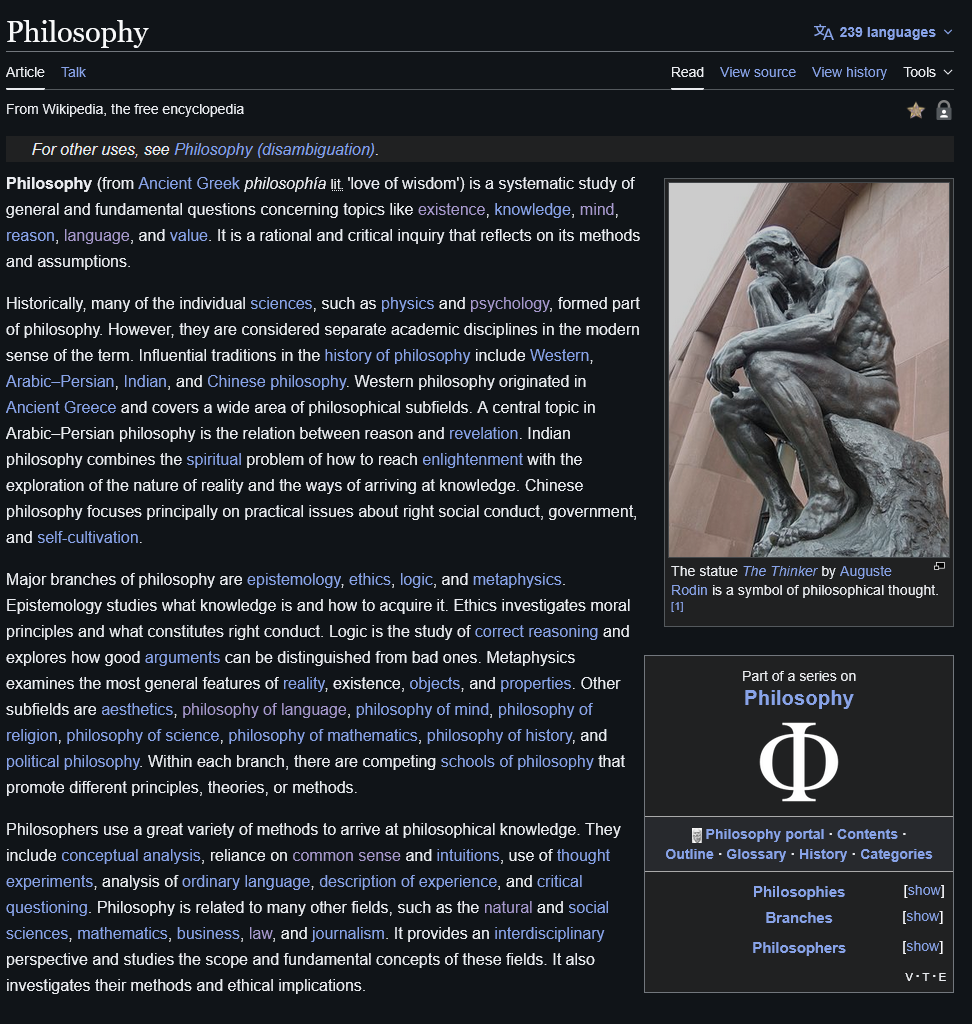
Trust us, we tried!
Image via Screenshot by SAYS3. One man spent 10 years fixing "Comprised Of"
Let's talk about Bryan Henderson (known online as Giraffedata). This man is a literal legend in the Wiki-world. He has a very specific pet peeve: the phrase "comprised of". He believes it is grammatically incorrect (it should be "composed of" or "consists of").
Over the last decade, he has manually edited over 47,000 articles to remove that one phrase. He even wrote a software program to alert him every Sunday whenever someone new types it into an article.
That is the kind of beautiful, slightly obsessive dedication that keeps the site reliable. While most of us are arguing about our favourite food, Bryan is quietly making the world a more grammatically correct place, one edit at a time.
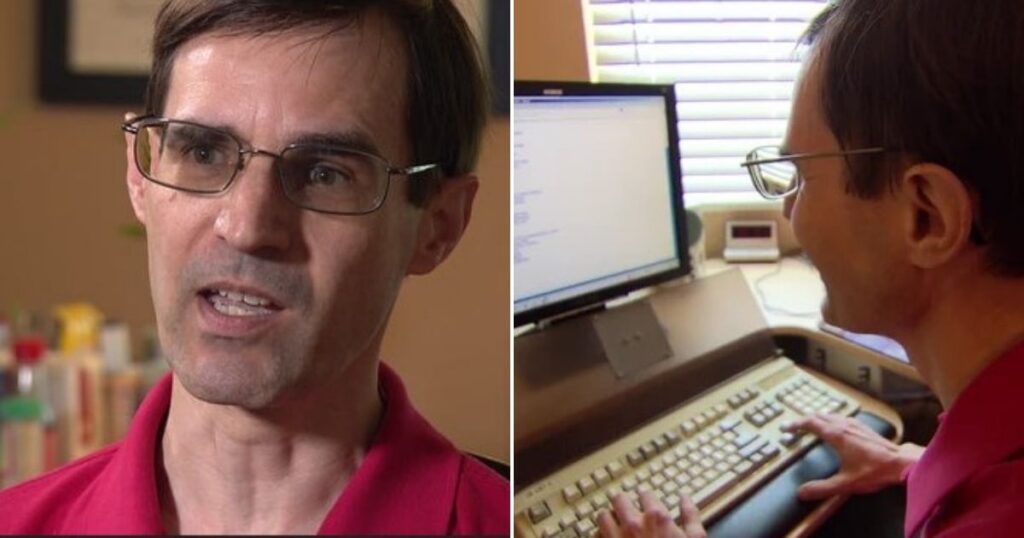
Bryan Henderson.
Image via CBS News4. There is a physical "Wikipedia Monument" in Poland
We usually think of Wikipedia as a digital ghost, but it actually has a physical home. In the town of Słubice, Poland, there is a literal statue dedicated to the website and its volunteers.
It was unveiled way back in 2014, and to this day, it remains a pilgrimage site for "Wikipedians". It's a nice reminder that behind the millions of edits are real people — librarians, students, and hobbyists — who contribute for free just because they believe knowledge should be shared.

5. AI won't be getting anything for free
Here is something fresh from this month's anniversary celebrations. For years, AI chatbots like ChatGPT and Grok have been scraping Wikipedia's data for free to train their brains.
But on its 25th birthday, the Wikimedia Foundation announced they've inked major deals with Microsoft, Meta, and Perplexity. Basically, these AI giants are finally going to start "chipping in" to pay for the infrastructure that hosts all that data.
It's a huge win because it helps keep the site free and ad-free for the rest of us. Jimmy Wales famously said he'd rather have an AI trained on human-curated Wikipedia than one trained solely on "angry people on X".
Why does it still matter in 2026
At the end of the day, Wikipedia is the "last best place" on the Internet. In an era where AI-generated slop and misinformation are everywhere, having a site where every sentence is debated by actual humans is a godsend.
So, the next time you use it to settle a bet at a mamak stall or to understand a complex news story, maybe give a little nod to the editors. Or, you know, finally click that donation button.

