


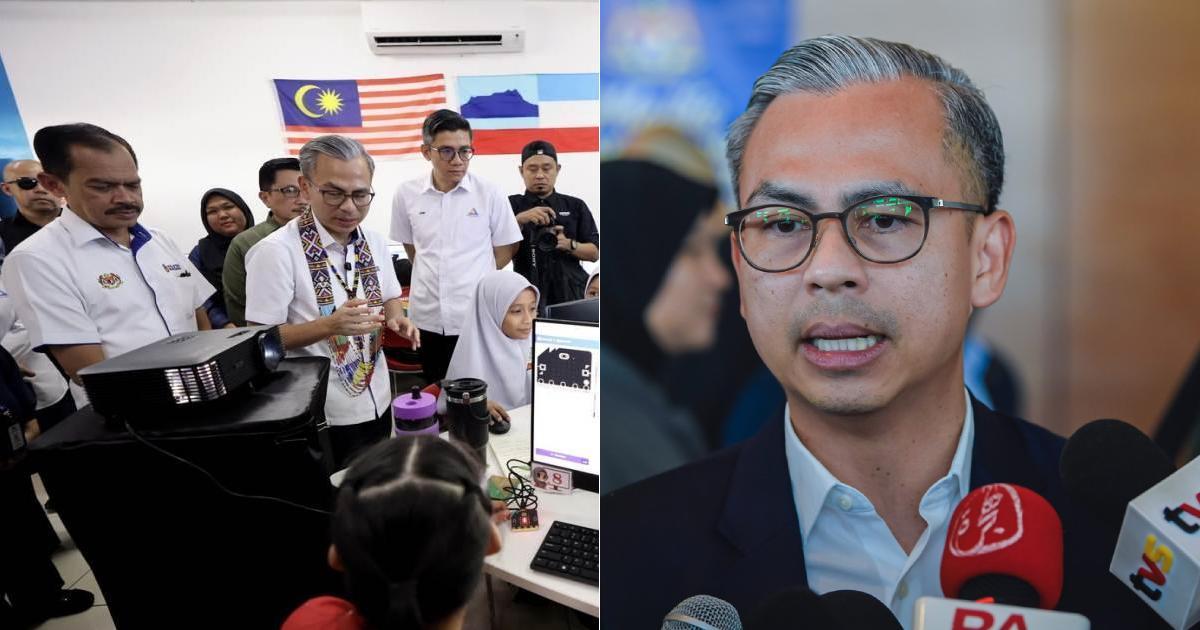
 Cover image via Bernama
Follow us on Instagram, TikTok, and WhatsApp for the latest stories and breaking news.
Malaysia will soon require all social media platforms to verify the identities of their users through an eKYC process
The move, announced yesterday, 15 October, by Communications Minister Datuk Fahmi Fadzil, is part of the government's broader push to strengthen online safety and accountability.
According to Fahmi, the main goal is to protect children under 13 from owning social media accounts and to curb online scams that continue to plague platforms.
He said the Malaysian Communications and Multimedia Commission (MCMC) will meet with social media companies later this month to discuss the initial steps towards implementing the policy.
Below is a breakdown of what we know so far.
1. What is eKYC?
Electronic Know Your Customer, or eKYC, is a digital verification process that uses official identification documents like MyKad or passports to confirm a user's identity.
It's already used in banking and fintech to prevent fraud and money laundering, but this will be the first time Malaysia applies it to social media platforms.
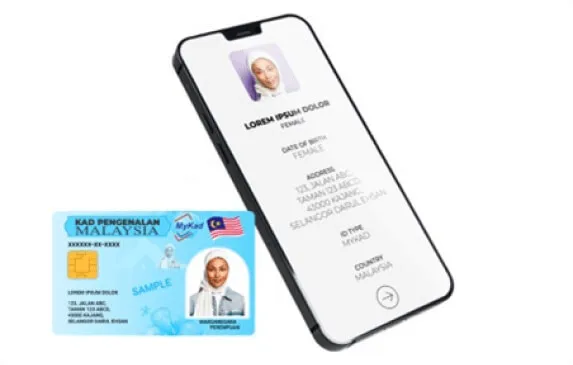
Image used for illustration purposes only.
Image via Experian2. Why is the government introducing it?
Fahmi said the main goal is to protect children under 13 from owning social media accounts and to make sure community guidelines are properly enforced.
"Malaysia will make identity verification mandatory, especially to prevent children below 13 from having accounts," he was quoted as saying by Bernama.
Fahmi added that eKYC will also help combat online scams, fake ads, and gambling-related content, noting that "78% of scam-related content taken down came from Facebook".

3. When will this be enforced?
There's no confirmed timeline yet. Fahmi said he will present the proposal to the Cabinet before making an official announcement.
Meanwhile, MCMC will meet with major social media platforms next week to discuss the initial steps of implementing eKYC requirements.
Civil society groups expect the policy to be introduced once the Online Safety Act comes into effect at the end of 2025 or early 2026.
4. Which platforms or apps might this affect?
While the government has not specified which platforms are involved, those that qualify as social media or allow user-generated content and public interaction are likely to be included, such as Facebook and Instagram (Meta), X (Twitter), TikTok, YouTube, Google, Threads, Reddit, and Telegram.
Platforms that combine social and commercial elements, where users can publicly post, comment, or sell, may also be affected. Possible examples include Shopee, Lazada, TikTok Shop, Carousell, Mudah.my, PropertyGuru, Grab, AirAsia, foodpanda, and more.
5. Are there any concerns about this policy?
While the move aims to make the Internet safer, several rights groups, including the Centre for Independent Journalism (CIJ), Article 19, and the Sinar Project, have raised serious concerns about privacy and human rights.
They argue that requiring users to upload sensitive personal data, such as MyKad or biometric details, could lead to further data breaches, misuse, or leaks.
They also warned that eKYC could enable greater state surveillance and have a "chilling effect" on freedom of expression by discouraging anonymous or critical speech online.
"Mandatory eKYC would further expose users to identification and tracking, making us more vulnerable to state surveillance, selective enforcement, and self-censorship," the groups said in a joint statement.
The civil society organisations urged the government to pause the rollout and instead hold public consultations with stakeholders and affected communities, and establish an independent social media council for oversight.
It also wants the government to conduct human rights and data protection impact assessments before introducing new digital laws, and strengthen Malaysia's Personal Data Protection Act (PDPA) to cover government agencies.
They emphasised that protecting children and preventing scams are valid goals, but the approach must not come at the expense of privacy and free expression.
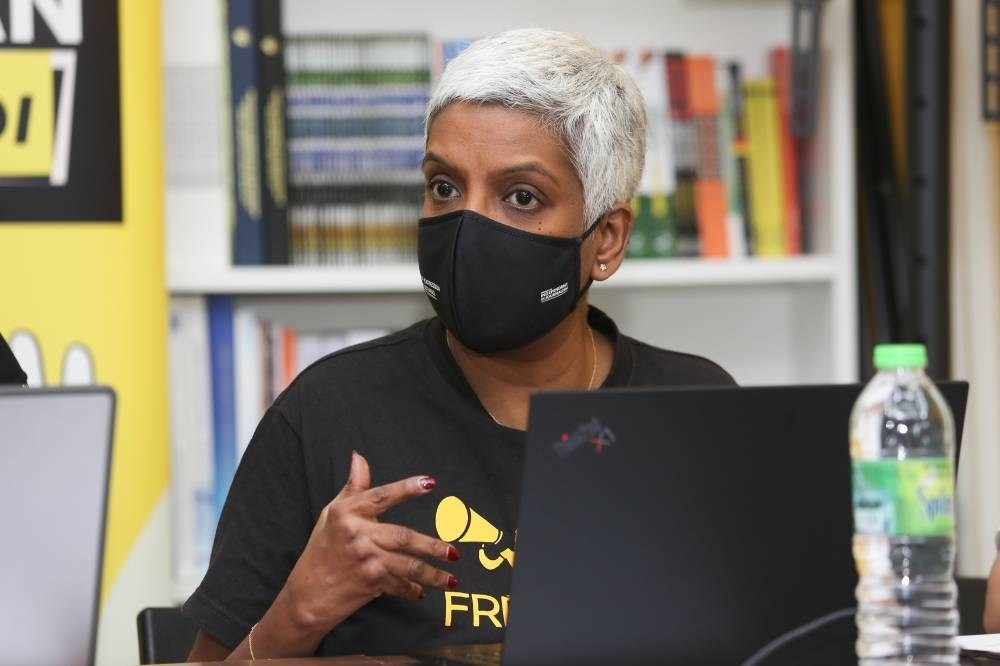
File photo of CIJ executive director Wathshlah G Naidu.
Image via Choo Choy May/Malay Mail6. What happens next?
The government will finalise its proposal and timeline for Cabinet approval. Once the Online Safety Act comes into force, eKYC verification could become mandatory for all social media users in Malaysia.
For now, discussions between MCMC and social media platforms are still ongoing.
Here's how other countries handle social media identity verification
| Country | Policy type / approach | Status of enforcement | Main civil-liberty concerns |
|---|---|---|---|
| China | Mandatory real-name registration tied to national ID numbers for most online services. | Fully enforced nationwide. | Enables state surveillance and suppresses online anonymity. |
| Vietnam | Decree mandates ID or local number verification for social accounts; required to post or share. | Phased rollout (2024–2025). | Tracking risk, privacy erosion, increased state control. |
| South Korea | Real-name verification for certain comment sections and news sites. | Implemented in 2007, later limited after court rulings. | Found unconstitutional; violates freedom of expression. |
| India | Traceability and accountability rules under IT Guidelines (not full eKYC). | Active since 2021 for major platforms. | Concerns over privacy, encryption weakening, and surveillance. |
| Nepal | Draft proposals for mandatory user registration and ID verification. | Under consideration. | Risk of exclusion, censorship, and data misuse. |
| Turkey | Law requires local reps, data hosting, and user verification via phone numbers. | Enforced since 2021. | Expanded censorship and state oversight. |
| Australia | Age-assurance rules for social media under Online Safety Act. | Enforcement in progress. | Data privacy concerns and risk of excluding minors. |
| Singapore | Online safety laws require age verification and content removal systems. | Active since 2023. | Potential for overreach and speech suppression. |
| Indonesia | Proposals for verified digital IDs and stricter user registration. | In discussion; not yet implement
MOST READ |
