


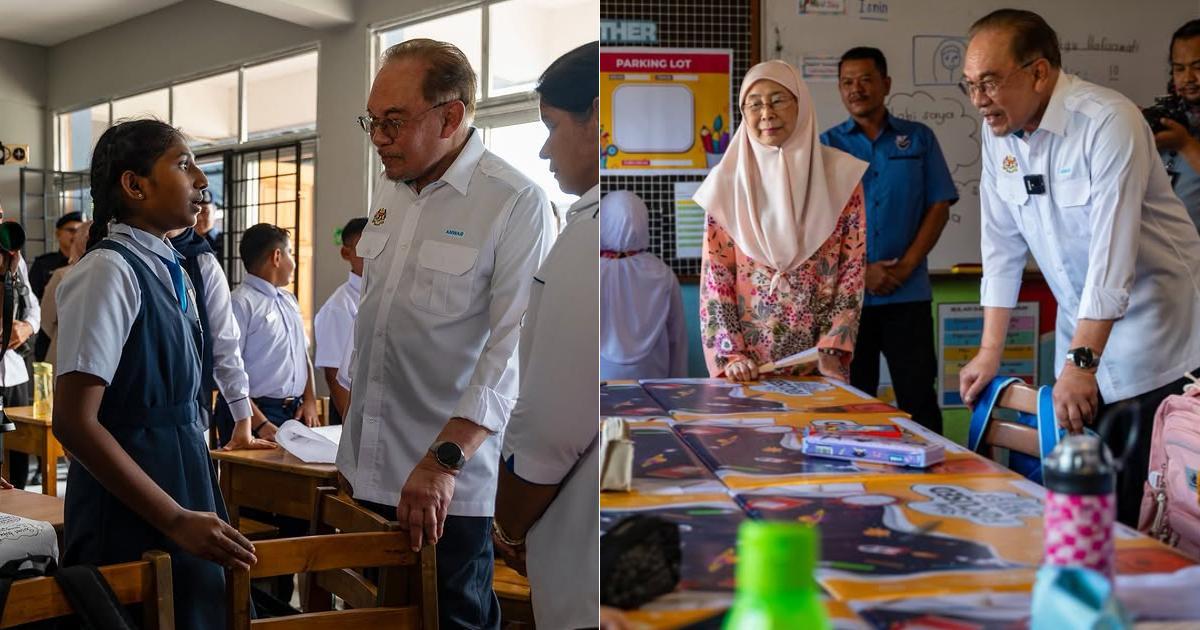
 Cover image via @sarawakdaily (Instagram)
Follow us on Instagram, TikTok, and WhatsApp for the latest stories and breaking news.
Prime Minister Datuk Seri Anwar Ibrahim today, 20 January, unveiled the National Education Plan 2026–2035
He outlined sweeping reforms across Malaysia's education system, from preschool to university, with a focus on language mastery, assessment reforms, school infrastructure, and broader access to higher education.
Speaking at the plan's launch, Anwar framed education reform as central to Malaysia's future in a globally competitive economy.
"Malaysia has broken records for the first time in history, reaching RM3 trillion in trade," he said, pointing to the country's growing role as a trading nation.
He stressed that this reality demands stronger language and digital skills among students.
"Mastery of English must be prioritised to secure our children's future on the international stage, alongside knowledge in digital transformation, energy transition, AI, and related fields."
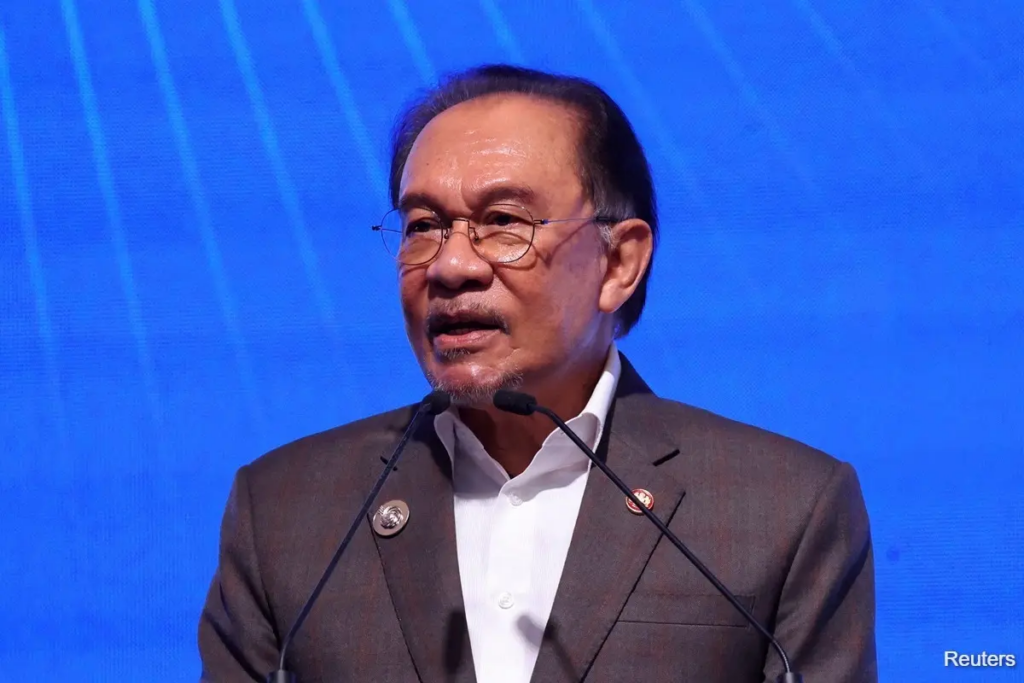
A key feature of the Education Plan 2026–2035 is expanding language offerings in national schools, with the Education Ministry required to provide enough teachers for multiple language options
"All national schools must provide teachers for this. Besides Bahasa Melayu and English, children, whether Chinese or Malay, who wish to learn Mandarin as an elective, or Tamil, or Arabic, the Education Ministry must ensure sufficient teachers to give these children the space to learn these languages," he said.
Anwar said the move aims to finally end decades-long language disputes in the education system.
"We hope to resolve the endless language controversies. I grew up in the 1950s and 60s when language conflicts were intense. In 2026, with this policy, we will end these polemics by strengthening Bahasa Melayu as the main language, while giving attention and emphasis to mastering other languages in our education system."
Anwar also announced the return of a centrally managed national assessment system for primary schools
"Beginning this year, we will bring back the Malaysian Learning Matrix System, a national assessment or examination system managed by the Examinations Board for Year Four pupils," he said.
He confirmed that Year Four students will take national assessments covering core subjects.
"The focus of the Malaysian Learning Matrix is Bahasa Melayu, English, Mathematics, Science, and History," he said.
"History will be included for Year Three (pupils) starting in 2027. From 2026, the subjects are Bahasa Melayu, English, Mathematics, and Science."
Anwar acknowledged long-standing infrastructure issues in public schools, including sanitation problems
"In 2023, I approved RM1 billion just to solve toilet problems," he said, noting that broken school toilets remain a recurring complaint.
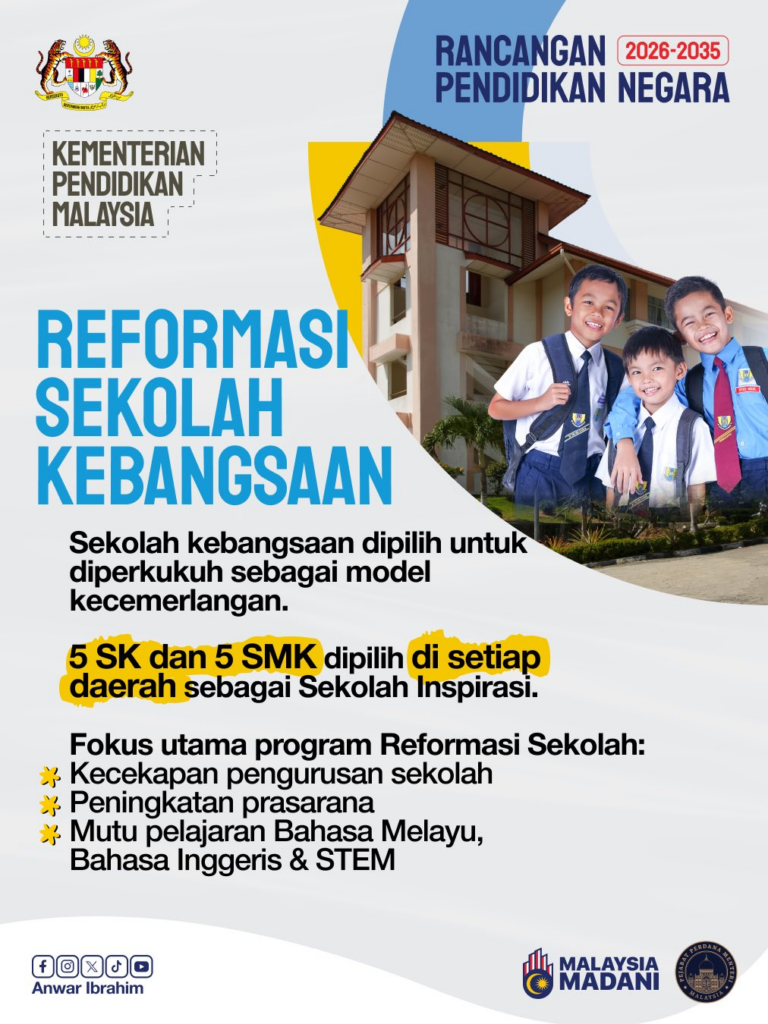
Under the new plan, each district will select five national primary schools and five national secondary schools to serve as pilot upgrade projects.
"These 10 schools will not be elite boarding schools or science schools, but regular district schools that we will equip with the best possible facilities. The focus is not only on infrastructure, but on improving teaching quality."
One of the most significant changes is lowering the entry age for formal schooling
"Currently, children enter Year One at age 7. From next year, preschool will begin at age 5, and Year One at age 6," Anwar said.
However, this will not be mandatory initially.
"We are not yet ready to make it compulsory, because some parents may feel their children are not prepared. We will still allow entry to Year One at 7, but we encourage parents who are ready to enrol their children in preschool at age 5."
He added that the entire preschool system will be taken over and standardised by the Education Ministry.
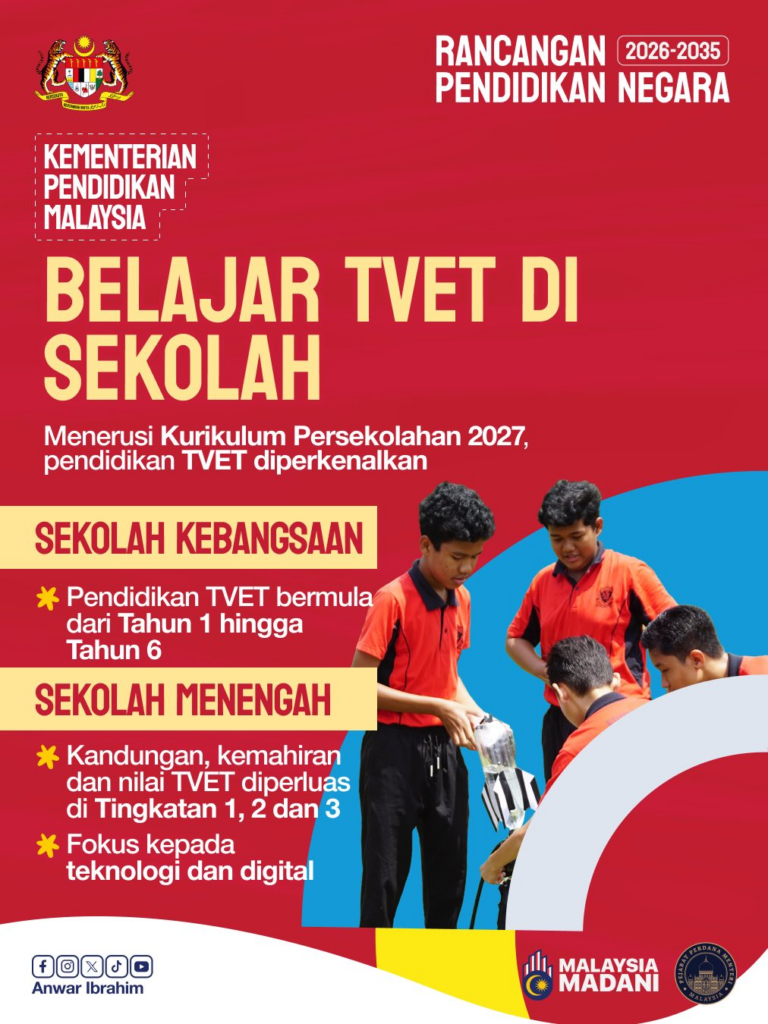
The plan also expands Technical and Vocational Education and Training (TVET) options to younger students
"Currently, TVET begins at Form Three. We will move it to Form One, so children can choose their pathways earlier," he said.
Anwar reaffirmed that education from Year One to Form Six remains free, alongside new initiatives to encourage reading
"We provide special allowances for students, including book purchases. Last year, I also provided allocations for teachers to buy reading materials, because globally, not just in Malaysia, reading interest has declined. Malaysia must act to sharpen talent and train children to read more textbooks, selected books, and novels."
He also announced expanded financial aid for students from low-income families.
"This number will be increased through PTPTN assistance to 10,000 students from the hardcore poor category."
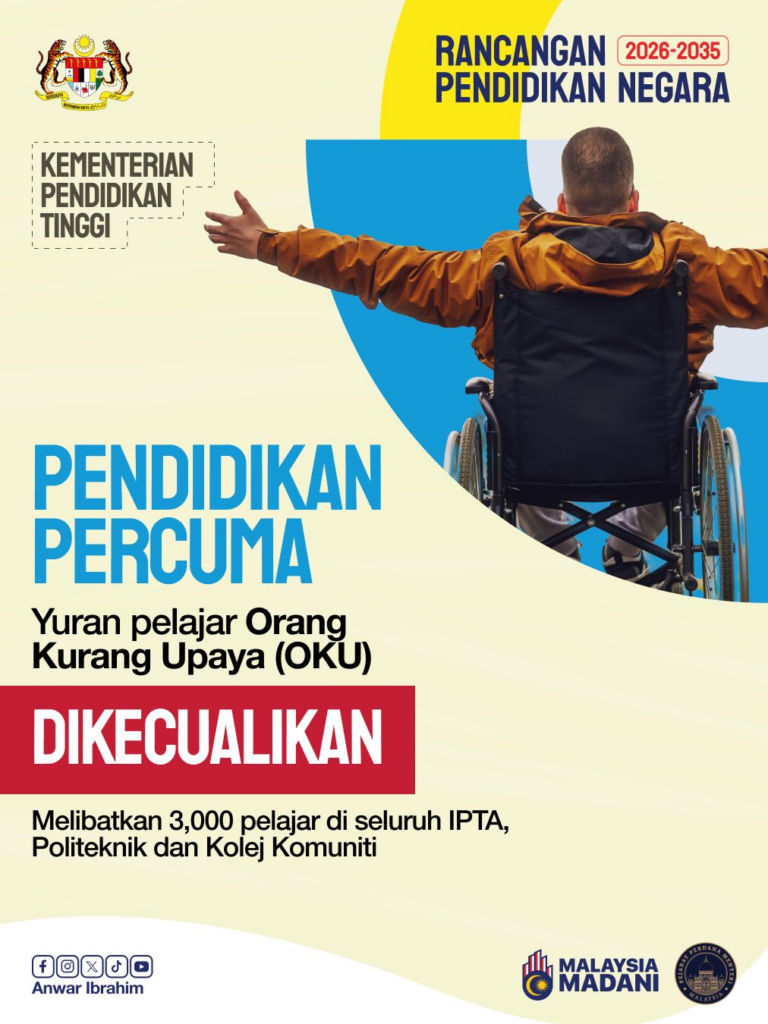
Students with disabilities in public higher education institutions will also receive free education.
"All students with disabilities in public universities, polytechnics, and community colleges, about 3,000 students, will receive free education starting now."
Higher education will also see structural changes, with pre-university programmes placed under the Higher Education Ministry
"The Ministry of Higher Education will take over the entire pre-university system, Form Six and matriculation, meaning these students are no longer school students but part of higher education."
To address limited university course placements, particularly in high-demand fields, Anwar announced an increase in intake capacity.
"We will add another 1,500 places, making 3,000 additional slots this year in Law, Accounting, Finance and Banking, AI, Economics, Communication, Data Science, and Computer Science."
He also acknowledged student complaints over accommodation shortages.
"We have instructed all government-linked investment companies to work with universities to develop areas and provide accommodation facilities, targeting 5,000 additional housing places for students."
In closing, Anwar stressed that execution will be the biggest challenge
"A plan is one thing. Implementation is far more challenging," he said, quoting TS Eliot: "Between the ideals and the realities lies the shadow."
He added that ministers, senior officials, vice-chancellors, and department heads will be required to submit monthly progress reports to ensure the plan does not stall after its launch.
"There is no point launching something with great fanfare and attractive coverage if implementation fails. The real challenge lies in delivery."
