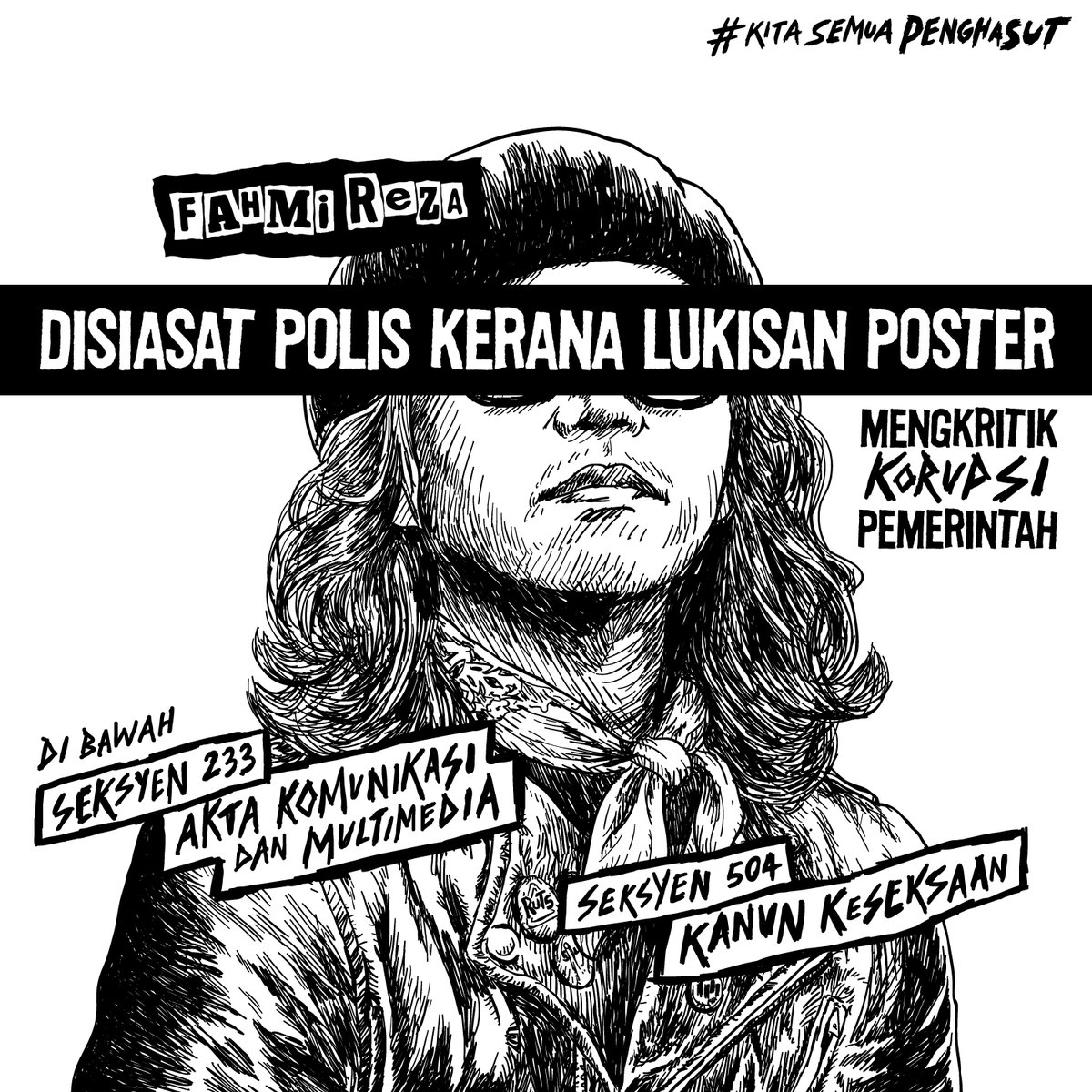
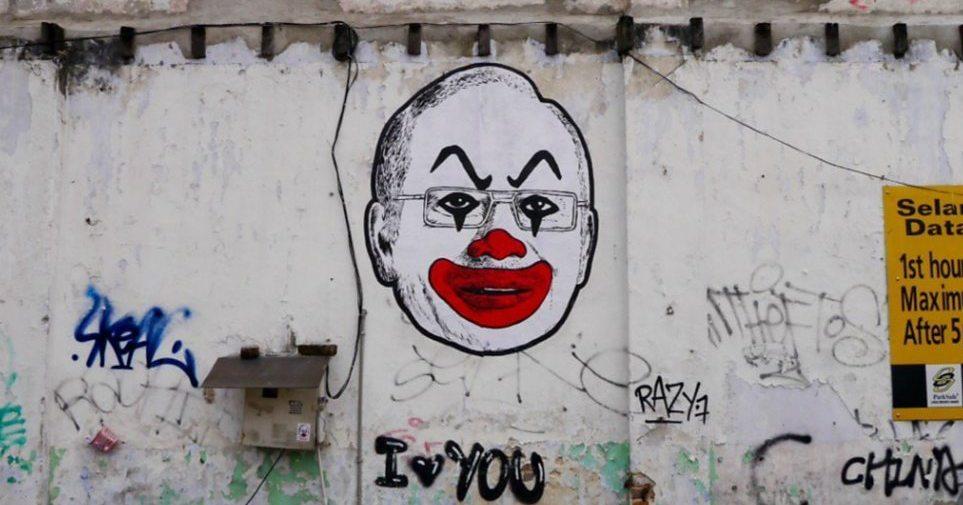
 Cover image via Fahmi Reza
"Dalam negara yang penuh dengan korupsi…. KitaSemuaPenghasut" (In a country filled with corruption, we are all instigators)
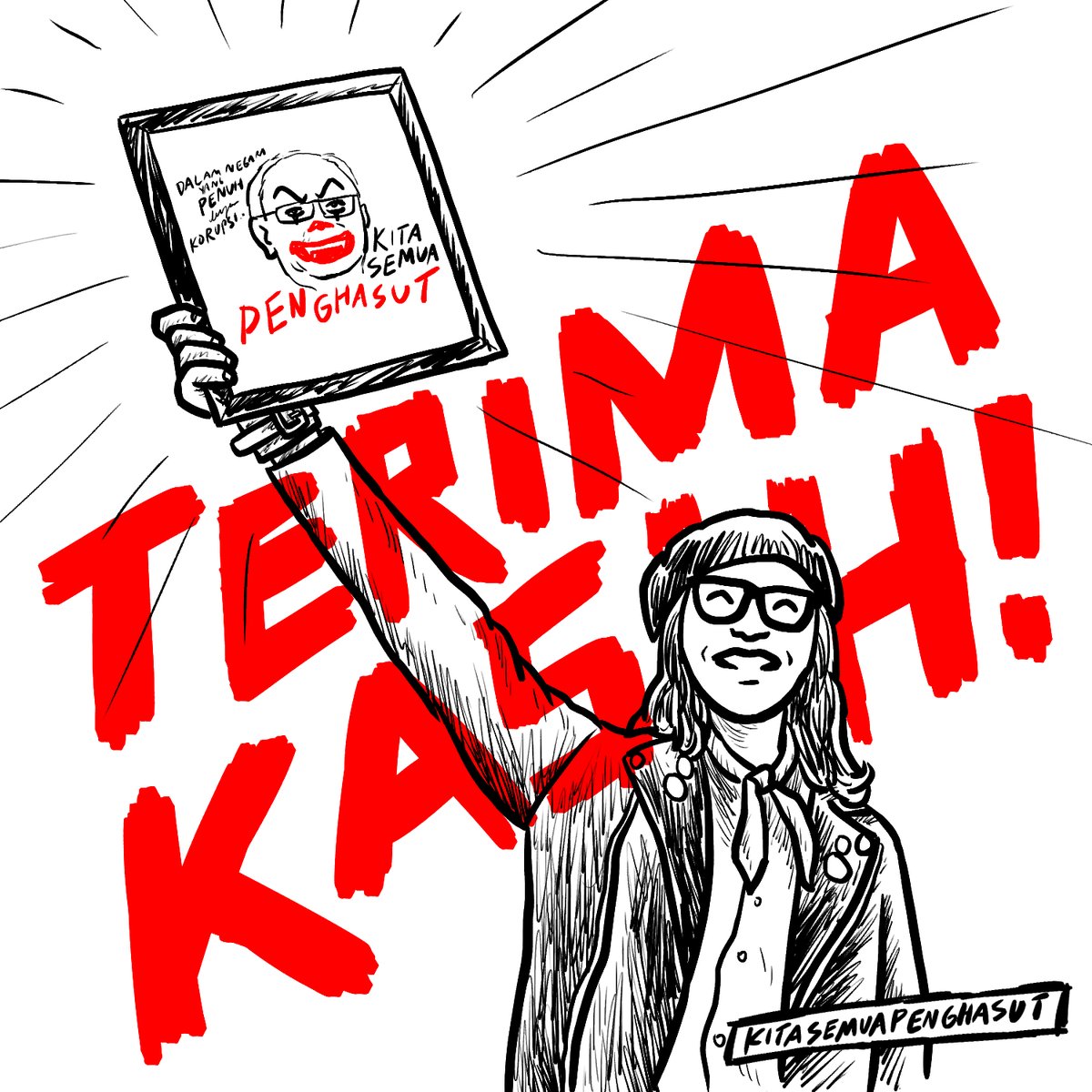
Image via Twitter/Fahmi Reza @kuasasiswa
From a country known for its mind blowing cuisine, lush tropical rainforests and beautiful beaches, the past year saw Malaysia becoming synonymous with political corruption scandals and massive clampdown on freedom of speech.
The eruption of these scandals lead to a widespread protest against government bodies and key political figures.
Eager to voice his thoughts as a fellow citizen, local activist, Fahmi Reza decided to use posters to raise awareness and fight corruption
The 39-year-old has been an active political activist for more than a decade. One of his most noted work comes in the form of a critically-acclaimed historical documentary he directed, ['10 Tahun Sebelum Merdeka'](https://www.youtube.com/watch?v=4Sn3C2QTeRs) (10 Years Before Merdeka).
The documentary details the events leading up to the 'Hartal Day' which is about the left-wing protest against the Federation of Malaya Constitutional Proposals by the British Colonial government and UMNO. The documentary won Fahmi the Most Outstanding Human Rights Film award at the 2007 Freedom Film Fest.
Just a few years later, Fahmi's key involvement in the 'Occupy Dataran' movement in 2011 gained him nationwide recognition. Inspired by the anti-austerity movement, 15-M in Spain, that demands radical change in Spanish politics, the first Occupy Dataran assembly was held on 15 October 2011 at Dataran Merdeka.
**"Just like 15-M, we wanted to explore the true meaning of democracy beyond the representative system, to redefine democratic participation beyond elections, and to increase and deepen public participation in political decision-making. To give power back to the people," said Fahmi, when speaking to SAYS in an email interview.**
So, what does someone like Fahmi think about free speech, corruption and politics in Malaysia?
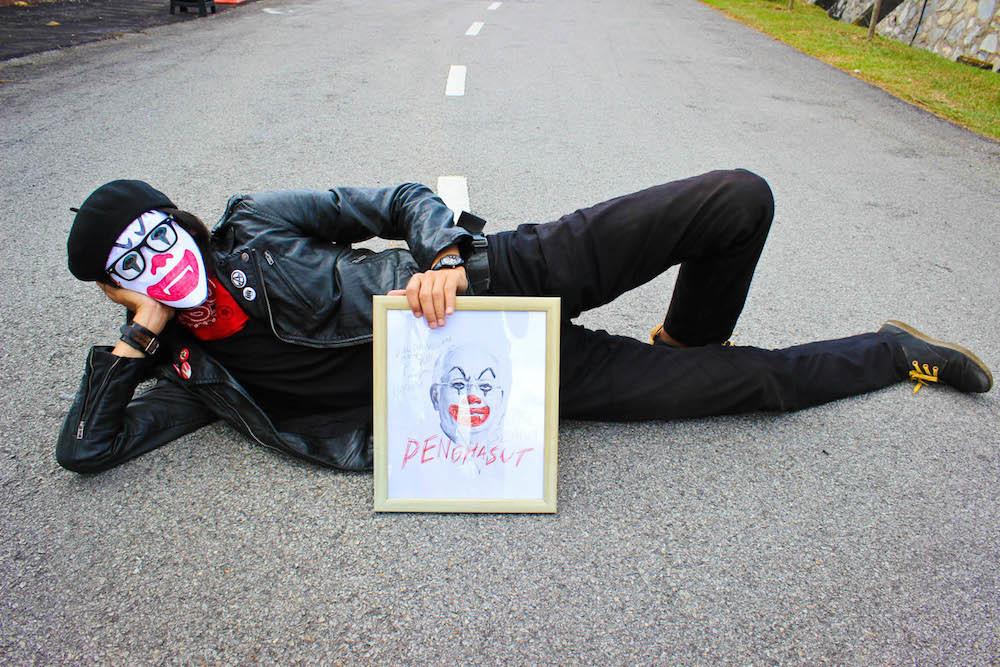
Image via Vice
While Fahmi is no stranger to getting in trouble with the local authorities for his political art, it was his Najib 'clown' poster that took the nation by storm
On 31 January, Fahmi posted up a sketch of Prime Minister Datuk Seri Najib Razak with the distinctive features of a clown drawn over it on his Twitter account with the hashtag #KitaSemuaPenghasut.
The sketch was accompanied by a status that read, "In 2015, the Sedition Act was used 91 times. Tapi dalam negara yang penuh korupsi, kita semua penghasut." (In a country filled with corruption, we are all seditious.)
Just three hours after the sketch was posted, Fahmi had received a warning from the police cyber unit, Police Cyber Investigation Response Center (PCIRC), saying that his account is currently under the surveillance of PDRM.
**"I think the clown poster gained widespread popularity because a lot of people shared my outrage and anger against Najib and his corrupt government, and have used the clown-faced image with the slogan "Kita Semua Penghasut" as a way to express their dissent," said Fahmi.**
When asked on why he chose graphics as a medium of expression, Fahmi spoke about how it pushes people to take action and serves as a tool for social changes.
Dismissing all questions about any fears he may have against authorities and being punished for his work, the local activist stressed that he is not afraid of being detained for voicing his thoughts.
**Fahmi has been arrested and charged multiple times, banned from entering the state of Sarawak and public universities, but is more determined than ever to defend and speak up against any injustice in the country.**
**The caricature became a local symbol of revolt against corruption and undemocratic practices.**
Politics and human rights issue became a significant part of Fahmi's life in his late teens. Interestingly enough, it was punk music that first sparked his interest in political and social issues.
"I got my first graphic design training when I was designing flyers and posters for punk gigs during my college years. I grew up listening to punk music since I was 15, and still identify myself as a 'punk'. I used to play in a hardcore punk band back in 2000-2002, but not anymore."
According to Fahmi, his work is very much influenced by punk music, graphics and aesthetics. He was also inspired by the 'First Things First Manifesto' published in 1964 by English graphic designer Ken Garland, as a reaction against the fast-paced productions of mainstream advertising that were dubbed "trivial" and "time-consuming".
He then started dabbling into creating graphic designs for various social causes.
"With the rise of social media, I began posting my own protest art and political graphics on issues that affect the country," said Fahmi.
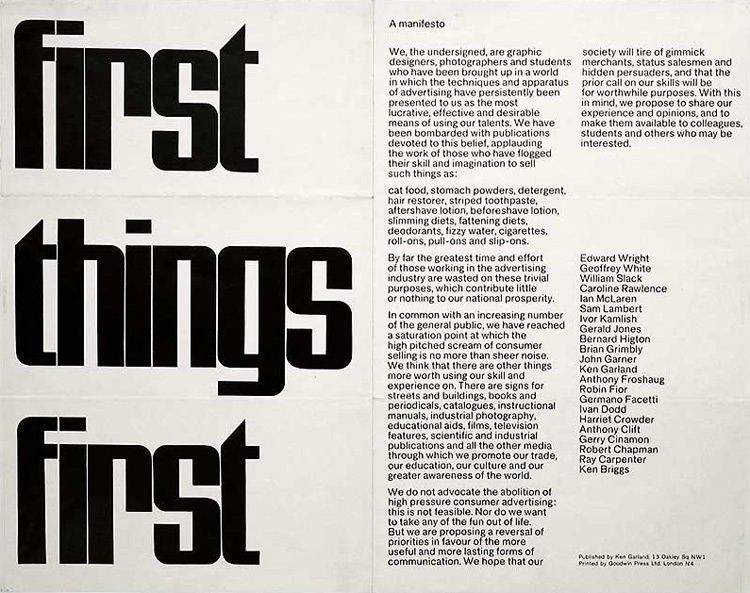
Image via Design Is History
The Selangor-born graphic designer has a way with words. His posters and art are almost always accompanied by thought-provoking one liners and phrases.
**With phrases like '#KitaSemuaPenghasut' and 'Political parody and satire is not a crime', Fahmi's political posters are truly intriguing.**
The most popular one would have to be '#KitaSemuaPenghasut' phrase which according to Fahmi refers to the colonial era law, Akta Hasutan (Sedition Act).
"Government critics have often been labeled as "penghasut". Last year alone there were 91 cases of people being investigated arrest and charged under that law. So I came up with the slogan "Dalam negara yang penuh dengan korupsi, kita semua penghasut" (In a country full of corruption, we are all seditious) as a response to this."
"The #AktaSakitHati is just a term that I came up with for Section 233 of the Communications and Multimedia Act that clearly says that you can be [charged for posting stuff online](http://says.com/my/news/this-woman-is-being-charged-by-the-mcmc-for-posting-this-status-about-najib) that can 'menyakitkan hati orang lain'," added Fahmi.
Under Section 233: Improper use of network facilities or network service, an individual can be charged for posting any material, comments online that may annoy, abuse, threaten or harass anyone.
As these messages seep into the minds of locals, the authorities continue to tighten their grip on free speech
A 19-year-old was recently sentenced to a year in jail for making "insulting comments" on social media against the crown prince of Johor Tunku Ismail Sultan Ibrahim.
When asked about the increased clampdown on freedom of expression in Malaysia, Fahmi opined that the ruling elite have always been intolerant towards all forms of protest, especially the creative ones.
With the emergence of Bersih that popularised rallies as a form of protest in Malaysia and social media, Fahmi thinks that Malaysians are no longer afraid to voice their opinions and dissatisfactions against the government.
These instances show how free speech and protests in Malaysia have been turned into acts of defiance that is shunned upon by the authorities.

Image via Twitter/Fahmi Reza @kuasasiswa
The stricter the laws, the more creative Malaysians get with their protest and that in turn shows how much Malaysians crave for a better, more democratic Malaysia
With that said, it was the most basic style of protest that came in the form of Bersih rallies that managed to grip the attention of the masses.
[Bersih 2.0](http://says.com/my/news/bersih-4-latest-updates-and-developments) (Coalition for Clean and Fair Elections) has held four rallies to date, and the last one in 2015 gathered about half a million supporters. The NGO have been fighting for a clean government, fair elections, the right to dissent, and most recently the [resignation of Prime Minister Najib Razak](http://says.com/my/news/reactions-and-questions-to-najib-s-rm2-6-billion-donations) over the ongoing [1MDB scandals](http://says.com/my/news/wsj-s-all-you-need-to-know-about-the-controversial-1mdb-scandal).
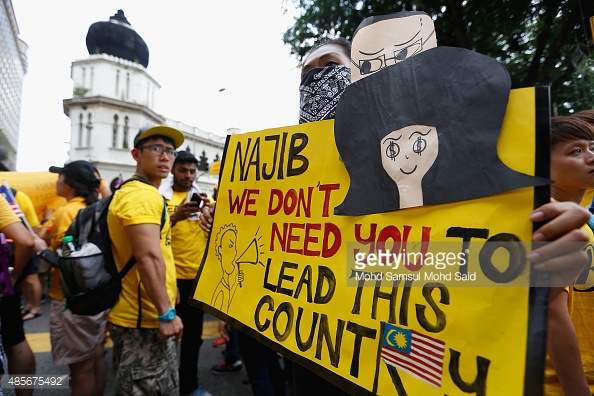
"Rallies have the potential to bring about immediate changes as we've seen in the Arab Spring but rallies are only one facet that is visible in a much wider campaign," explained Fahmi.
While the Bersih rallies have managed to create both local and international attention on the state of Malaysia's democracy, election and governance, it has not quite managed to materialise the changes it's fighting for.
Fahmi says that rallies create great awareness about issues that the people are concerned about and elevate it to a national level, making it something that the government can no longer ignore.
**"Ideally, the mass media will pick it up, awareness of the issue is raised and powerholders are forced to react or respond in our favour. Unfortunately, powerholders can choose to just ignore these rallies if it's not seen as a threat to their power, like we've seen in Malaysia," explained Fahmi.**
While stressing that consistency is key when it comes to protests, Fahmi also mentioned that diversifying protest methods and strategy is crucial as it ensures that the issue remains relevant and doesn't "fizzle out".

The first wave of protests started years ago, even before Datuk Seri Najib Razak was sworn in as the prime minister in 2009, but it only intensified during his leadership
An article published by TIME on 17 March 2016, titled ['These 5 Facts Explain the State of Global Corruption'](http://time.com/4262897/five-facts-globa-corruption/) shows how the 1MDB issue under PM Najib Razak's governance has made the country a laughing stock.
"Malaysia exemplifies how corruption drives can fall short in countries with a single political party and weak governing institutions," read an excerpt from the article.
It is [a scandal so big and messy](http://says.com/my/news/abc-four-corners-state-of-fear-documentary) to the point that the [international medias](http://says.com/my/news/all-you-need-to-know-about-reporter-linton-basser-s-arrest-in-malaysia) and [justice departments](http://says.com/my/news/now-fbi-opens-money-laundering-investigation-on-1mdb-here-are-the-facts-so-far) are eagerly pursuing the issue while PM Najib and his government have [denied any wrongdoing](http://says.com/my/news/rm2-6-billion-of-1mdb-fund-pumped-into-pm-najib-s-personal-accounts#segment-151573).
Despite everything that has been going on, the government assures that Malaysians have nothing to worry about
Najib has repeatedly ensured that he [prioritises](http://says.com/my/news/what-has-pm-najib-razak-been-saying-about-malaysia-to-the-americans) the people and that Malaysians should be grateful for it.
While right-wing politicians continue to chant that Malaysia is well on its way to achieving the glorious Vision 2020, Fahmi says that things are nowhere close to being fine.
**"When it comes to politicians, my general rule is: Do not trust politicians, no matter what party they belong to, no matter how great they may seem.** It's all just a show. I think it's very important for us Malaysians to start imagining a better democracy, to start thinking of a better alternative to our failed representative system," he added.
So, if all is well in Malaysia, why do people continue to worry about the nation's future?
Malaysians critisicing local politicians, the ruling government and constantly talking about leaving the country in their efforts to seek greener pastures, has become a common sight on social media channels.
The situation is made worse with politicians constantly feeding our minds with their party's agendas and [brickbats](http://says.com/my/news/what-are-government-leaders-saying-about-bersih-4-and-its-supporters), leaving one to wonder if these actions actually solve the problems that the masses face.
**Stressing that he can't speak for the masses, Fahmi says that he believes and wants a country and government that allows its people to have the decision-making power in creating policies and laws that affects them.**
Fahmi is tired of the 'two-party' system, that is mainly influenced by "aggressive politicking", "childish bickering" and "media generated controversies" and instead wishes for a truly democratic nation.
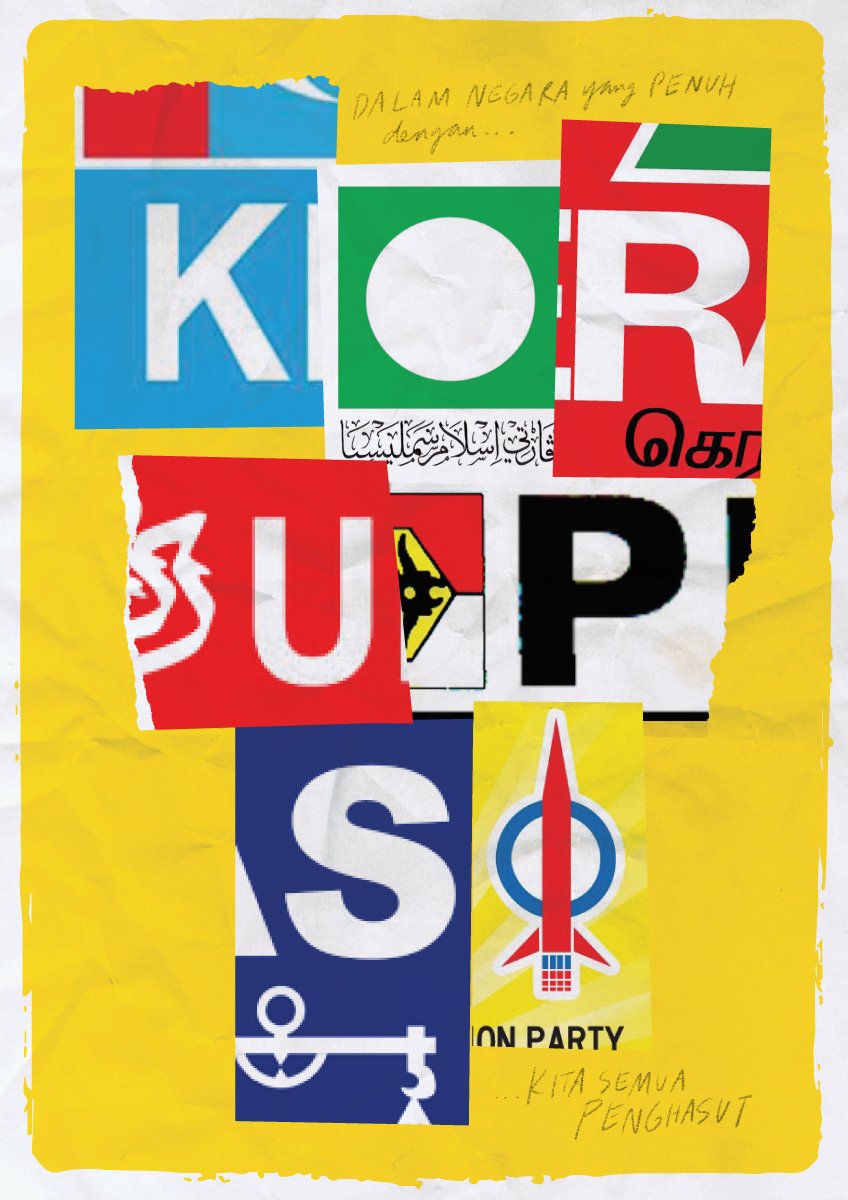
Image via Twitter/Fahmi Reza @kuasasiswa