


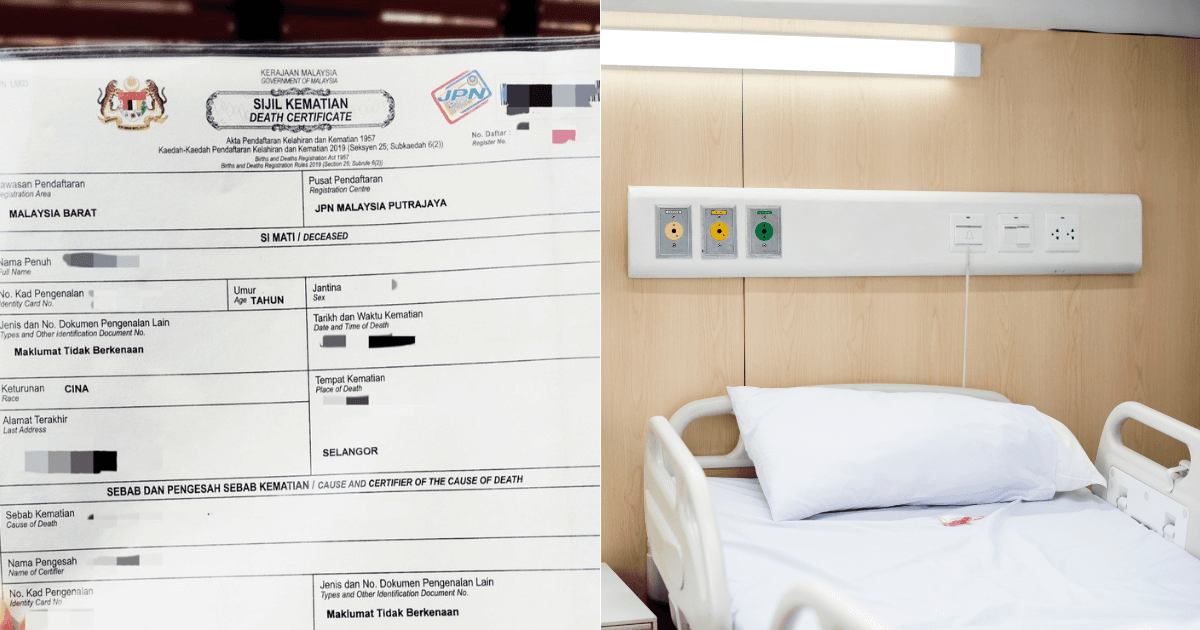
 Cover image via
Follow us on Instagram, TikTok, and WhatsApp for the latest stories and breaking news.
First things first, the death must be medically confirmed or certified
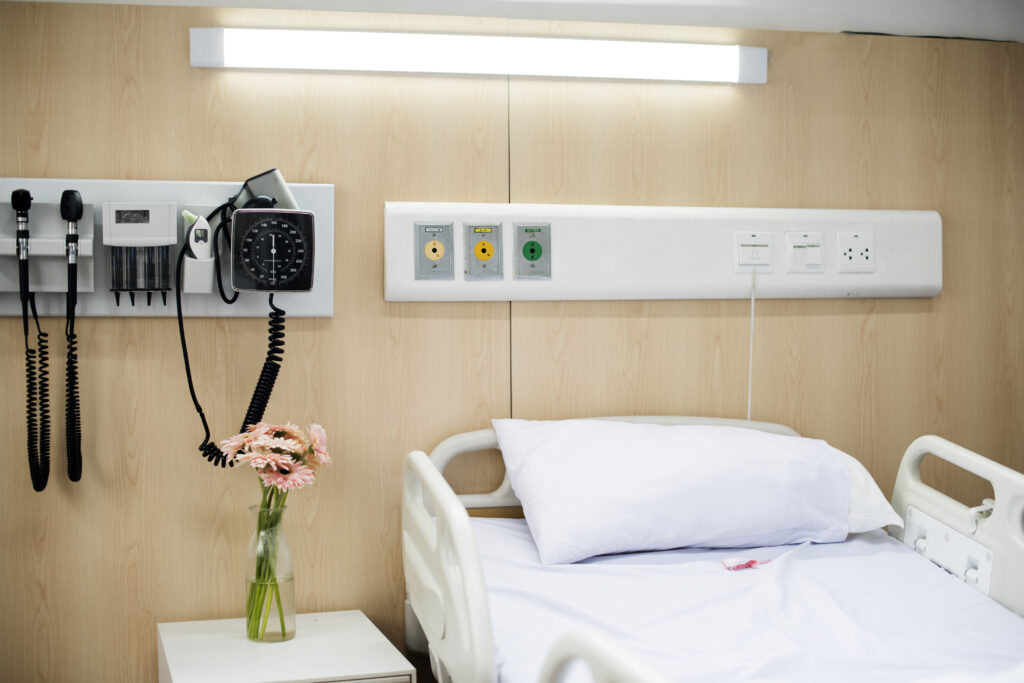
In Peninsular Malaysia, if the death happens in a hospital or medical facility, a doctor will issue a Medical Certificate of Cause of Death and the JPN.LM02 form (more commonly known as the burial permit or death registration form). Then, hospital staff usually guide family members on the next steps.
For home deaths, a registered medical practitioner must be contacted. Sudden, suspicious, or accidental deaths require contacting the police, who will issue the relevant documents including the JPN.LM02 form after investigations or a post-mortem.
For Sabah and Sarawak, deaths must be registered within 24 hours at state JPN offices using local forms. Sabah uses Form B/N2 while Sarawak uses Form III/XI.
Home deaths will require a police report and hospital deaths require a medical certificate. But in Sarawak, a certificate from the local community chief is also needed.
Then, you should continue by registering the death at any JPN office, selected hospitals, district offices, or police stations authorised to handle death registrations

Ideally, the death should be registered within seven days. Bring along the blue copy of the JPN.LM02 form, the medical or police certificate, and identification documents which include both the deceased's MyKad and applicant's MyKad.
In Sabah and Sarawak, you should register deaths at the respective state JPN offices within 24 hours using the local forms. Required documents include hospital medical certificates for hospital deaths, police reports for home deaths, and community leader certificates for Sarawak.
Procedures are specific to each state, so families should consult JPN Sabah and JPN Sarawak for official guidance.
After the registration is done, JPN will issue the Death Certificate (Sijil Kematian). This is usually done on the same day for straightforward cases.
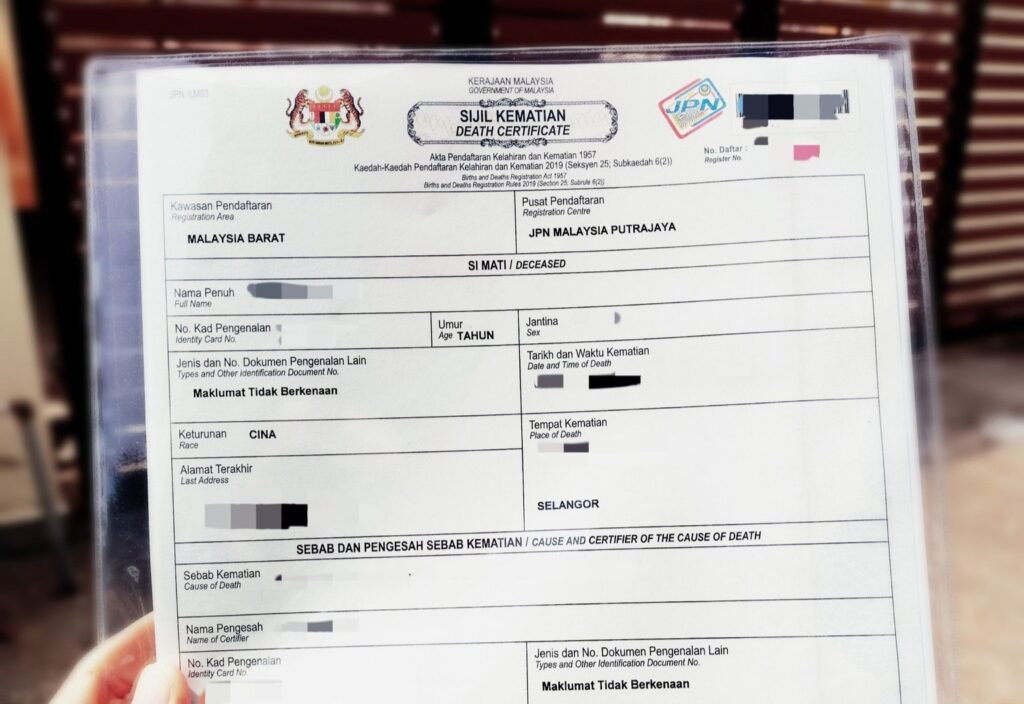
Make sure you request multiple certified copies, as they are needed for insurance claims, EPF (KWSP) and SOCSO applications, bank account closures, property transfers, and estate matters.
For deaths overseas, register first with the nearest Malaysian embassy or consulate, then with JPN or state offices upon return using the consular documents.
Once the death certificate is obtained, you should begin notifying relevant institutions and handle the respective administrative matters

Important institutions and agencies include:
- Banks and financial institutions: Close or transfer accounts, update account holders, and settle outstanding debts.
- Insurance companies: File claims for life insurance or medical policies, and provide copies of the death certificate.
- Employers: Notify of the employee's passing to arrange any final benefits or payments.
- Government agencies: Apply for survivor benefits, pensions, or social assistance through EPF, SOCSO, and other relevant departments.
- Utilities and subscriptions: Cancel or transfer services, memberships, and subscriptions linked to the deceased.
- Property and legal affairs: Begin managing estate matters, property transfers, and inheritance proceedings.
Handling these tasks early helps prevent delays or complications and ensures that the deceased's affairs are properly settled.
