


 Cover image via
Follow us on Instagram, TikTok, and WhatsApp for the latest stories and breaking news.
If you just got handed a traffic summons from a police, and the slip says you need to go to court… don't freak out.
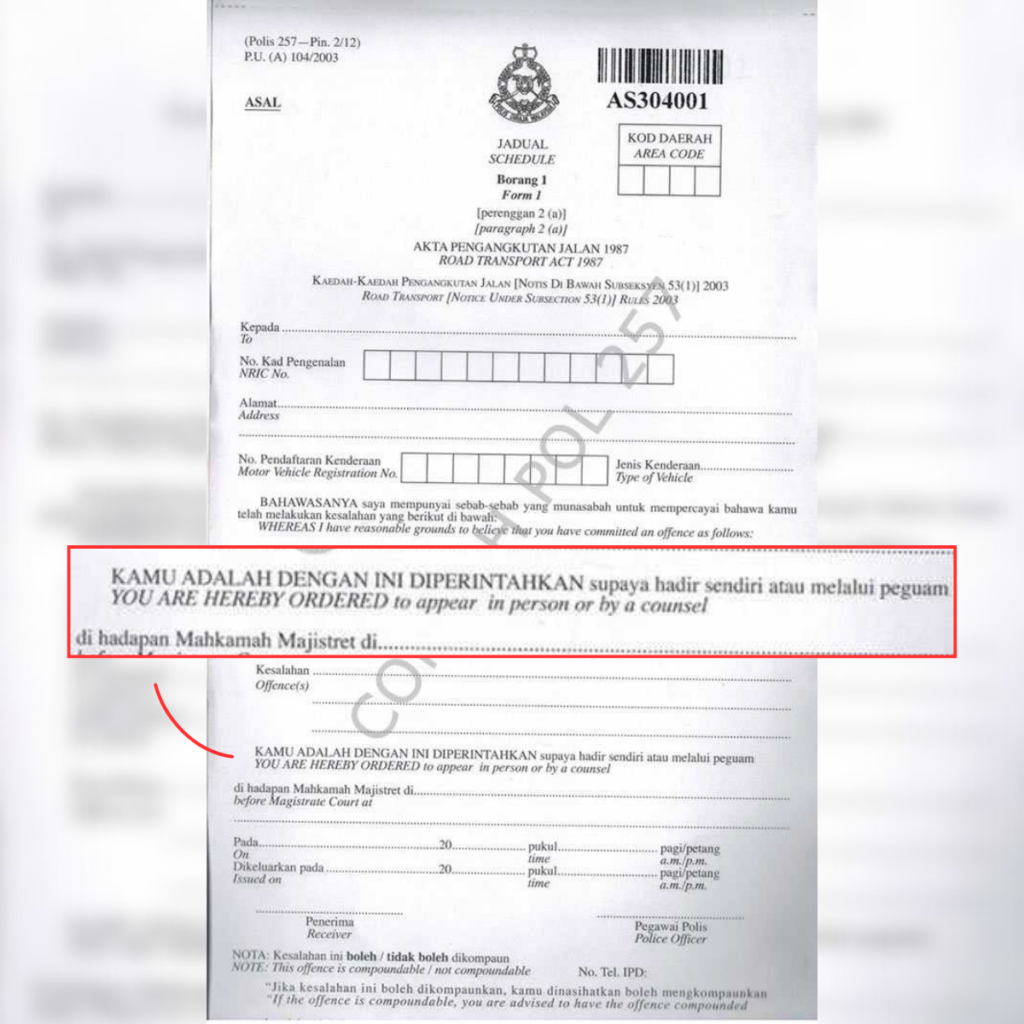
If this is what your traffic summons looks like, then yes, you are pretty much required to go to court.
Here's the sort-of-good news. While inconvenient, the court process — known as a hearing — is not that complicated or scary.
Usually, these offences require you to show up in court (on top of paying a fine), as they are regarded as more serious violations:
- Using a mobile phone while driving
- Driving in the emergency lane (without valid reason)
- Overtaking on double lines or cutting queue
- Driving without a valid licence
- Drunk or dangerous driving
These are often flagged as first-category offences by the Royal Malaysia Police (PDRM) or major traffic violations by the Road Transport Department (JPJ). No compounding allowed, straight to court.
Here's what to expect when you appear in court for your hearing

On the day itself, you'll need to head to the specified magistrate's court. Wear decent clothes (no shorts, slippers, or sleeveless tops), and bring your IC, your summons, and a debit or credit card to pay any fines.
- Arrive early. The queue can be long, and court starts slow. Best to be there by 8am even if your letter says 9am.
- Register. You'll give your details to the officer at the counter, who'll assign you a courtroom.
- Wait. You'll need to wait outside the courtroom for your name to be called, and then wait inside the courtoom until you're called to face the magistrate.
- Hear your charge. A court officer will read your offence aloud, and you'll be asked how you plead: guilty or not guilty.
If you plead guilty, the magistrate may ask if you'd like to explain yourself or request a lighter fine. This is your moment to rayu (appeal) for a discount on your fine — it might feel awkward, but courts can be gracious, especially towards first-time offenders.
If you plead not guilty, the process becomes more complex and may involve a separate trial date. So unless you have a strong defence or were wrongly charged, it's usually better to plead guilty.
Do note, however, that but the court may also impose jail time, especially for repeat or severe offences.
Once your case is settled, you'll be given a slip to take to the payment counter
Payment methods vary, but most courts now accept debit and credit cards, and there are sometimes ATMs nearby for cash.
Keep all your receipts in case you need to show proof that the case is resolved, especially when renewing road tax or checking for blacklisting on JPJ systems.
Remember: Failing to show up in court when required can lead to a warrant being issued under your name. That means the next time you get stopped at a roadblock or renew your licence, the police could arrest you on the spot.
For more #informative stories:
- Here's How To Check And Pay Traffic Summonses Online
- PDRM Considers Mandatory Court Appearances Instead Of Summons For Red Light Violators
- You Can't Hide — Drone Squad Issues 47 Traffic Compounds On Federal Highway
- New Speed Traps On These 2 Highways Will Track Drivers From Point To Point Beginning June
