


 Cover image via
Follow us on Instagram, TikTok, and WhatsApp for the latest stories and breaking news.
Picture this. You've paid the downpayment for your dream home and waited three long years, counting down the months until you can finally move in.
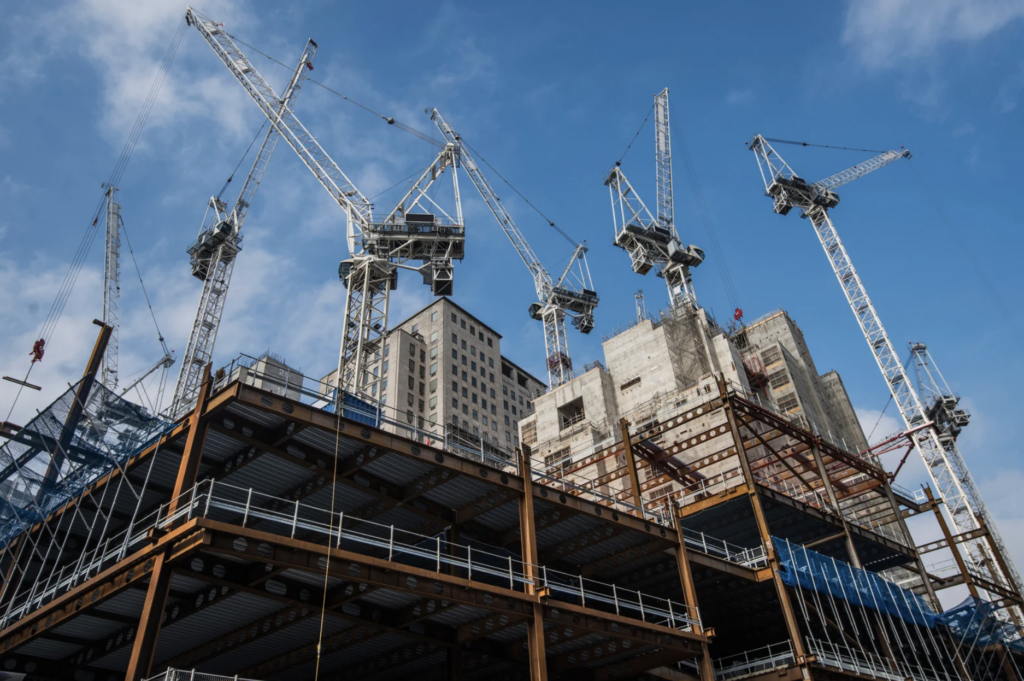
But when you drive past the construction site, your heart sinks.
The project looks nowhere near complete. The completion date is almost here, but the walls are half done, cranes sit idle, and it's clear the keys won't be handed over anytime soon.
So, what happens now? And more importantly, what can you actually do about it?
While property handovers don't always go as planned, there are legal safeguards in Malaysia that protect homebuyers

First, the Sale and Purchase Agreement (SPA) sets the deadline, which developers must stick to.
When buying from a developer, you sign an SPA regulated under the Housing Development (Control and Licensing) Act 1966. Usually, developers have:
- 36 months to complete and deliver vacant possession (for landed homes)
- 48 months for stratified properties like condominiums
If they fail to hand over within this timeframe, they're officially in breach of the SPA.
In such cases, you are entitled to compensation called Liquidated Ascertained Damages (LAD)
This compensation is a penalty the developer pays for late delivery. It works out to 10% per year of the purchase price, calculated daily.
So, if your RM500,000 condo is six months late, you could claim up to RM24,658.
| Purchase price | — | RM500,000 |
| 10% per annum | RM500,000 × 10% | RM50,000 per year |
| Daily rate | RM50,000 ÷ 365 | RM136.99 per day |
| For 180 days late | RM136.99 × 180 | RM24,658 |
Here's how to claim LAD from your developer:
Send a detailed letter or email to the developer stating the breach (delay), your supporting evidence, and the exact LAD amount you're claiming. Give them a clear payment deadline. Always use a trackable method, like registered mail or email with read receipt, to confirm delivery. For best results, get a lawyer to draft or review your notice.
If the developer hesitates or refuses to pay LAD, you can take your claim to the Homebuyer's Tribunal under the Housing and Local Government Ministry (KPKT).
It's designed to be faster and more affordable than court, but it only covers claims up to RM50,000. For claims above that, you would have to bring the developer to civil court.
Do note that developers are allowed to request for extensions, but these usually fall within strict rules

Developers may apply for an Extension of Time (EOT) to delay deadlines legally, usually approved by KPKT.
But there's a catch: The Federal Court ruled that EOTs must be officially signed by the minister, not lower officials. If this process isn't properly followed, the EOT is invalid, and you can claim LAD as if no extension was granted. So, always check if your developer's EOT is valid.
There are also special circumstances. For instance, during the COVID-19 pandemic, the government passed special laws giving developers automatic delays without facing LAD penalties, initially up to 31 August 2021, then extended to 31 December 2021. While this frustrated homebuyers, the law treated the lockdowns as unavoidable. Once the exemption expired, LAD obligations resumed as normal.
But what if the developer goes bankrupt or absconds? Here's what you can do:
1. Confirm the project status with KPKT
Check if it has been officially declared abandoned. This status is key because it allows the government to step in.
2. Understand the Housing Development Account (HDA)
Licenced developers must keep buyers' payments in a special account that can only be used for that project's construction. If funds were misused, recovery may be difficult.
3. Lodge a report and file a claim
File a police report if there's suspected fraud or criminal breach of trust. You can also file a claim with the Homebuyer's Tribunal, but compensation is capped at RM50,000.
4. Look out for government rescue schemes
KPKT sometimes appoints another developer to complete abandoned projects. This process can take years, but has revived many stalled developments.
5. Consider legal action in court
For larger sums, you may need to file a civil suit. However, if the company is insolvent, payouts may be minimal or delayed.
As of 30 June 2025, there were 233 delayed developments and 360 sick projects (delayed by more than 30%) nationwide
KPKT has successfully revived 89 private housing projects with a total gross development value (GDV) of RM6.48 billion in the first two months of 2025. A further 13 projects under the Budget 2023 initiative are set to be successfully completed later this year.
Authorities also plan to tighten the Housing Development Act next year to crack down harder on fraud, abandoned projects, and late developers, including blacklisting offenders and holding company directors personally responsible. These changes will cover more commercial projects too.
