


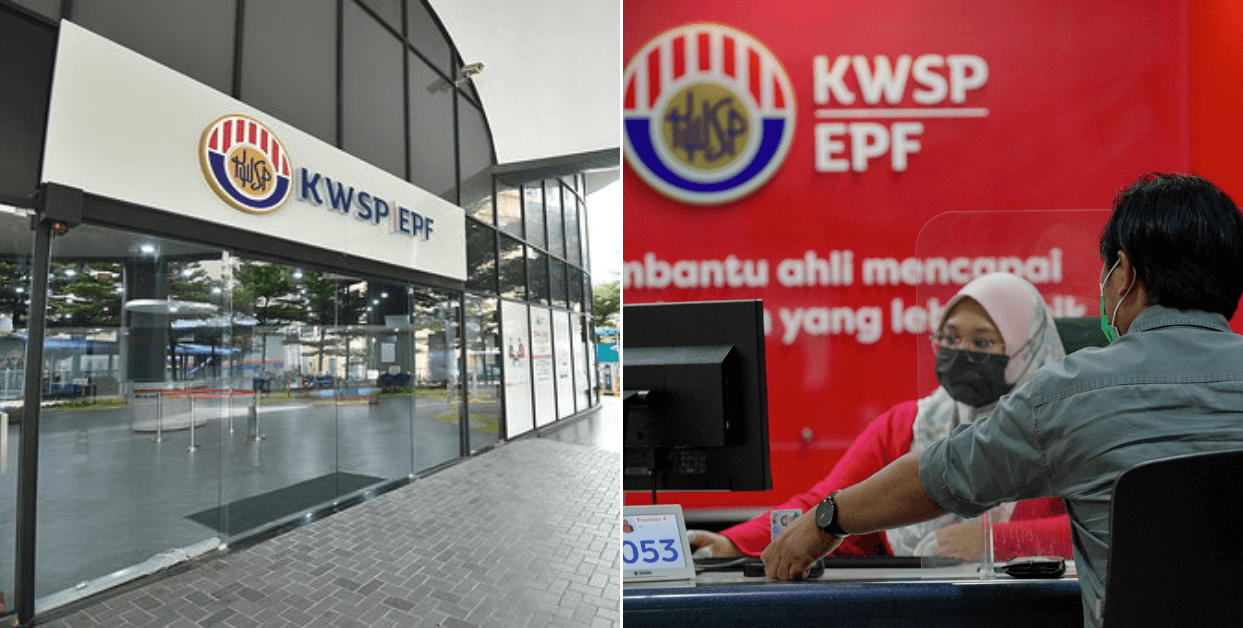
 Cover image via
The Employees Provident Fund (EPF), or Kumpulan Wang Simpanan Pekerja (KWSP), is a cornerstone of retirement planning for millions of Malaysians
Whether you're just starting your career or planning your retirement, understanding how EPF works is essential. This 2025 guide breaks down everything you need to know, from contributions and withdrawals to dividends and recent changes.

Image via New Straits Times
What is EPF?
The EPF is a government-managed retirement savings scheme designed to help private-sector employees save consistently throughout their working lives. It functions like a forced savings plan, where both the employer and employee contribute a percentage of the employee's monthly salary. These savings grow over time through annual dividends declared by the EPF.
EPF funds are invested by the government in various sectors such as real estate, bonds, and equities to generate returns. Members can withdraw these savings upon retirement, or under certain conditions such as housing, education, or health emergencies.
Who needs to contribute?
In Malaysia, EPF contributions are mandatory for:
-
Private sector employees
-
Non-pensionable public sector employees
-
Domestic workers (if both employer and worker agree to contribute)
Foreign workers and expatriates may opt out unless specified by their employment terms. Self-employed individuals and freelancers can also contribute voluntarily.

Current contribution rates (2025)
As of 2025, the EPF contribution rates are as follows:
- Malaysian Employees under age 60:
- Employer: 13% (if monthly wage ≤ RM5,000), or 12% (if > RM5,000)
- Employee: 11%
- Malaysian Employees aged 60 and above:
- Employer: 4%
- Employee: 0% (optional contribution)
Malaysian employees can opt to increase their personal contribution beyond 11% if they wish.
- Foreign Employees (effective Q4 2025):
- Employer: 2%
- Employee: 2%
How do dividends work?
EPF grows your savings through annual dividends, which are announced each year — usually in the first quarter. These dividends are generated through investment returns.
The dividend rate varies year to year, depending on market performance and the EPF's portfolio. For example, in 2023, EPF declared a 5.25% dividend for conventional accounts and 4.75% for Shariah-compliant accounts.
For the 2024 financial year, announced in March 2025, the EPF declared a dividend of 6.30% for both conventional and Shariah-compliant accounts.
Dividends are compounded — meaning you earn dividends not just on your contributions, but also on the previous year's earnings.
Here are a few key updates for 2025:
Dividend announcement: Expected in March 2025 for the 2024 financial year. (Announced: 6.30% for both conventional and Shariah accounts).
Voluntary contribution ceiling: Increased to RM100,000 annually for self-contributors.
Mobile app upgrade: The KWSP i-Akaun app has been significantly upgraded and offers a range of new features to enhance user experience.
This new app (replacing the older version) includes:
- Instant registration and i-Akaun activation
- Options for making voluntary contributions
- Simplified nomination management and updates
- Easy viewing and downloading of account statements
- A retirement planning calculator
- The i-Sayang feature for transferring savings to eligible family members
- The ability to cancel withdrawal requests (if the status is "Submitted")
- Access to information on healthcare and life insurance/takaful products
- The ability to check withdrawal eligibility and apply for certain withdrawals
- Important news and tips directly from EPF

Image via Google Play
Mandatory contributions for foreign workers: As per the Employees Provident Fund (Amendment) Bill 2025, mandatory EPF contributions for foreign workers will commence in Q4 2025, with both employers and employees contributing at a rate of 2%.
No changes have been announced to contribution rates or withdrawal policies for Malaysian employees as of April 2025.
While the EPF is primarily for retirement, members can withdraw savings for:
-
Age 50, 55, and 60 withdrawals (partial or full)
-
Housing: Down payments, monthly installments, or housing loan settlements
-
Education: Tertiary education expenses for self or children
-
Health: Medical expenses for critical illnesses or approved treatments
-
Leaving the country: For Malaysians renouncing citizenship or foreigners permanently leaving Malaysia
-
Death and incapacitation
Each type of withdrawal has specific conditions and documentation requirements.
Managing your EPF account has never been easier. Here's how you can access your account:
-
Register for i-Akaun: Available on the EPF website or via self-service kiosks.
-
Log in using your IC number and password: New users will need to activate their accounts via SMS or in person.
Through i-Akaun, you can:
-
Check your balance and transaction history
-
Update personal details
-
Download EPF statements
-
Apply for eligible withdrawals

What are the most common misconceptions surrounding EPF?
-
"I can't change my nomination." You can update your EPF nominee anytime via i-Akaun or by visiting a branch.
-
"EPF is only useful at retirement." Partial withdrawals are possible for key life needs.
-
"Dividends are fixed." They fluctuate based on investment returns.
-
"I don't need to check my EPF regularly." Mistakes or outdated info (e.g., incorrect beneficiary) can cause problems later.
Frequently Asked Questions (FAQs)
Q: Can I contribute more than the mandatory 11%?
Yes, you can voluntarily increase your contribution or make additional deposits.
Q: What happens to my EPF if I pass away?
It will go to your nominated beneficiary. If none is listed, it will go through estate administration.
Q: Can I switch to a Shariah-compliant account?
Yes, but only during specific switching windows. Check i-Akaun or EPF's website.
Q: Is EPF protected?
Yes, it's backed by the Malaysian government, making it one of the safest savings instruments.

