


 Cover image via
If you've ever ended up with a burnt pan, you'll understand the struggle of cleaning it
We've all been there — after a good cooking session, you're left staring at a greasy, blackened pan that looks like it's been through something. Whether it was fried chicken, or stir-fry gone rogue, now you've got burnt bits stuck like cement.
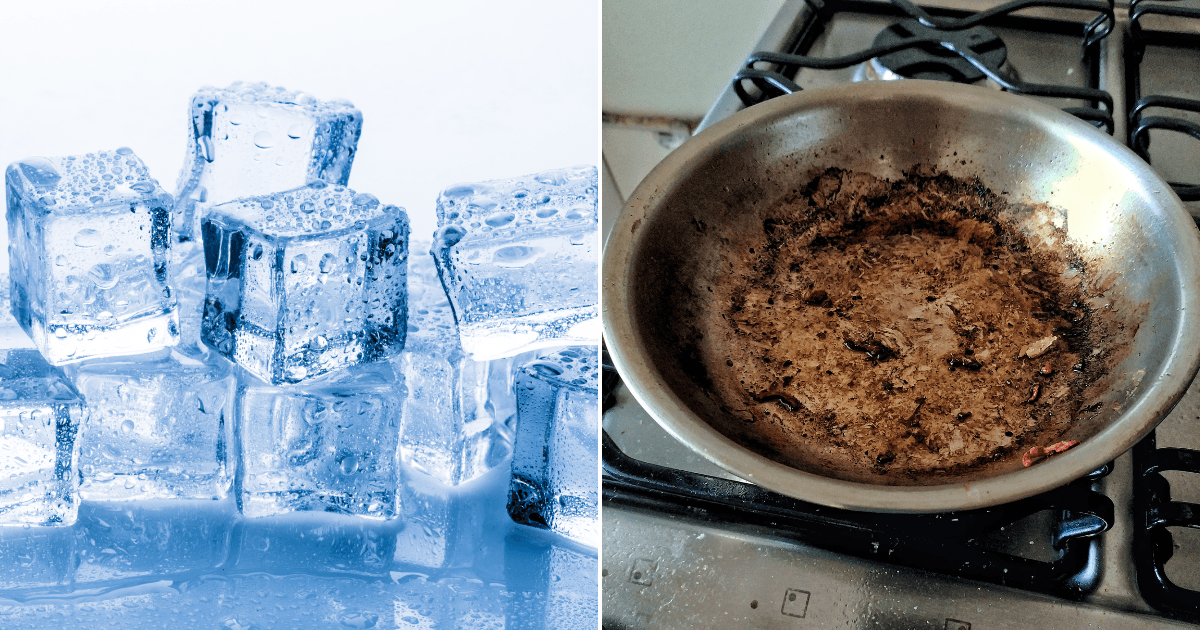
You could soak it. You could scrub till your arms go numb. Or, you could try this hack, where you throw ice cubes into your still hot pan, and let it do its magic.

Image via aydinynr (Canva Teams)
It works because of something called thermal shock
Here's the science: When cold ice hits a hot pan, the sudden temperature change causes a mini thermal shock. That shock makes the burnt-on grease and gunk contract and break away from the surface. Meanwhile, the ice melts, steam forms, and that steam helps loosen grime from the pan's nooks and crannies.
It's similar to what chefs do in pro kitchens when they deglaze a pan — usually with water or broth.

Image via Chef Samantha George
It doesn't work on every type of pan, though
Before you start experimenting with ice cubes on every pan in your kitchen, it's important to know which ones can handle the thermal shock. This method works best on stainless steel and uncoated aluminium pans. Cast iron can be used with caution, but rapid temperature changes might cause it to crack or warp over time.
Avoid using this hack on non-stick pans as the sudden cold can damage the surface and shorten its lifespan. Glass cookware is also a no-go, since it can crack under pressure.
So, if you're trying to rescue a burnt stainless steel pan, you're in the clear. But if it's your pricey non-stick pan? Probably best to stick with gentler methods.

Image via PhonlamaiPhoto (Canva Teams)
How to clean your pan with ice cubes — step by step
STEP 1: Leave a bit of oil or residue in the pan to help the steam form
STEP 2: Heat the pan slightly if it's cooled down — it should be hot
STEP 3: Drop in one to two ice cubes carefully, expect some sizzling and steam
STEP 4: Use a wooden or silicone spatula to gently scrape away the residue
STEP 5: Pour out the water and wipe the pan with a paper towel
STEP 6: Wash as usual with mild soap and a soft sponge
If this method still doesn't work, there are a few other tried-and-tested alternatives
- Pour hot water into the warm pan and scrape
- Make a baking soda paste and scrub
- Soak with vinegar to loosen burnt bits
These might take longer, but they're safer for delicate cooking utensils, like non-stick pans.

Image via Africa Images (Canva Teams)


