


 Cover image via Taylor's University
Follow us on Instagram, TikTok, and WhatsApp for the latest stories and breaking news.
The digital economy is moving faster than ever, and IT experts need to do more than just fix bugs or write code quietly behind their screens
Taylor's University recognises that fresh IT graduates require a broader, future-proof skill set to succeed in the field, and has designed its Bachelor of Information Technology (BIT) (Honours) programme to meet the industry's demands.
This is especially important considering that Malaysia's Information and Communications Technology (ICT) sector now makes up 23% of the national Gross Domestic Product (GDP) and supports more than 1.2 million ICT-related jobs
Speaking on the evolution of the field, Dr Abdul Hadi bin Mohamad, programme director of the BIT (Honours) at the School of Computer Science, Faculty of Innovation and Technology, Taylor's University, shared that IT professionals today play a more strategic role, helping organisations grow, innovate, and stay competitive in the digital world."
This means that pure coding knowledge is not enough, as employers want professionals with strategic thinking, the ability to solve complex problems, and a knack for building professional relationships with others.

Dr Abdul Hadi bin Mohamad, programme director for the Bachelor of Information Technology (BIT) (Honours) programme.
Image via Taylor's UniversityThat is why the BIT (Honours) programme students are equipped with both technical and soft skills from the get-go
From cloud systems to data analytics and automation, the curriculum dives deep into the real-world technologies driving digital transformation in today's systems and industries.
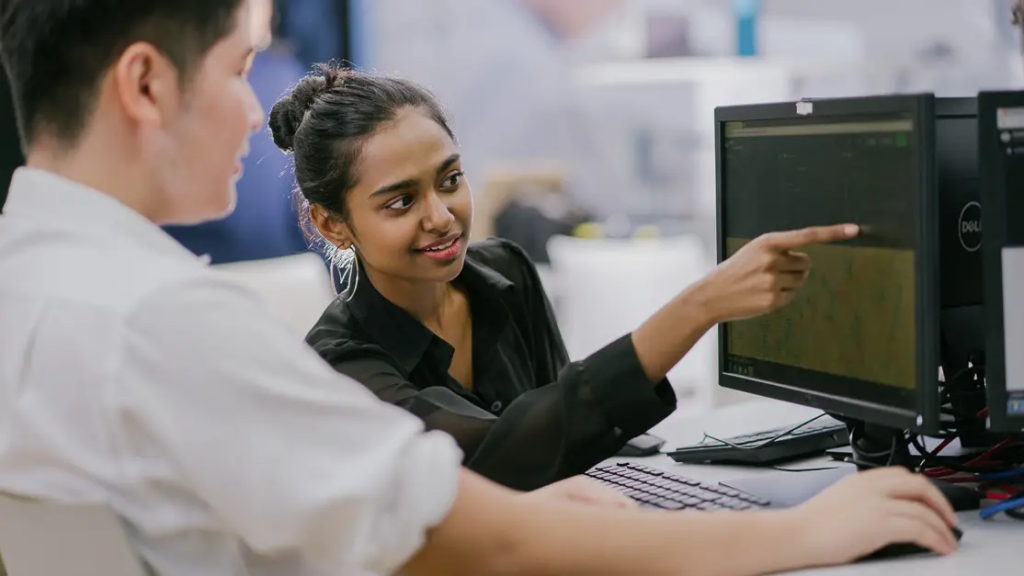
"Skills in artificial intelligence (AI), cloud computing, data analytics, and cybersecurity are now in high demand, but soft skills such as communication, critical thinking, and teamwork have also become equally important as technical competencies," Dr Hadi said.
From the outset, students gain real-world exposure through capstone projects, startup accelerators, and hackathons where they build tech-driven solutions in areas such as Smart Cities, FinTech, and HealthTech for real industry problems and engage with clients from reputable companies
Examples include hackathons, startup accelerators, and capstone projects, where they get to solve real industry problems and meet clients and decision-makers from reputable companies.
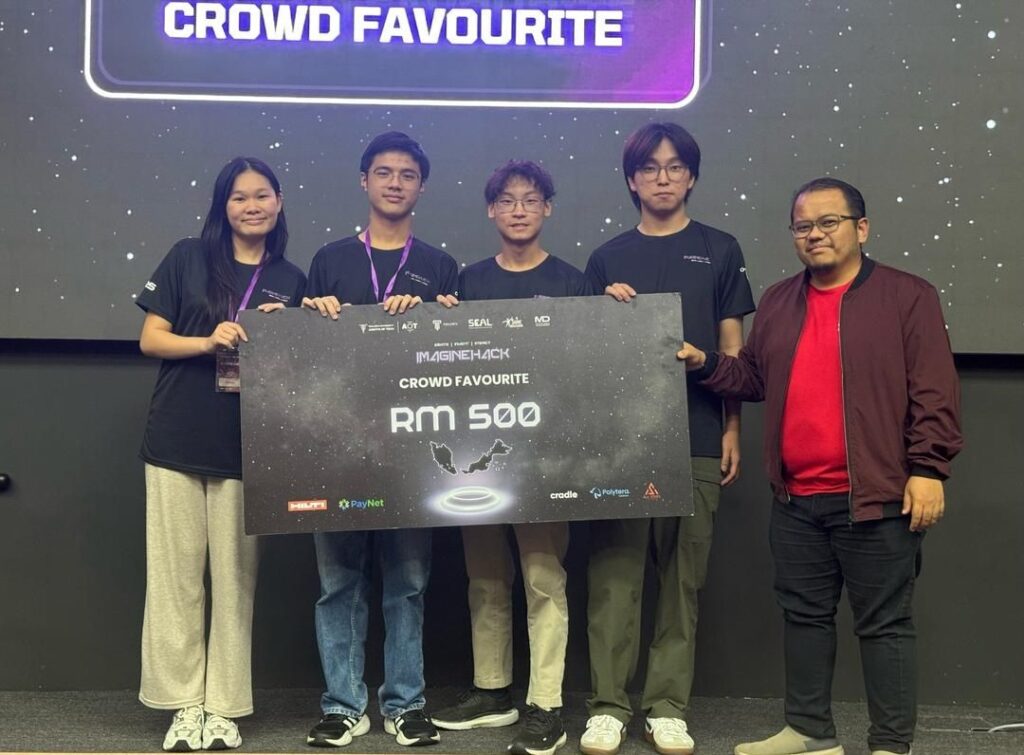
In 2025, students from the School of Computer Science won the "Crowd Favourite" award at ImagineHack for developing tech-driven solutions to real-world challenges supported by industry partners.
Image via Taylor's UniversityThrough collaborations with leading companies across various sectors, students gain valuable exposure via industry talks, work-based learning (WBL) placements, and opportunities to build startups through the university's BizPod accelerator.
Then there's also the opportunity to learn from other disciplines during the course
Through Taylor's Multidisciplinary Learning Experience (MLE), the students collaborate with peers from different fields such as business, design, and communications to develop practical solutions, which mirrors the cross-functional teamwork typically encountered when working at an actual firm.
"Instead of working in silos, they co-create apps, digital tools, or physical prototypes as real-world solutions. With industry mentorship and validation, students translate their theoretical knowledge into meaningful innovations," Dr Hadi explained.
There are also specialisations and global mobility options
Students can choose from four high-demand specialisations such as Digital Transformation, Internet Technologies, Business Intelligence & Analytics, and Game Design.
From their chosen specialisation, they can further pursue an extension in AI, Mobile Computing, Data Science, or Cybersecurity.
And if going overseas is the objective, the university also has articulation pathways with global partner universities, including in the United Kingdom and Australia, which allow students to complete part of their degree abroad.
Finally, there is the Technopreneurship track via BizPod that helps students launch their own startups before even graduating.
For those wanting to go the career distance, the Digital Transformation specialisation is the ideal choice
Students who choose the Digital Transformation pathway will gain more than just technical depth—they will be primed to do more than build systems and solve problems.
They are mentored in leadership, strategy, and business innovation in preparing them for roles such as Chief Technology Officer, Vice-President of Engineering, or Digital Transformation Analysts.
"Ultimately, timeless, human-centred skills such as critical thinking, adaptability, empathy, ethical reasoning, and digital awareness will continue to define career success in any future workplace," Dr Hadi elaborated.
Ready to lead digital change? You can take the first step with the BIT (Hons) programme at Taylor's University
Become more than just a coder, take the first step with the Bachelor of Information Technology (Honours) programme at Taylor's University.
Make your way to Taylor's Open Days on 9–10 August and 16–17 August, or click here for more details.
Read more #lifestyle stories on SAYS:
- This Japanese-Inspired Cheras Villa Has A Private Pool, Pickleball Court & Karaoke Set
- Here's How To Check If Your MyKad Works Before RM100 SARA Aid Rollout
- Pokémon's First Permanent Theme Park Opens In Early 2026! Here's What To Expect
- TikTok Shop Records Over 100 Million Daily Searches In Malaysia
