
Love Snacking On Dried Fruits, Like Mangoes? You Might Want To Check The Label First
The majority of them use artificial sweeteners like sodium saccharin (locally known as 'ibu gula'). It's incredibly sweet, cheap to produce, and can strain your liver and kidneys with regular consumption.


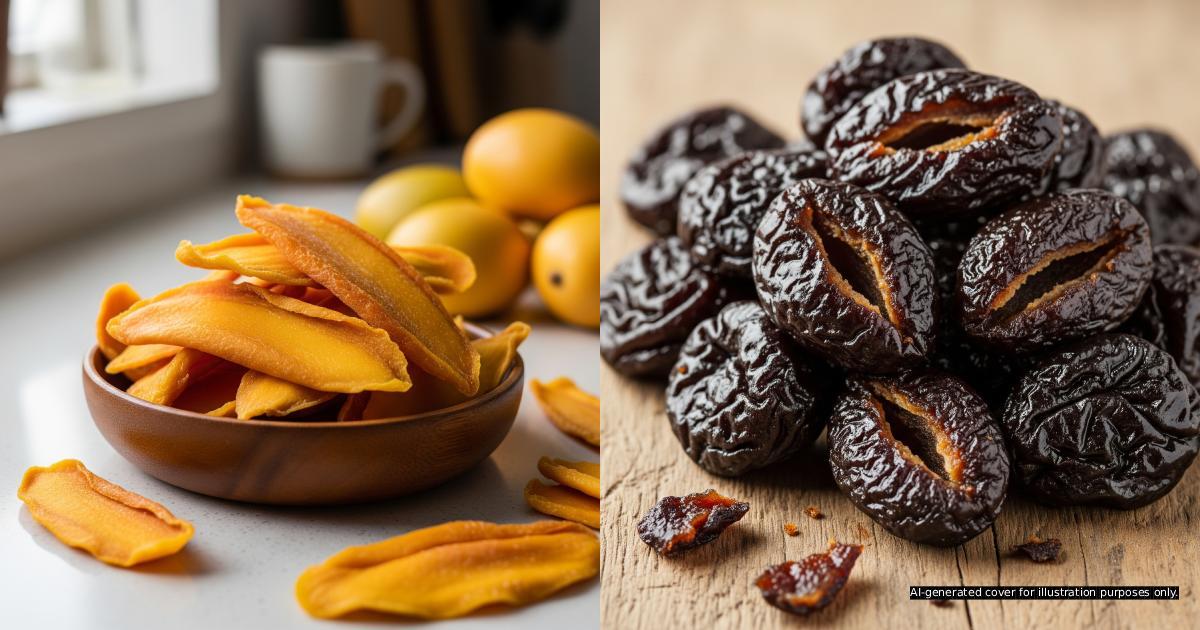 Cover image via Gemini (SAYS)
Follow us on Instagram, TikTok, and WhatsApp for the latest stories and breaking news.
It would be hard to find someone who doesn't love dried mango, cranberries, raisins, and prunes, and most of us reach for them thinking they're a "healthier" snack
But behind that chewy texture and sweet taste could be a mix of preservatives, added sugars, and misleading claims.
So before you snack, here's what you need to know.
What's actually in your dried fruit?
Despite the so-called "health halo" — the assumption that dried fruits are automatically good for you just because they're fruit-based and natural — many dried fruits, especially the processed ones sold in stores or night markets, are far from clean.
According to Malaysia's Dietary Guidelines, you should always opt for unsweetened and unsalted varieties. But many local products, especially dried or pickled, are anything but.
A recent article by the food and lifestyle blog MyResipi highlights how some dried mangoes use artificial sweeteners like sodium saccharin (locally known as ibu gula). It's incredibly sweet, cheap to produce, and can strain your liver and kidneys with regular consumption. Side effects may include bloating, fatigue, or even allergic reactions in some individuals.
Meanwhile, a 2012 investigation by the Hong Kong Consumer Council tested 50 dried fruit products and found that over 60% contained sulfur dioxide, a preservative that can trigger asthma or gut issues, and some exceeded legal limits.
The study found that saccharin was detected in the majority of the samples.
Even more alarming? Some were labelled as "natural" despite being chemically treated.

What do the experts say?
The Malaysian Dietary Guidelines (2020) explicitly warn:
"If you choose dried fruits, select unsweetened or unsalted variety."
MyResipi cautions against mass-produced dried fruits due to the use of artificial sweeteners and additives not always declared on the label.
While the Health Ministry (MOH) has no dedicated guidelines that address dried fruit consumption directly, the Hong Kong Consumer Council recommends tighter regulations and better labelling to protect public health.
So, how to snack smarter?
- Read labels, always — If the ingredients include sodium saccharin, sulfur dioxide, or sodium benzoate, that's your red flag.
- Avoid glossy or overly vibrant fruits — That sheen might not be natural; it's often from chemical preservatives or dyes.
- Choose fresh or naturally dried — Brands that air-dry fruits without additives are your safest bet.
- Make your own dried fruit at home — Salt, sugar, and asam boi go a long way without the chemical baggage.
Dried fruits aren't automatically healthy. Between sugar loading, preservatives, and artificial sweeteners, your "natural" snack might be doing more harm than good.
Snack wisely.
The information provided is for educational and communication purposes only and it should not be construed as personal medical advice. Information published in this article is not intended to replace, supplant or augment a consultation with a healthcare professional regarding the reader's own medical care.
