


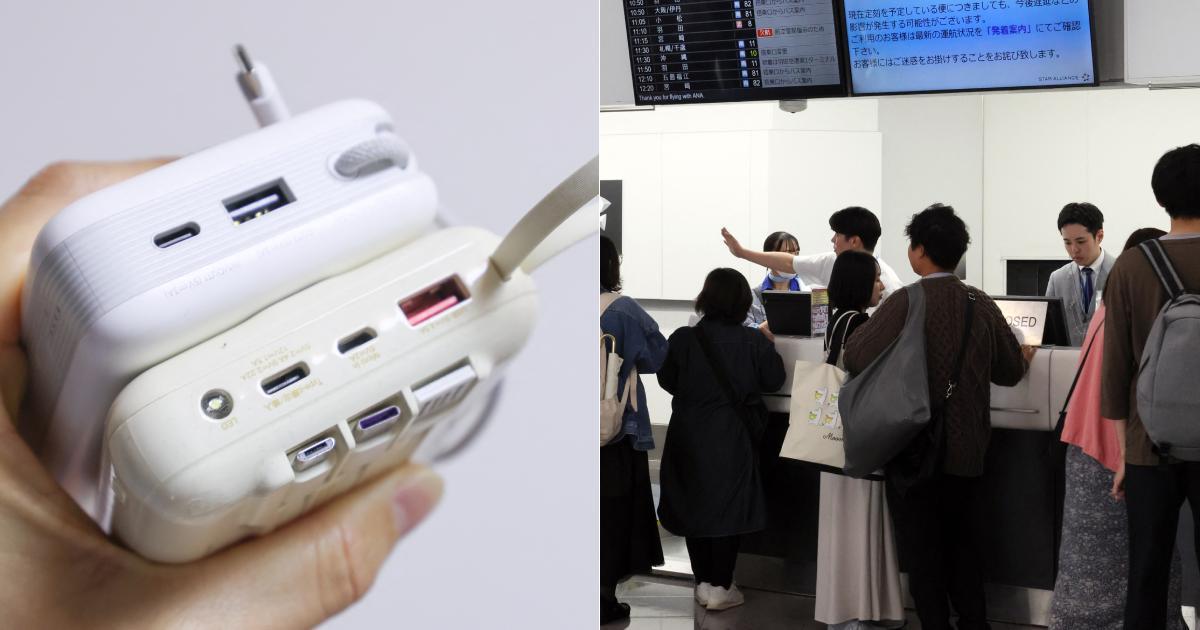
 Cover image via Melissa/Cfoto/AFP & Masanobu Nakatsukasa/The Yomiuri Shimbun/AFP
Follow us on Instagram, TikTok, and WhatsApp for the latest stories and breaking news.
Malaysians flying to Japan soon, take note: while power banks are still allowed on board, using them mid-flight could now land you in serious trouble
Starting 24 April 2026, Japan is rolling out strict new aviation safety rules targeting portable chargers, following a rise in battery-related fire incidents on aircraft worldwide.
The new regulations come from Japan's Ministry of Land, Infrastructure, Transport and Tourism (MLIT), in line with updated international safety standards.
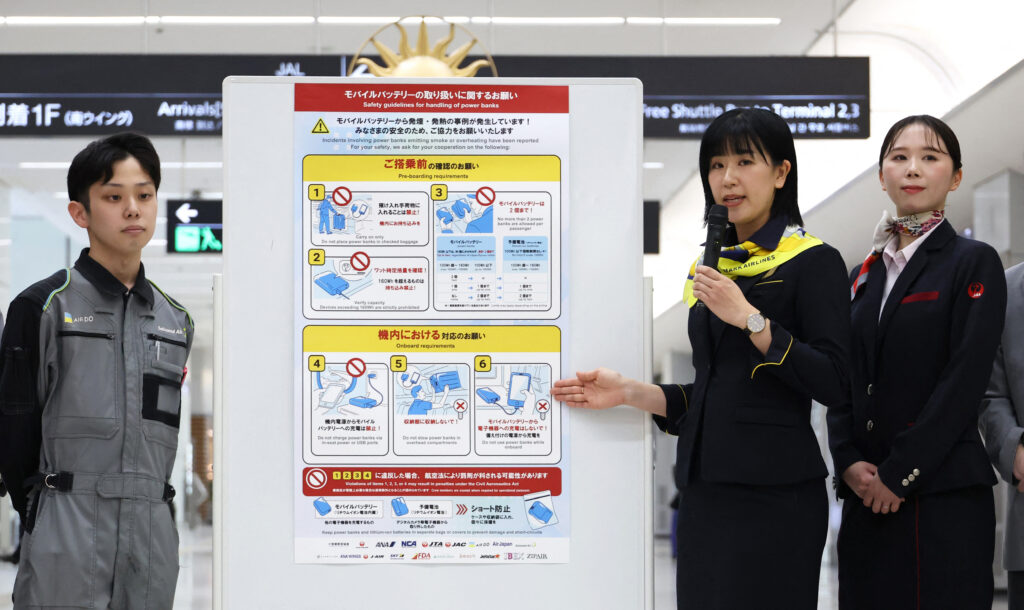
Flight attendants explain how to use a portable battery at Haneda Airport on 14 April.
Image via Kaname Muto/The Yomiuri Shimbun/AFPYou can bring power banks on board, but you are not allowed to use them
Passengers are still allowed to carry power banks, but using them during the flight is strictly prohibited.
This includes:
- Charging your phone or laptop using a power bank
- Charging the power bank itself using the plane's USB ports or power outlets
However, you can still charge your devices directly using the aircraft's built-in power supply, if available.
Only two power banks per passenger
The new rules also introduce a hard cap:
- Maximum two power banks per person
- Each unit must not exceed 160Wh
This applies regardless of size; even smaller everyday power banks fall under this total limit.
The restriction specifically targets "mobile batteries", meaning power banks used to charge other devices.
If you're carrying spare batteries (like for cameras or drones):
- Batteries under 100Wh currently have no restrictions
- They must still be properly protected from short-circuiting
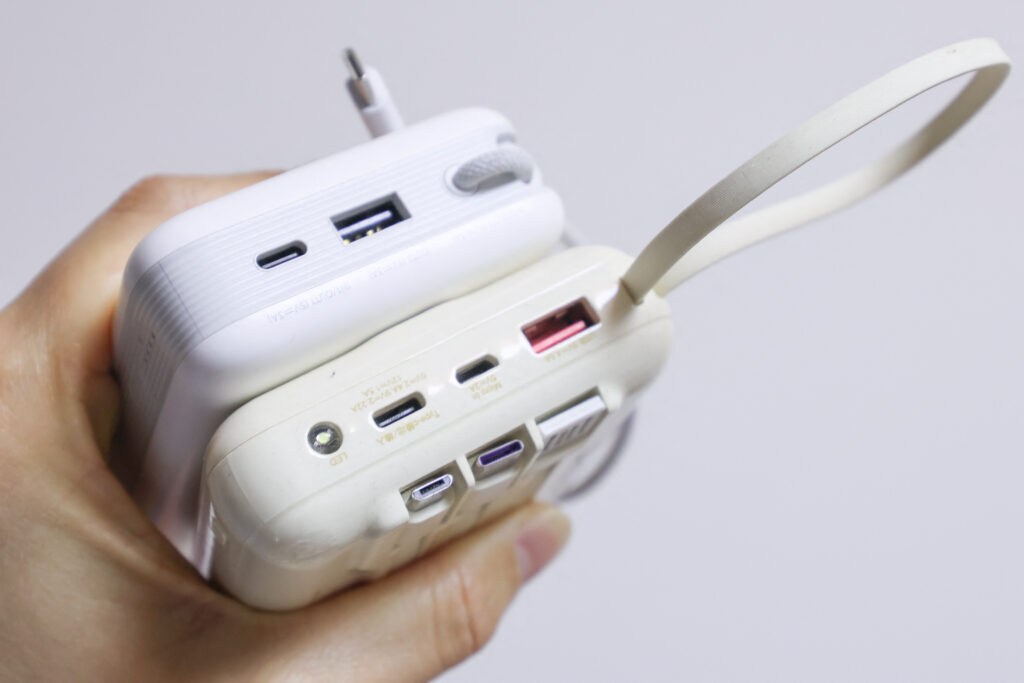
Where you store it now matters
Passengers must also follow stricter handling rules:
- Power banks must be in carry-on baggage only
- They cannot be placed in checked luggage
- They must be kept within reach, such as in a seat pocket or under the seat
- Storing them in overhead compartments is not allowed
According to MLIT, the reason is that if a battery overheats or catches fire, it must be spotted and handled immediately.
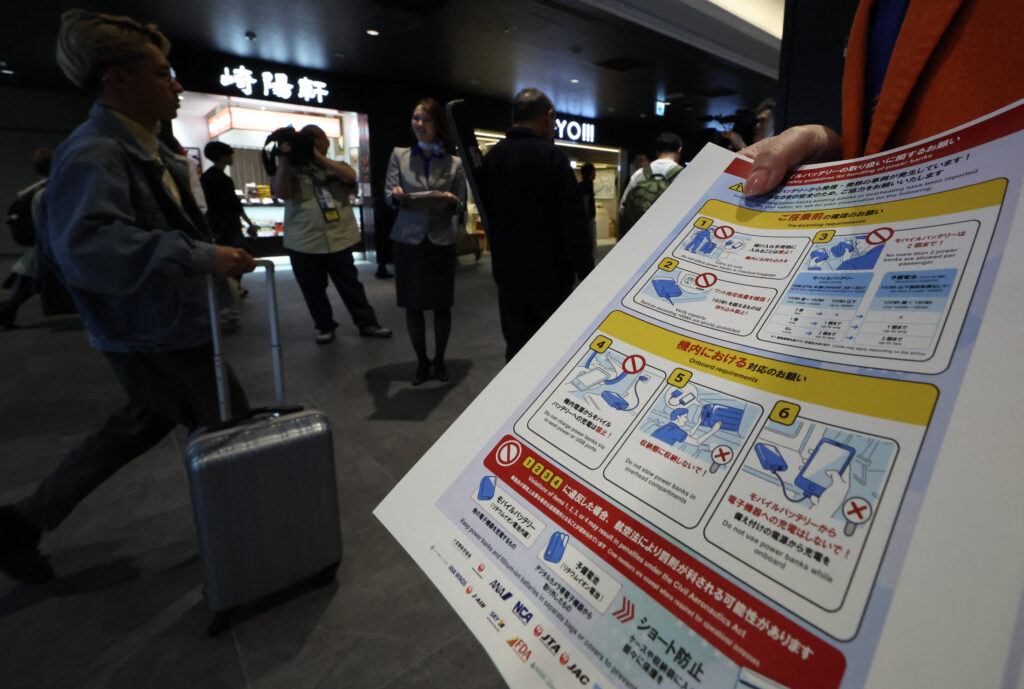
Why the sudden crackdown?
Authorities say the move comes after a global increase in smoke and fire incidents involving lithium-ion batteries on aircraft.
The International Civil Aviation Organisation (ICAO) approved emergency updates to safety standards in March 2026, prompting Japan to act quickly.
While the announcement itself doesn't spell out exact punishments, it states that violations fall under Japan's Civil Aeronautics Act
Under that law, offenders can face:
- Fines of up to 1,000,000 yen (around RM25,000)
- Up to two years in prison in serious cases
These penalties apply to breaches such as exceeding limits, improper storage, and ignoring the no-usage rule.
What this means for Malaysians flying to Japan
If you're flying with airlines like AirAsia X or other budget carriers, this rule could hit harder, as many of these aircraft don't have seat power outlets, which means:
- You won't be able to use your power bank
- You may have no way to charge your phone at all during the flight
In short, whatever battery you have when you board is what you'll be stuck with until landing.
You can still bring your power bank, but you must not use it during the flight. With strict enforcement and heavy penalties in place, this is one travel rule you don't want to test at 30,000ft.
Here's a summary of the Japan flight rules on power banks:
| Feature / Action | Allowed? |
|---|---|
| Bringing a power bank in carry-on | ✅ Yes (Max 2, ≤ 160Wh) |
| Putting a power bank in checked luggage | ❌ No |
| Charging your phone from a power bank | ❌ No (Must be off/unused) |
| Charging a power bank from a seat outlet | ❌ No |
| Charging a phone from a seat USB/Outlet | ✅ Yes (Usually allowed) |
| Storing power bank in overhead bin | ❌ No (Keep in seat pocket) |
