


 Cover image via
Follow us on Instagram, TikTok, and WhatsApp for the latest stories and breaking news.
Picture this: You're travelling overseas and want to buy something. But, when you tap your card, suddenly it declines.
When you think about it, everything is alright. Your balance or credit limit has more than enough for the transaction and you're not blocked by the bank.
So, what is the actual issue?
Chances are, the bank simply thinks your transaction is suspicious due to anti-fraud measures

Bank systems are built to detect any unusual spending patterns, which includes overseas transactions.
If your bank doesn't offer that feature, calling their hotline will work as well. It's also important to do this a few days before your trip.
All you have to provide to the bank is enough context to recognise your transactions as legitimate

That usually means specifying when you'll be overseas and which countries you plan to visit.
If you're travelling across multiple countries, make sure to include all of them. Going between countries without prior notice can still trigger fraud alerts, even if you've already informed your bank about your trip.
You should also make sure that overseas transactions are enabled on your card
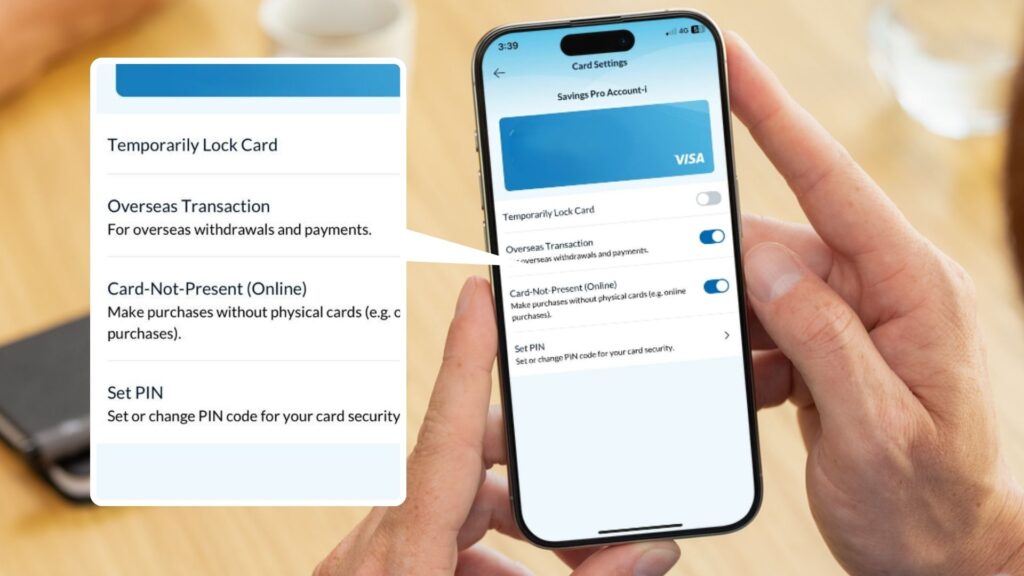
Some debit and credit cards have international transactions disabled by default as a safety feature, so even with a travel notice, your card can still get rejected.
So, just double check and make sure you have your overseas transactions enabled for your card.
Now, even with everything set up properly, occasional bugs and glitches might still occur

Keep a second card, cash in the local currency, or a flexible e-wallet so you can have backups when you need it. Especially in more rural areas where it might be hard to reach support.
You can also learn more about the differences between a multi-currency card and credit card by reading this article.
Notifying your bank takes just a few minutes, but it can save you from awkward situations when you're abroad.
If your card does get wrongly flagged for fraud, it's usually fixable within minutes
In most cases, all you need to do is contact your bank, confirm your identity, and request for the block to be lifted.
As long as you can verify the transactions, access is often restored instantly.
For more #lifestyle stories:
- Here's A Complete Guide On The Documents You Need To Drive Into Thailand From Malaysia
- Multi-Currency Vs Credit Card: Which Is Actually Better To Use Overseas?
- Do You Pay Minimum Or Full? Here's How Your Credit Card Habit Actually Affects Your Score
- Here's The Ultimate Step-By-Step Guide To Filing Your Taxes For Beginners In 2026
