


 Cover image via
Follow us on Instagram, TikTok, and WhatsApp for the latest stories and breaking news.
If you've ever caught a strong food smell drifting from your neighbour's unit, you may have wondered whether it's something you can actually complain about
In condos, apartments, or townhouses, pungent smells can easily travel beyond the kitchen, affecting neighbours and even entire floors.
While cooking itself isn't illegal, issues may arise when the smell begins to interfere with other residents' comfort, which is where it may fall under the scope of a nuisance.
In Malaysia, such situations are generally dealt with under the tort of private nuisance
This legal principle applies when one party's actions interfere with another's comfort or ability to enjoy their home.
But not every smell qualifies. The key consideration is whether it becomes unreasonable, typically when it is:
- Persistent or frequent
- Strong enough to travel beyond your home
- Disruptive to the point that it affects someone else's living conditions
If you live in a condominium, apartment, or townhouse, your home falls under the Strata Management Act 2013

While the Act doesn't specifically mention smell, it clearly states that residents must not use their unit in a way that causes nuisance or discomfort to others. This includes anything that disrupts another person's ability to enjoy their space. That can extend to persistent odours from cooking, smoke, pets, or waste.
Under strata regulations:
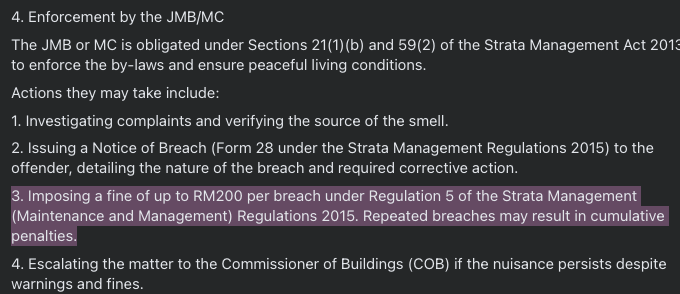
- Repeated breaches can lead to cumulative penalties
- A Notice of Breach can be issued
- Fines of up to RM200 per offence may apply
ㅤ
If the situation escalates, it can even be brought before the Strata Management Tribunal, which has the authority to order a resident to stop or adjust the activity causing the nuisance.
For landed homes, it becomes a council matter instead

If you're in a landed property, the dynamic changes slightly. There's more space, more airflow, and generally more tolerance. But that doesn't mean complaints can't arise.
Neighbours can raise issues with the local council under Section 82 of the Local Government Act 1976 (Act 171). This typically applies when the smell is persistent or linked to broader concerns, such as hygiene or waste management.
In landed homes, if a local council determines that an odour nuisance is injurious or offensive, it may serve a nuisance notice. Failure to comply can result in fines of up to RM1,000 or imprisonment for up to six months.
At the end of the day, the law isn't trying to stop you from cooking your favourite dishes
It's about recognising when your smells start affecting someone else's comfort. A little consideration goes a long way!
