Cover image via AFP & Noel Celis
Recently, a post by the AFP News Agency, shook social media as it detailed the harrowing situation of inmates
The Quezon City Jail in Manila, is home to almost 3,800 inmates (nearly five times more than it was designed for). According to [The Independent](http://www.independent.co.uk/news/world/asia/filipino-philippines-prison-jail-president-rodrigo-duterte-war-on-drugs-a7164006.html) news site, the said photos mirror the present criminal justice system of the Philippines.
The writer, Will Worley, believes that this condition is set 'to worsen as the state engages in an aggressive war on drugs' instigated by the country's hardline president, Rodrigo 'The Punisher' Duterte.'
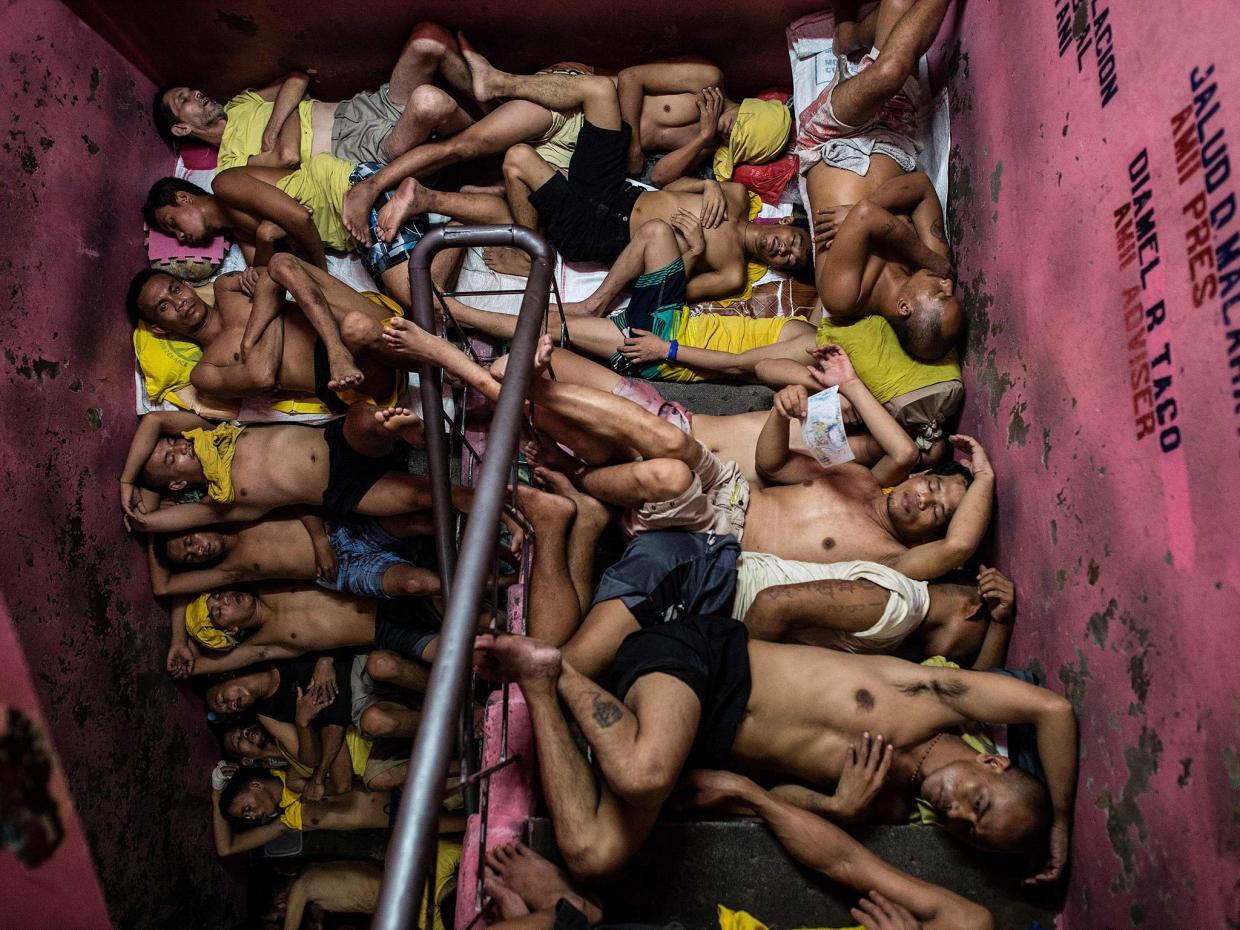
**"Prisoners – caught up in trials which take years – can be seen crammed body-to-body on concrete floors and stairwells. Others are forced to sleep sitting or standing," he adds.**
"Many go crazy. They cannot think straight. It's so crowded. Just the slightest of movements and you bump into something or someone," says Mario Dimaculangan in an interview of the AFP news agency
This condition mirrored the detention facilities in the country, according to Dr Nymia Pimentel Simbulan, executive director of the Philippine Human Rights Information Centre (PhilRights), also based in Quezon City.
"These conditions exist in municipal and city jails across the country, as well as state penitentiaries," Dr Simbulan told The Independent.
**Sanitary conditions are also poor, and in Quezon City Jail, one toilet is used by up to 130 other people. According to an April 2015 Commission on Human Rights report, toilet facilities in Filipino jails "either do not exist or are poorly maintained" and cause an "odious stench".**
**"Overcrowding is a consequence of criminal justice policy not of rising crime rates, and undermines the ability of prison systems to meet basic human needs, such as healthcare, food, and accommodation. It also compromises the provision and effectiveness of rehabilitation programmes, educational and vocational training, and recreational activities," says [PenalReform.org](http://www.penalreform.org/priorities/prison-conditions/overcrowding/).**
"Overcrowding, as well as related problems such as lack of privacy, can also cause or exacerbate mental health problems, and increase rates of violence, self-harm and suicide," it adds.
Because of this, we came up with solutions that can resolve the worsening prison conditions of these inmates:
Bureau of Jail Management and Penology (BJMP) data show that on the average, its detention centers are at **380%** overcapacity. Among the most congested jails, the overcapacity reaches levels of more than **2,000%**, according to a report of [Rappler](http://www.rappler.com/move-ph/130525-overcrowding-philippines-prisons-technology).
Human Rights Watch (HRW) says the Philippines has the highest number of pre-trial detainees in the Southeast Asia Region, a condition that is attributed to a diverse set of factors.
"The sources of this injustice are multifold," wrote Carlos Conde, HRW researcher in the Philippines.
"Corrupt and incompetent investigators and prosecutors, a judicial and court system clogged with too many cases, and too few judges to try them. These institutional pathologies result in unjust and prolonged detention."
**Criminal cases pile up faster than they can be tried.**
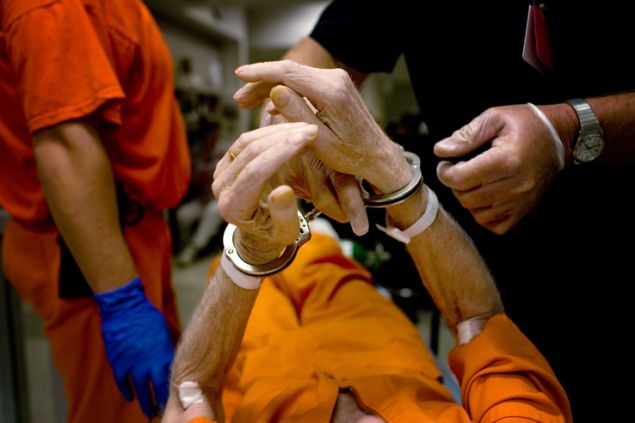
1. Release of elderly prisoners
After the age of 55, people who are released from prison are highly unlikely to commit new crimes, according to many [studies](http://www.huffingtonpost.com/2013/11/08/prison-overcrowding_n_4235691.html).
2. Allow more prisoners to reduce their sentences or be granted with parole (for good behavior)
Expand the number of rehabilitation programs that offer credits toward early release for those who participate. (This option also offers the benefit of providing more inmates with skills that could help them stay out of trouble after they're released.)
3. Give prisoners a full year off their sentences for participation in a drug rehabilitation program
Prisoners who graduate from the system's main drug program are supposed to get a full year off their sentences. But thanks to overcrowding, the line to get into the program is so long that many offenders have less than a year of their sentences left by the time they graduate.

4. At a local level, one way to relieve the pressure on jails is a pre-trial release, leaving defendants free until they're convicted
Nearly two-thirds of the nation's prison population haven't been convicted of a crime. They are awaiting trial. Many are arrested for low-risk offenses such as disturbing the peace, minor theft cases or traffic violations, and they languish in jail because they can't afford bail.