



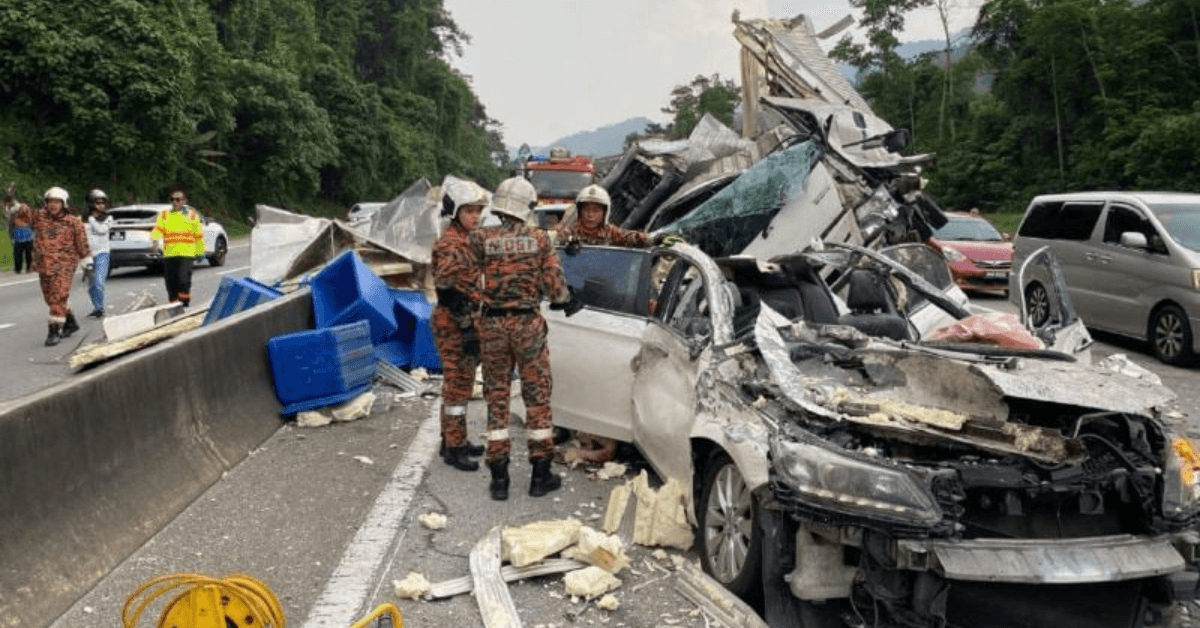

Follow us on Instagram, TikTok, and WhatsApp for the latest stories and breaking news.
Every year, Malaysia's roads witness a relentless toll of human life, shattered families, and economic losses that ripple through society
Headlines about tragic crashes often focus on drunk drivers, and there is good reason to condemn reckless behaviour behind the wheel, but when we examine the statistics, a more sobering and nuanced reality emerges.
Drunk driving represents only a small fraction of Malaysia's road fatalities.
To make Malaysian roads truly safer, we must broaden our focus beyond alcohol and base our strategy on data, impact, and prevention.
According to official figures and verified reports, Malaysia continues to record alarmingly high numbers of road accidents and fatalities.

Mas Tina Abdul Hamid is the coordinator of the Vehicle Theft And Accident Reduction Council of Malaysia.
Image via VtarecofficialIn 2022, there were roughly 545,588 road accidents, resulting in approximately 6,080 deaths, an average of nearly 1,500 accidents per day or one accident every minute
This tragic figure represented a significant increase compared with pre‑COVID years and highlighted the nation's struggle with rising traffic risks as travel and economic activity surged.
By 2023, the issue had not abated. Royal Malaysia Police (PDRM) statistics reported 598,635 road accidents nationwide, with 6,433 fatalities in that year alone, an average of about 18 lives lost every single day.
Motorcycle riders were disproportionately affected, accounting for around 65% of fatal casualties, particularly among youth and young adults.
For 2024, preliminary data up to September showed similar trends: approximately 477,416 total road accidents, with 4,844 deaths documented through September alone, even before the year-end tally.
And as we move deeper into 2025, daily traffic statistics from PDRM indicate that road accidents remain pervasive.
For instance, on a single day in March 2025, more than 2,300 accidents were reported, resulting in 32 deaths, with other days showing similarly high figures
These consistent figures underscore the persistent human cost of everyday travel.
While these totals are alarming, a closer examination of causal factors reveals a critical insight: the majority of fatal crashes are attributable to human error, risky behaviours, and systemic road safety deficiencies rather than alcohol consumption alone.
It confirms that human error, including failure to observe nearby vehicles, unsafe manoeuvres at intersections, overtaking recklessly, and driver distraction or fatigue, remains the leading contributor to road fatalities in Malaysia.
Vulnerable road users, particularly motorcyclists, account for the majority of fatalities, highlighting structural and behavioural risk factors.
When isolating drunk driving as a specific factor, the statistics are significantly smaller.
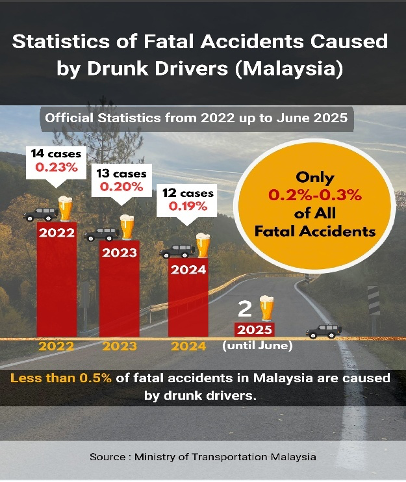
PDRM records show only 14 fatalities attributed to alcohol-impaired drivers in 2022, 13 in 2023, 12 in 2024, and just 2 in the first half of 2025
Drunk driving statistics represent less than 0.5% of all road deaths annually.
While each case is a human tragedy, the data make it clear that focusing solely on drunk driving does not address the primary determinants of mortality on Malaysian roads.
This does not diminish the importance of combating drunk driving, but it underscores the need for a strategic, evidence-driven allocation of resources.
Policymakers must focus on the factors that statistically result in the highest fatalities and injuries, including speeding, distracted driving, unsafe passing, poor compliance with traffic signals, inadequate vehicle maintenance, and insufficient road infrastructure.
Consider the broader human and economic costs. Tens of thousands of accidents occur every year, and while many are non-fatal, the cumulative impact is substantial.
In 2023, nearly 598,635 accidents inflicted an estimated RM25 billion in economic losses, accounting for healthcare costs, lost productivity, emergency response, and property damage.
Comparative insights further highlight the gap between legislation and outcomes. Singapore and the United Kingdom (UK), while permitting legal alcohol consumption, maintain superior road safety records through integrated enforcement, public awareness, and cultural expectations.
In Singapore, random Breathalyzer checkpoints, strict penalties, and continuous educational campaigns reinforce safe driving as a social norm, not just a legal requirement.
In the UK, traffic law enforcement is paired with robust deterrents such as fines, licence points, and public awareness, establishing a culture in which irresponsible driving behaviour is socially unacceptable.
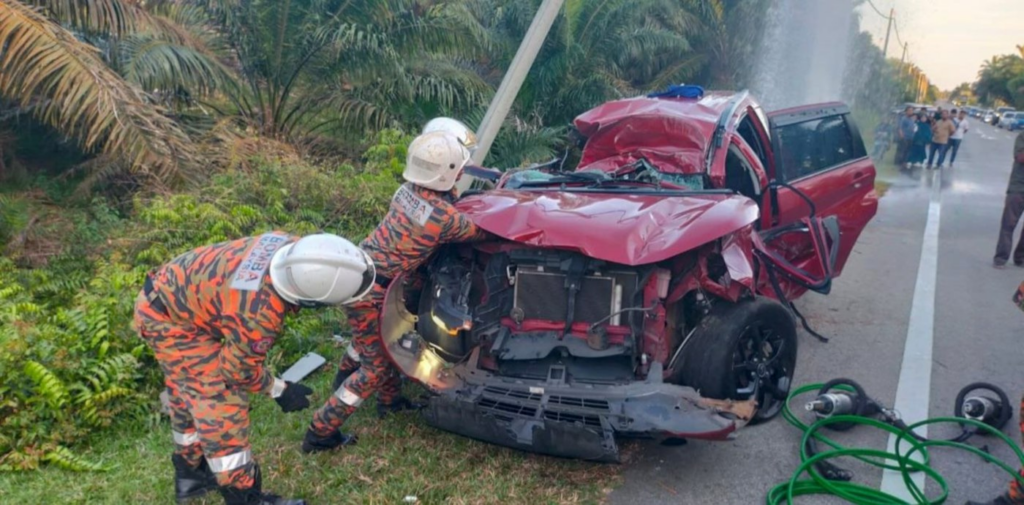
Image for illustration purposes only.
Image via NSTPMalaysia's existing legal framework is relatively strong
The Road Transport Act 1987 imposes penalties of up to 15 years' imprisonment, heavy fines, and licence revocation for alcohol-related fatal incidents.
Yet, enforcement by the enforcement agencies is sporadic, and public education lacks the sustained intensity seen in Singapore or the UK.
Consequently, laws are often reactive rather than preventative.
A holistic, data-driven road safety strategy in Malaysia must include:
1. Enforcement targeting the highest-risk behaviours: Speeding, distracted driving, unsafe overtaking, and traffic signal violations should be systematically monitored. Automated enforcement cameras, high-visibility patrols by the enforcement agencies, and consistent application of penalties are essential.
2. Education campaigns grounded in evidence: Road safety messaging must go beyond slogans. It should engage drivers emotionally and intellectually, highlighting the human cost of negligent driving while promoting a culture of responsibility across all road users.
3. Infrastructure and vehicle safety improvements: Dangerous Road segments, blackspots and poorly maintained routes must be upgraded with proper lighting, signage, lane markings, and pedestrian safety features. Vehicle inspections, commercial fleet compliance, and adoption of safety and monitoring technology such as emergency braking, dashcam, Bluetooth, and lane departure warnings are critical.
4. Access to safe alternatives: Especially in rural areas, ride-hailing, public transport, and community shuttle programs can reduce exposure to risky driving, including alcohol-impaired operation and fatigue-related crashes.
Drunk driving should remain a critical component of enforcement, but it is only one small element within a broader safety ecosystem.
By prioritising interventions according to data-driven impact, Malaysia can target the behaviours and conditions that account for the majority of fatalities.
Ultimately, road safety is not merely a legal or administrative concern; it is a public health imperative, an economic necessity, and a moral obligation.
The statistics tell a clear story: to reduce road traffic accidents meaningfully, Malaysia must act decisively, focusing on the most impactful factors while reinforcing laws against less frequent but high-consequence behaviours such as alcohol-impaired driving.
The challenge is substantial, but so is the opportunity. By embracing a comprehensive, evidence-based approach, Malaysia can shift from reactive policies to proactive interventions, creating a culture of safe driving that protects all road users.
Only then can laws, enforcement, education, and infrastructure converge to transform Malaysian roads from sites of tragedy into spaces of safety, shared responsibility, and respect for life.
