

 Cover image via Kuala Lumpur Reads
Follow us on Instagram, TikTok, and WhatsApp for the latest stories and breaking news.
Kuala Lumpur Reads works best in its most mature and ideal form as a practice. Not a weekly 'event', but a practice.
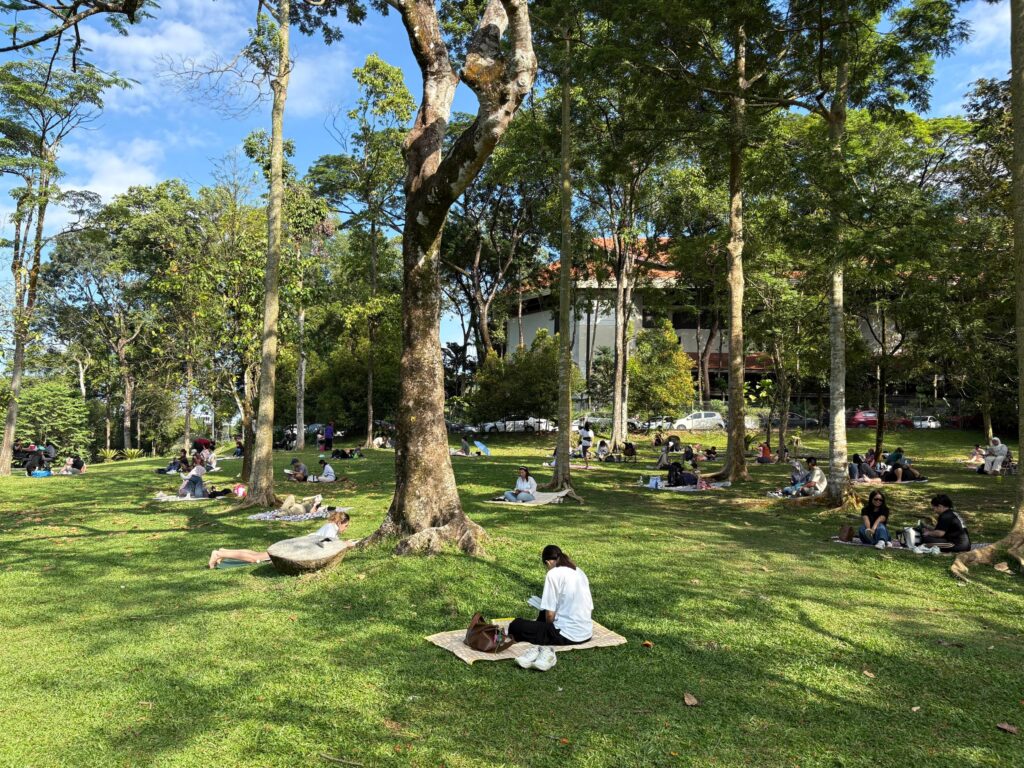
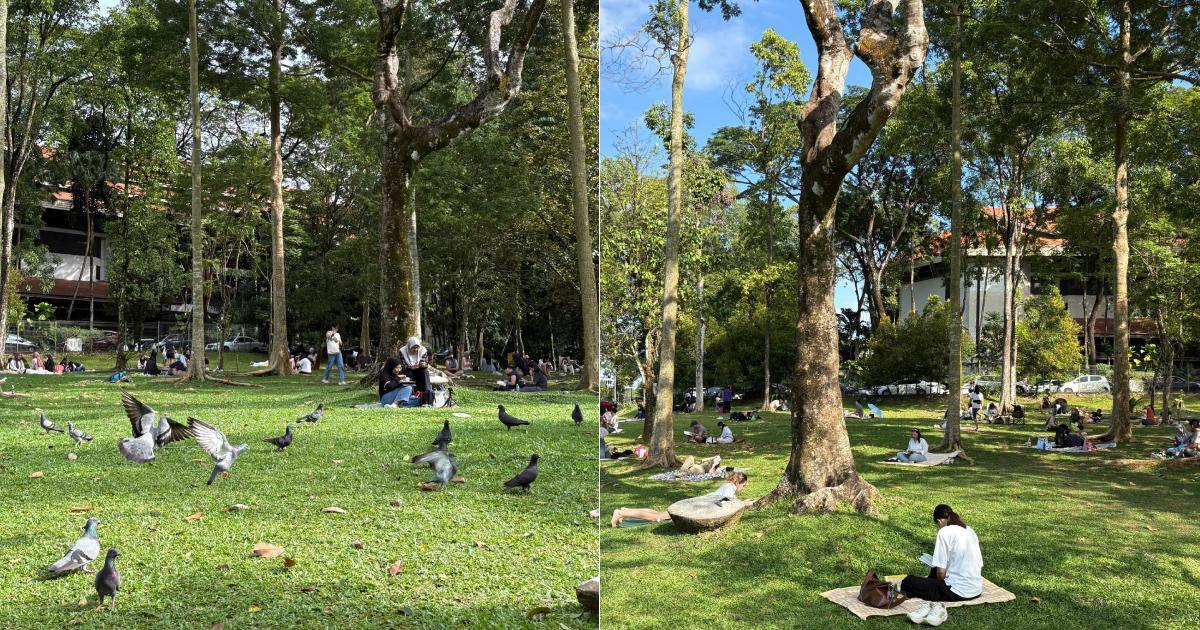
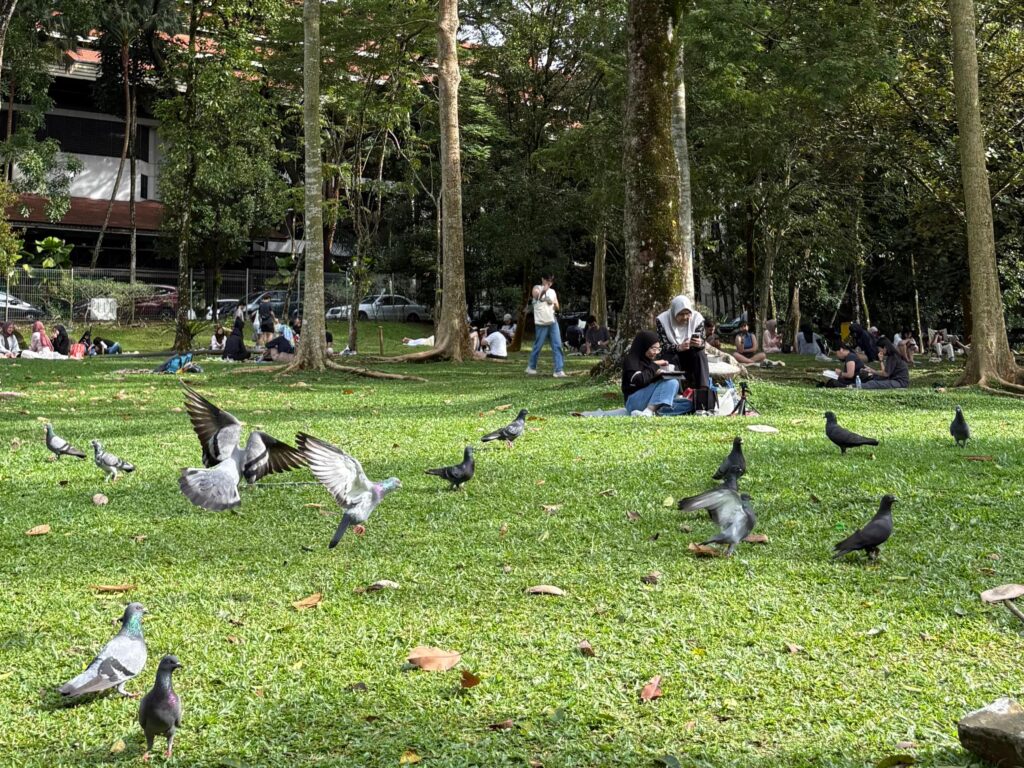
In Perdana Botanical Garden, every Saturday morning, people are on benches and mats, reading by themselves and together. Some come early, some come mid-morning, and some get up and leave quietly when they feel like it.
No incentive whatsoever, except a remarkable sense of community fostered by "why" and not "what's in it for me?" In other words, a community that is built on shared purpose, rather than an exchange.
Motivation without incentives
The expectations for this practice are so intentionally loose that people participate for inherent enjoyment. All they need is a book and a mat, and it doesn't even matter what they read. No fees, no registration, not even required pleasantries.
We could go as far as to say that they are intrinsically motivated to participate, where they can freely be, doing what they love, alongside others with a sense of belonging.
But this doesn't happen by itself. It happens when social environments support a motivational ecosystem.
The role of social infrastructure
Sociologist Eric Klinenberg writes that the strength of a society does not just depend on economic resources or individual resilience. It also depends on the quality of its social infrastructure.
That is, the physical environments that allow social life to happen – and in this case, a public park. A public park where relationships are formed, and civic habits like how we share space and respect limits are fostered.
More than just public goods
Social infrastructure, we say, is a public good. But public parks are not simply public goods. They are more accurately common-pool resources. They're open to everyone, but are subject to overuse, crowding, and wear-and-tear.
This distinction makes a difference, because it means the resource needs governance to maintain.
Beyond the 'tragedy of the commons'
Garrett Hardin very famously argued that any shared resources were doomed to collapse. He called it the "Tragedy of the Commons".
In his view, individuals, acting in their own self-interest, would inevitably overuse and exhaust shared resources, unless limited by government control or privatisation.
But Nobel laureate Elinor Ostrom, spending her career studying communities around the world, found the opposite to be true.
She found that communities are very much capable of governing shared resources when given the autonomy and institutional support to do so. They develop communal norms and learn through practice what works and what doesn't. And over time, they become remarkably effective stewards.
This is why Kuala Lumpur Reads works.
From participation to stewardship
As the community grew, readers began to treat both the practice and the park as a shared resource worth caring for. And this isn't just goodwill because the community guidelines were intentionally designed. It works best when people know who the space is for, how it is used, and what its limits are.
The "rules", so to speak, are practised by those who participate and are shaped by the local context and park regulations. Regular readers help keep an eye on how the space is used, monitoring casually and "enforcing" norms through social expectation rather than authority.
A non-transactional virtuous cycle
The practice creates a self-reinforcing virtuous cycle between intrinsic motivation, social infrastructure, and commons governance.
What might be most consequential about this practice is the non-transactional principle it is built on. Because it makes it deliberately inefficient by market standards.
Why incentives undermine participation
Studies on behaviour and economics show that transactions can undermine autonomy and "crowd out" intrinsic motivation – the very force that sustains voluntary participation and feeds this virtuous cycle in the first place.
Whereas non-transactional spaces create the conditions for social production and stewardship. People participate meaningfully because of the values they share and because they're empowered to self-govern.
Scale but only sideways
What the community produces then is collective. Like more activated parks, place-based culture, and a stronger social fabric overall.
If this model scales at all, it only does so by scaling sideways through local adaptation on the community's own terms.