


 Cover image via Xpeng
Chinese electric carmaker Xpeng is set to soar in 2026
Xpeng plans to start mass-producing its Aeroht modular flying car in 2026. If they succeed, they'll be the first company in the world to deliver these types of vehicles to the public, according to their chairman and CEO, He Xiaopeng.
The vehicle is essentially a two-person flying drone that works with a six-wheeled, four-seater ground vehicle. The ground vehicle acts as a 'land aircraft carrier', storing and charging the drone in its back. Once the ground vehicle reaches a suitable take-off spot, the drone will detach automatically, and the driver and passenger can fly for the rest of their journey.

Image via Xpeng
Xpeng's flying car is poised to solve traffic issues
It can also be used to travel to hard-to-reach places. The whole package, priced at under 2 million yuan (RM1.21 million), was demonstrated in its first public flight at the Zhuhai Airshow last November and has reportedly received around 3,000 pre-orders, according to the Straits Times.
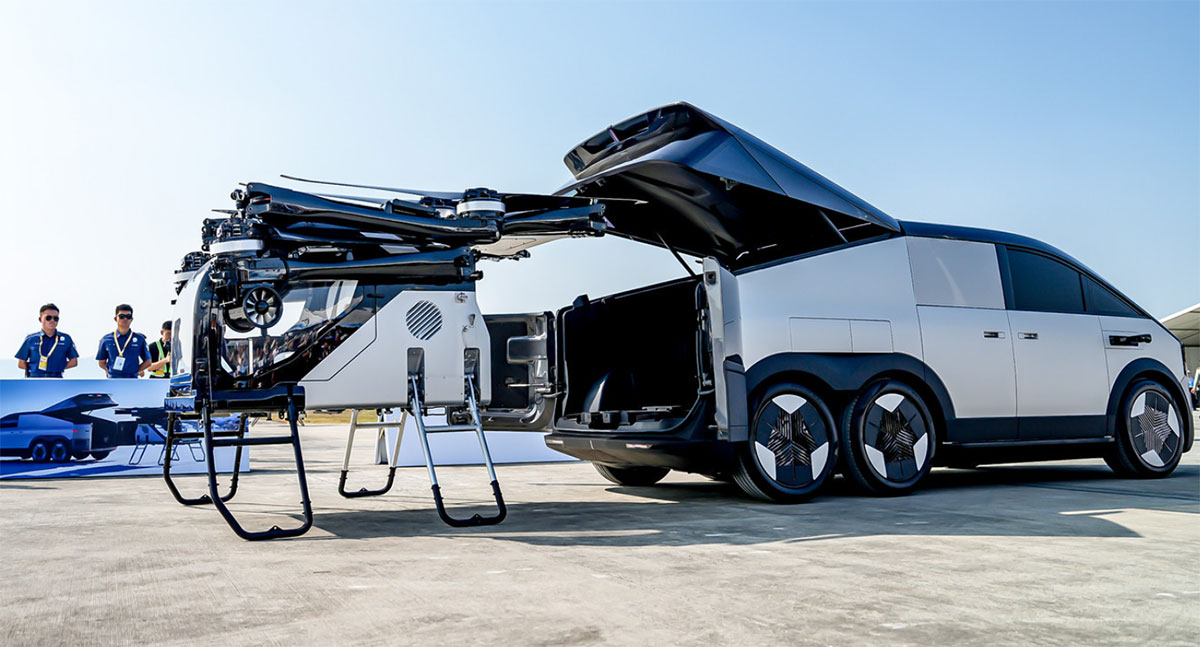
Image via Xpeng
The company began building a factory in October last year, which is expected to be completed in early 2026 and capable of producing 10,000 of these vehicles annually
He said the company intends to begin mass production of its modular flying car in 2026. While initial statements pointed to a general 2026 start, he later clarified that they aim to begin the actual mass production in the second quarter of 2026, with deliveries following soon after.
This timeline positions Xpeng to potentially become the first company globally to mass-produce and deliver a modular flying car to consumers.

Image via Xpeng
Even though Xpeng is pushing forward with its flying car plans, the company recognises that making them a common sight on roads and in the sky is still a long way off
According to He, convincing governments to create the required legislation for flying cars is a major obstacle.
He pointed out that there are several challenges: firstly, the vehicle needs to be approved as both a car and a plane, which involves navigating complex certification processes. Secondly, there need to be clear guidelines on where and how these flying cars can take off and land. And finally, there's the question of who will be allowed to fly them and what kind of license they'll need.

Image via Xpeng

