


 Cover image via
Follow us on Instagram, TikTok, and WhatsApp for the latest stories and breaking news.
The Malaysian automotive landscape is undergoing a fundamental transformation as the industry pivots toward high technology and sustainable energy solutions
As global and local economic pressures mount, Malaysian consumers are actively altering their purchasing behaviour, moving away from traditional internal combustion engine (ICE) vehicles in favour of electrified mobility options.
Here are some hard numbers proving that Malaysians are adopting EVs at a strong rate
According to the latest Malaysian Economic Statistics Review, the adoption of electric vehicles (EVs) in Malaysia has multiplied exponentially. In 2015, the number of EVs registered was only 55 cars. Little over a decade later, the number ballooned to 44,813 registrations.
Statistics from the review reveal that out of 870,327 vehicles registered in 2025, about 44,813 cars were electrified. EVs made up a considerable 5.15% of registered vehicles last year. Out of that number, 8,206 are PROTON-made electric cars, which is 18.3% of EVs registered in 2025.
Another recent example of strong adoption is PROTON's newest car on the market
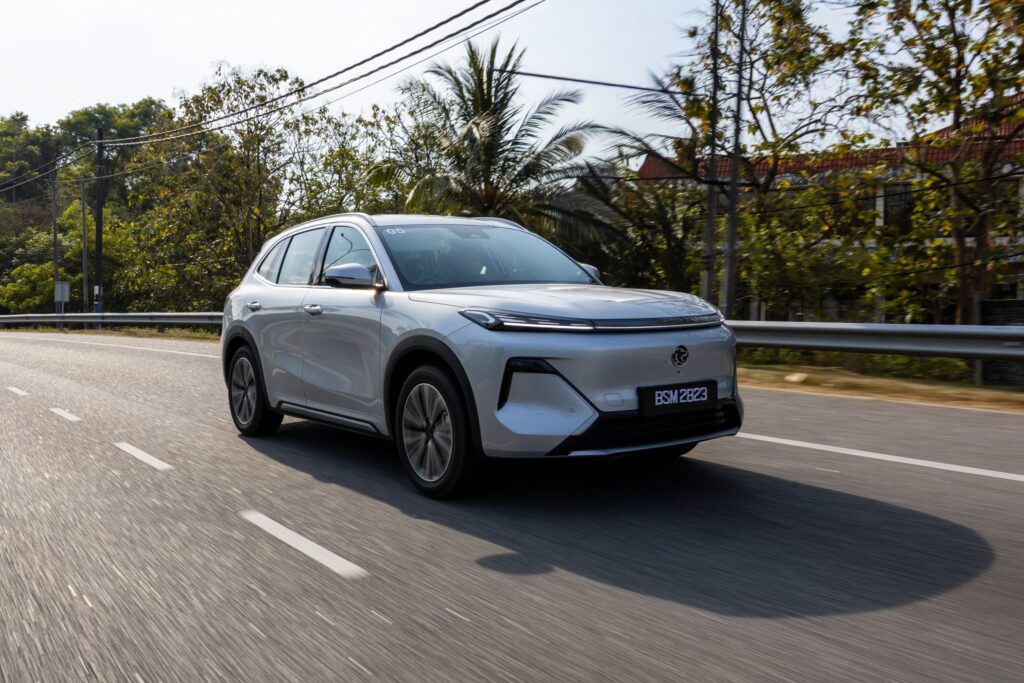
Take the PROTON e.MAS 7 PHEV, for example. Since its launch in February 2026, the model has accumulated over 6,500 bookings within two months, according to PROTON.
Further evidence of this shift is seen in the fact that 63% of e.MAS 7 PHEV customers are trading in their existing petrol-powered vehicles, such as sedans and compact SUVs, signalling that consumers now view electrified models as primary, future-ready vehicles rather than secondary choices.
This trend is particularly evident among family-oriented consumers, with 75% of e.MAS 7 PHEV buyers are men aged 36 and above who utilise the vehicle for daily commutes and weekend road trips.
Data from the aforementioned statistics review also supports this upward trajectory, with EV registrations rising significantly from 21,789 units in 2024 to 44,813 units in 2025.
Here's why Malaysians are more comfortable with adopting an EV
The rapid shift toward electric mobility is supported by a convergence of economic necessity and technological advancement
The rising cost of fuel and the recent reduction in BUDI95 subsidy quotas have made long-term mobility expenses a critical concern for Malaysian households.
For example, the e.MAS 7 PHEV addresses this by prioritising fuel efficiency, demonstrating a consumption rate of just 4.3L/100km even when operating in battery-depleted conditions. This means cars like the e.MAS 7 PHEV can hit ranges of roughly 1,000KM before needing a refuel and recharge.
As the automotive sector continues to transition toward EV technology and automation, the growth in electric mobility suggests that Malaysians are no longer just testing these options
Malaysians are confidently integrating them into their daily lives. By offering a blend of electric efficiency and petrol-assisted flexibility, vehicles like the e.MAS 7 PHEV are lowering the barriers to entry for sustainable transport, positioning itself as a leading choice for the modern Malaysian family.
