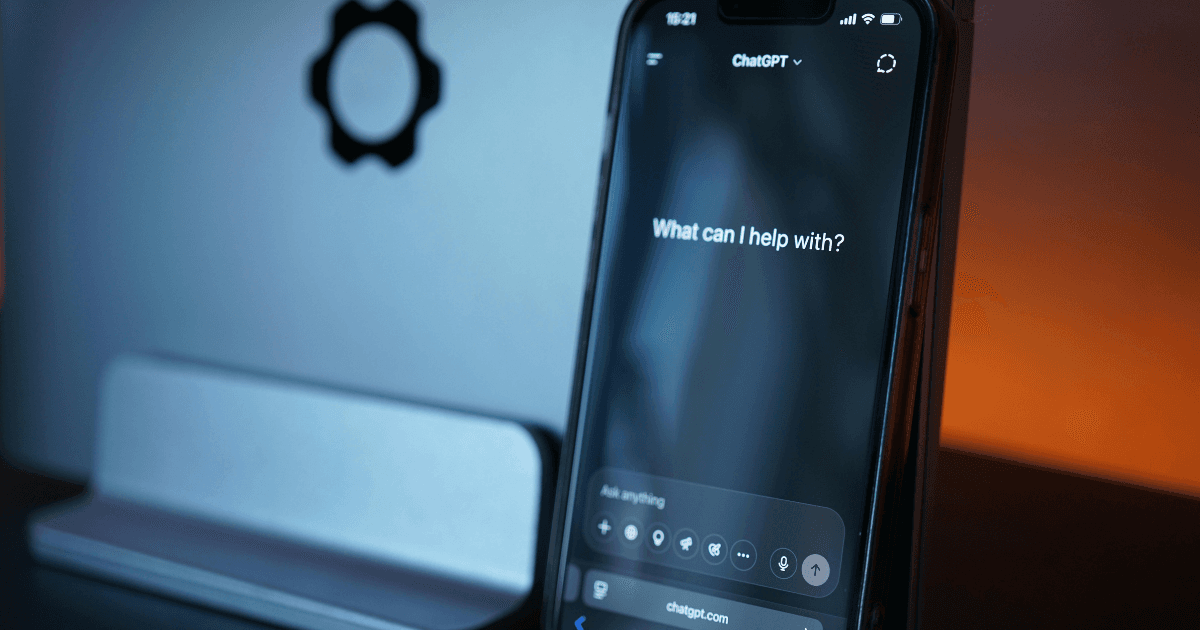
 Cover image via Canva
Follow us on Instagram, TikTok, and WhatsApp for the latest stories and breaking news.
AI tools have become part of our everyday lives and that's not necessarily a bad thing
You may have used it to write emails, plan trips, fix your resume, or even vent about personal problems.
It's fast, helpful, and honestly… a little addictive.
But have you ever stopped to wonder where all that information actually goes after you click "enter"?
The thing is, your data doesn't just "disappear"
When you type into an AI tool, your input isn't floating in empty space.
It gets sent to company servers, processed, and often stored — at least temporarily.
Depending on the platform, this can include:
- Your prompts and responses
- Timestamps and usage data
- Device and account information
Some services store conversations for a limited time (for example, around 30 days for abuse monitoring), even if you turn off chat history.
That means closing the app or website doesn't necessarily mean your chat is erased or your data is forgotten.
While most people use AI casually, they may actually be sharing surprisingly sensitive information
This could include work emails, client details, work briefs, company memos, personal problems, medical questions, business ideas, and even names, places, and other identifying information of either themselves or people they know.
Once you input that, you're not just asking for help, you're sharing potentially sensitive data with an external system.
And that's where the risk starts to increase.
Sometimes, humans can see your conversations
This is something many users don't realise.
To improve systems and ensure safety, some AI platforms allow human reviewers to look at samples of conversations.
That doesn't mean someone is reading everything you type. But it does mean your chats are not fully private in the way messaging apps are.
The key issue is how your data is used after it's collected
In some cases, your chats may be analysed to improve the AI; shared with partners, contractors, or researchers; or used for system training.
It may also depend on whether you're on a free or paid plan, as well as if you didn't actively choose to opt out of having your chats recorded.
In short, you don't always have full visibility or control.
There have already been data leaks
In March this year, Meta suffered a sensitive data leak when an employee asked AI for guidance on an engineering problem. The AI agent responded with a solution, which was implemented, resulting in both user and company data being exposed for two hours.
That's just one example. Past incidents on other platforms have exposed users' chat data and payment details due to a bug in the system.
Even if you're careful, AI systems can sometimes infer additional information based on what you share
This could include your habits, preferences, writing style, and even emotional state. So, even if you don't specifically share these details, you may still be revealing more about yourself than you realise.
On the flip side, there are users who actively upload photos of themselves and those around them as part of their AI prompts. This can be considered risky.
Don't let convenience override your privacy
AI is fast, helpful, and feels harmless. It can feel like you're having a private chat, similar to that with a friend. However, it's important to keep in mind that you are actually interacting with a cloud-based system, and not having a one-on-one conversation with an actual person.
You are not in a confidential space.
AI tools aren't inherently unsafe but they do require more awareness than most people currently have
A simple rule of thumb is to not share anything you wouldn't be comfortable storing in someone else's server.
This could include personal details, IC numbers, phone numbers, addresses, financial details, passwords, confidential work documents, and so forth.
Especially in the case of using free AI services, remember that "If you're not paying for the product, you are the product."
REAL ke AI? Fact-check before you act. Everyone plays a role.