


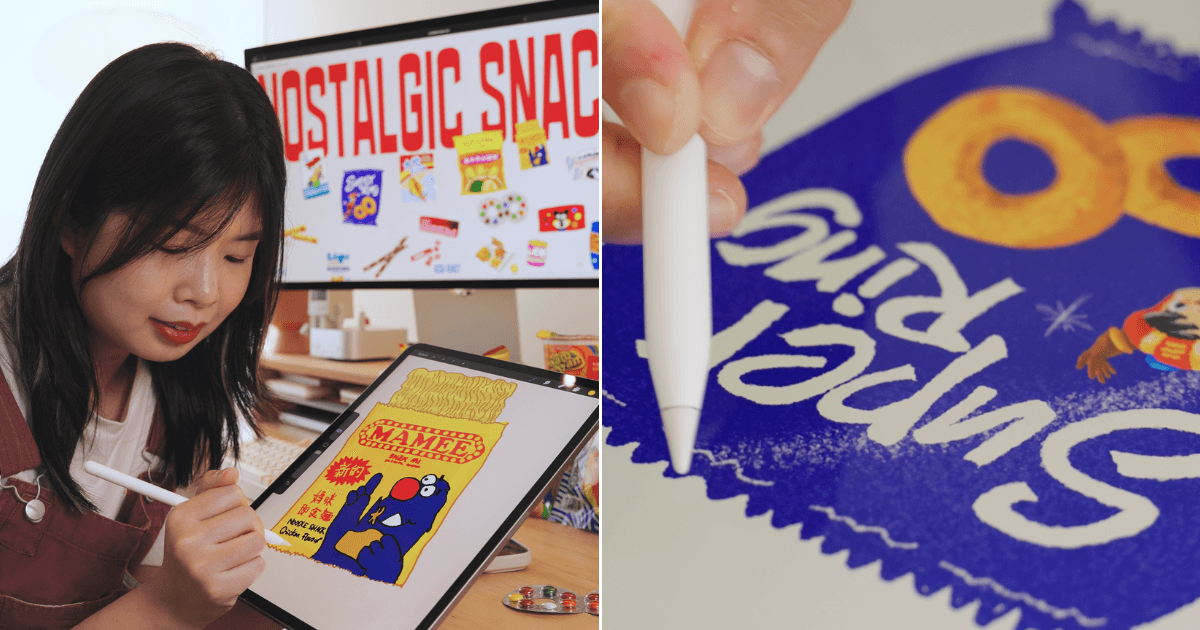
 Cover image via Rachel How
Follow us on Instagram, TikTok, and WhatsApp for the latest stories and breaking news.
Tech Tarik is a SAYS Tech original series where we sit down with the movers, shakers, and glass-breakers of Malaysia's digital scene. Just like your favourite mamak drink, we're "pulling" the best insights, spilling the tea on industry trends, and serving up the innovations that are shaping our country's future — one conversation at a time.
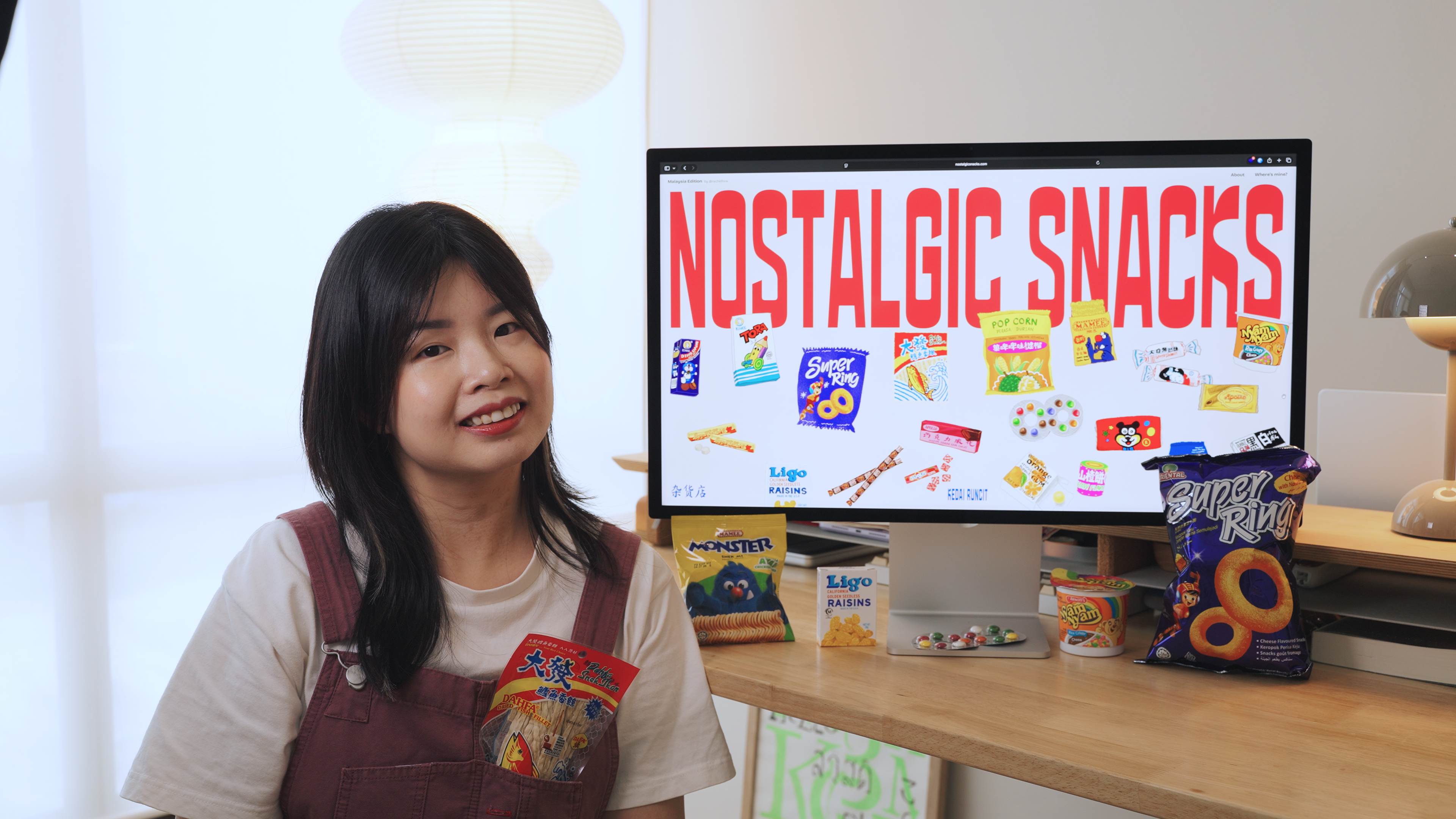
Rachel How is a well-known name in the Malaysian design scene, but her latest project hits a different kind of emotional chord
She recently launched the Nostalgic Snack Museum, a digital time capsule dedicated to preserving the iconic treats that defined Malaysian childhoods from the '70s to the '90s.
Distilled from a poignant realisation that our beloved kedai runcit culture is slowly fading, Rachel turned her design expertise into a heartfelt tribute to the snacks — from White Rabbit candy to Mamee Monster — that once made 50 sen feel like a fortune.
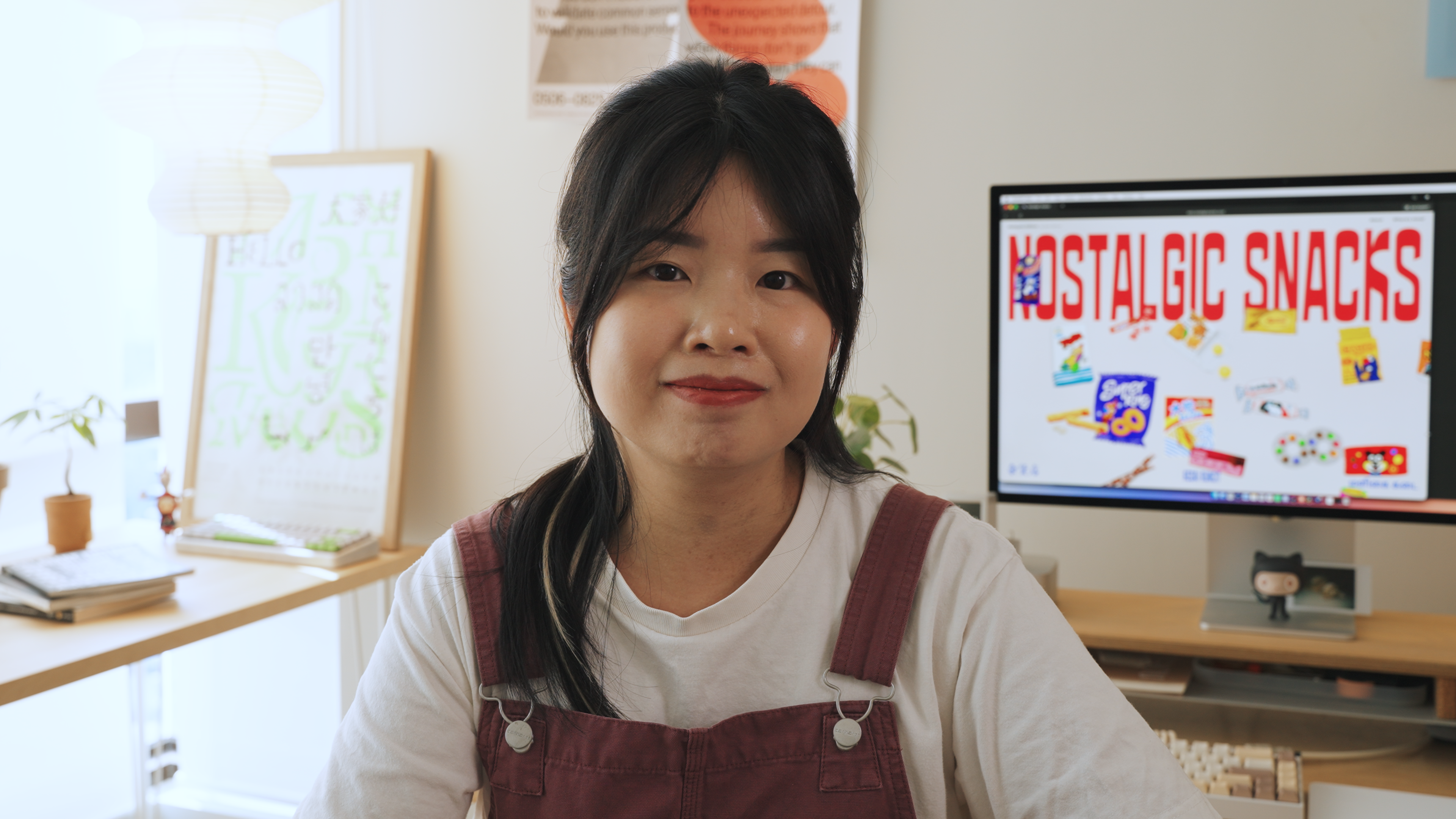
To bring this vibrant museum to life, Rachel leaned into the power and portability of the Apple iPad Air M4
What began as a scattered brainstorm in Freeform evolved into a series of charming, hand-drawn illustrations created in Procreate.
Despite humorously describing herself as a "stick figure person", the intuitive pairing of the Apple Pencil Pro and the M4's responsiveness allowed her to bridge the gap between imagination and execution, proving that the right tech can turn a daunting creative hurdle into a literal playground.
In conjunction with World Creativity and Innovation Day, this interview with Rachel explores how creativity comes to life—from the technical "magic" behind her digital workflow to the emotional intent driving her work—offering a glimpse into how the right tools and mindset can empower more Malaysians to take the leap and create.
SAYS Tech: Was there a specific snack or a disappearing kedai runcit that served as the inspiration for starting this digital museum?
Rachel: I was walking through a mall and stumbled on a little booth selling nostalgic Malaysian childhood snacks. And it just stopped me in my tracks. Seeing the White Rabbit candy, the hawthorn flakes, the ice gem biscuits, I realized my memory of all these things had already started going fuzzy. Growing up and busy adulting, I had quietly forgotten so many of the details.
And then I thought about the traditional sundry shops I still pass by sometimes in old neighbourhoods. There's this quiet worry I carry every time I see one, that one day they'll just be gone. That this whole part of Malaysian history and culture will vanish without anyone really noticing.
So I felt like I had to do something. Preserve it somehow. And the only way I knew how was with what I'm most familiar with: designing, coding, building things on the internet! Paired with hand-drawn snacks on my iPad Air M4, using raw, loose strokes that embrace imperfection, so it feels nostalgic and honest.
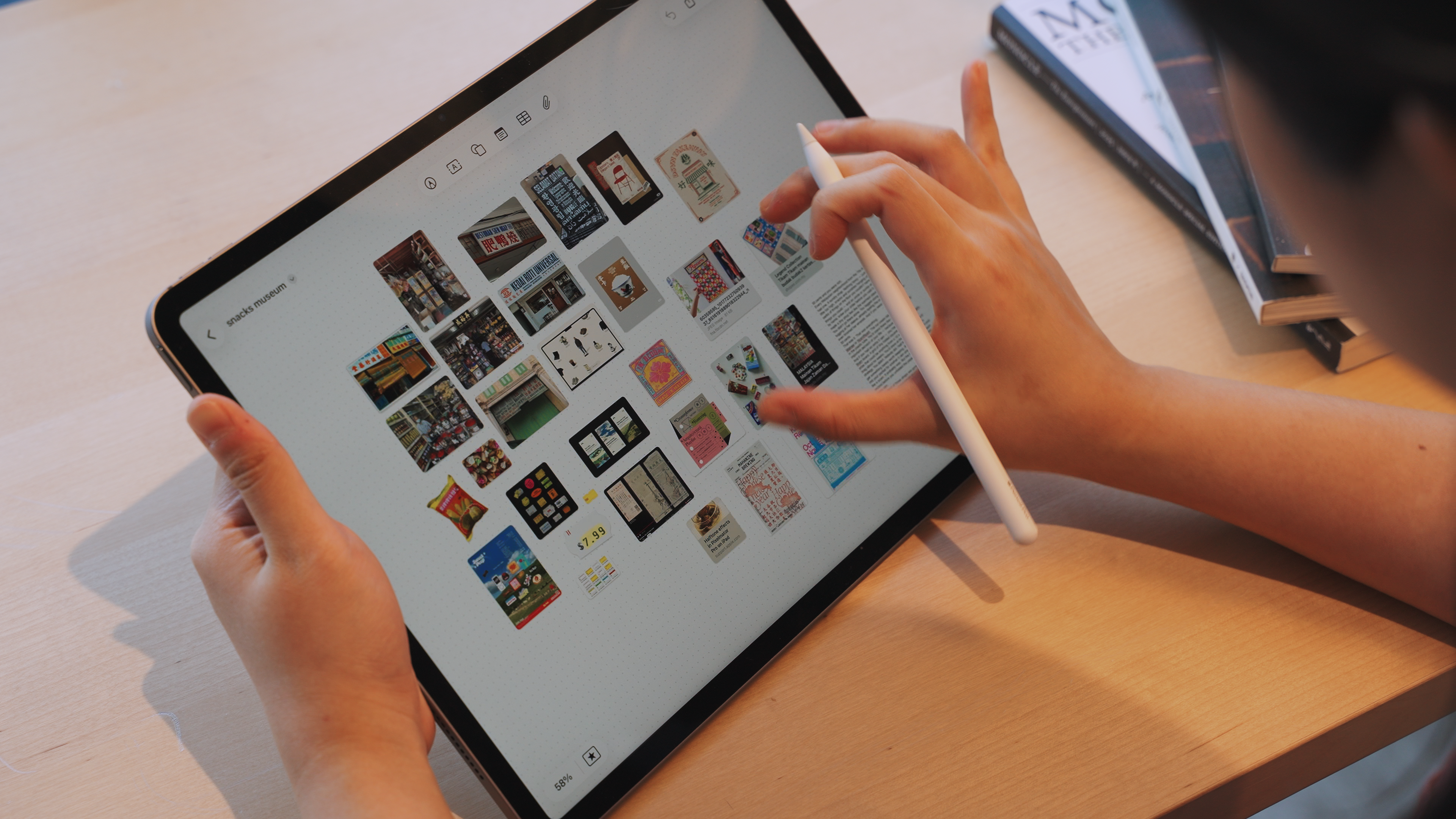
SAYS Tech: How did iPad Air M4 specifically change your workflow? Was there a moment where it officially replaced the need for a desktop setup?
Rachel: iPad Air M4 didn't replace my desktop entirely, but it changed where my best thinking happens. For ideation, for sketching, for brainstorming, iPad feels freeing because it goes where you go — the sofa, a cafe, wherever the idea hits. The desktop is where I go when it's time to execute.
Before, I'd sketch rough ideas on paper or just type things out. It worked, but there was always a gap between the idea in my head and getting it out. iPad closed that gap.
Sometimes all I want to do is drag references from the Internet right next to my doodles — and that's just not something you can do as naturally anywhere else.
Freeform was where this whole project started. It's a minimal tool that doesn't get in the way of your thinking. I'd open it in Split View with Safari or Pinterest on the right, and just drag anything that inspired me straight onto the canvas. And because you can erase, move, and rearrange freely, it gave me a calm space to think without the pressure of getting it right.
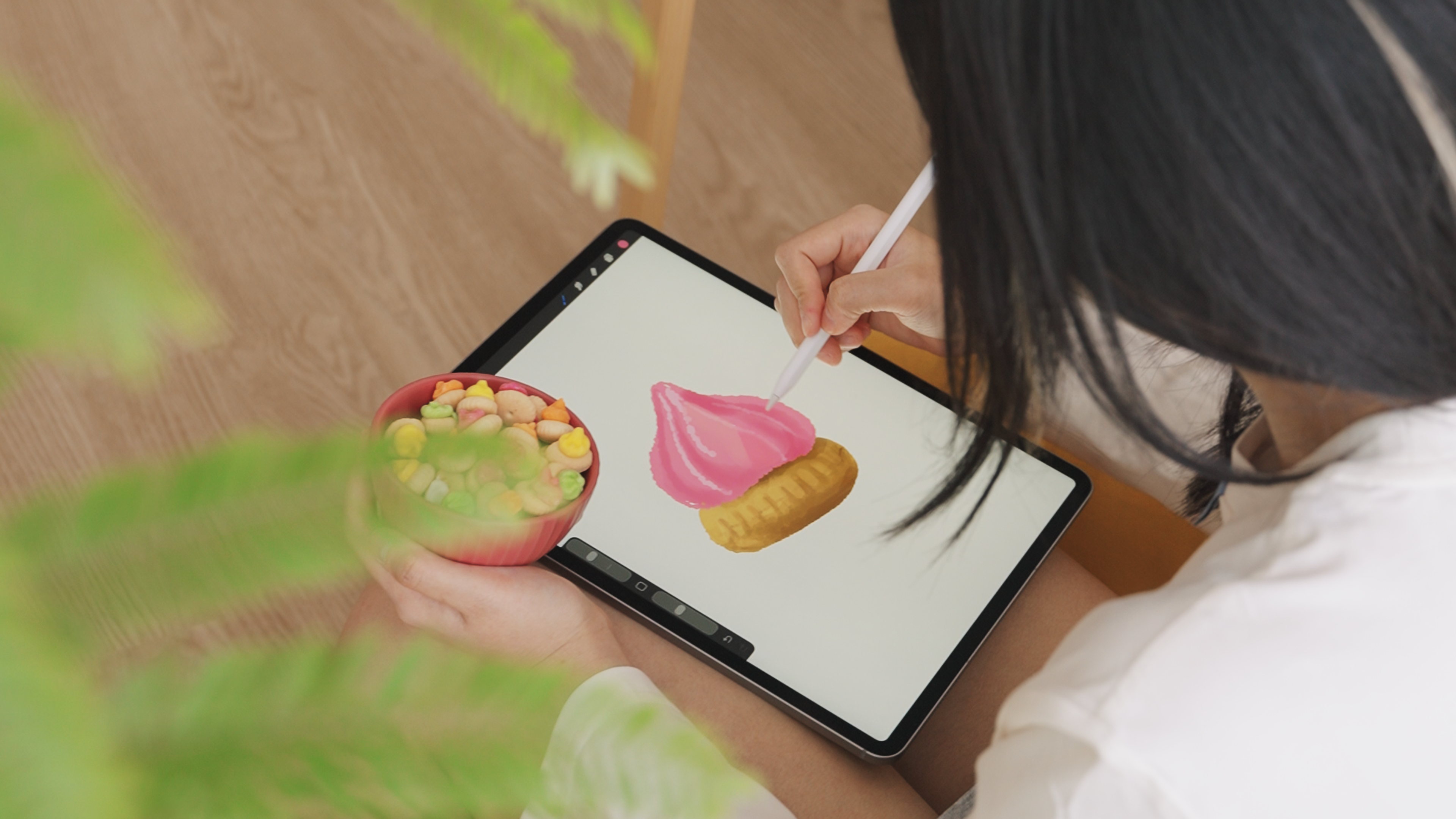
Then there's Procreate. Honestly, I'm a designer but I cannot draw. Before this project, I was strictly a stick figure person. But something about Apple Pencil Pro on that Liquid Retina display just felt natural — no lag, no latency, smooth and responsive in a way that made me forget I was supposed to be bad at drawing. I ended up rediscovering how fun illustration actually is. And somewhere along the way, I started to think — maybe I actually can draw.
SAYS Tech: Which snack was the most challenging to illustrate in Procreate, and how did you capture those tactile, "crinkly" nostalgic details?
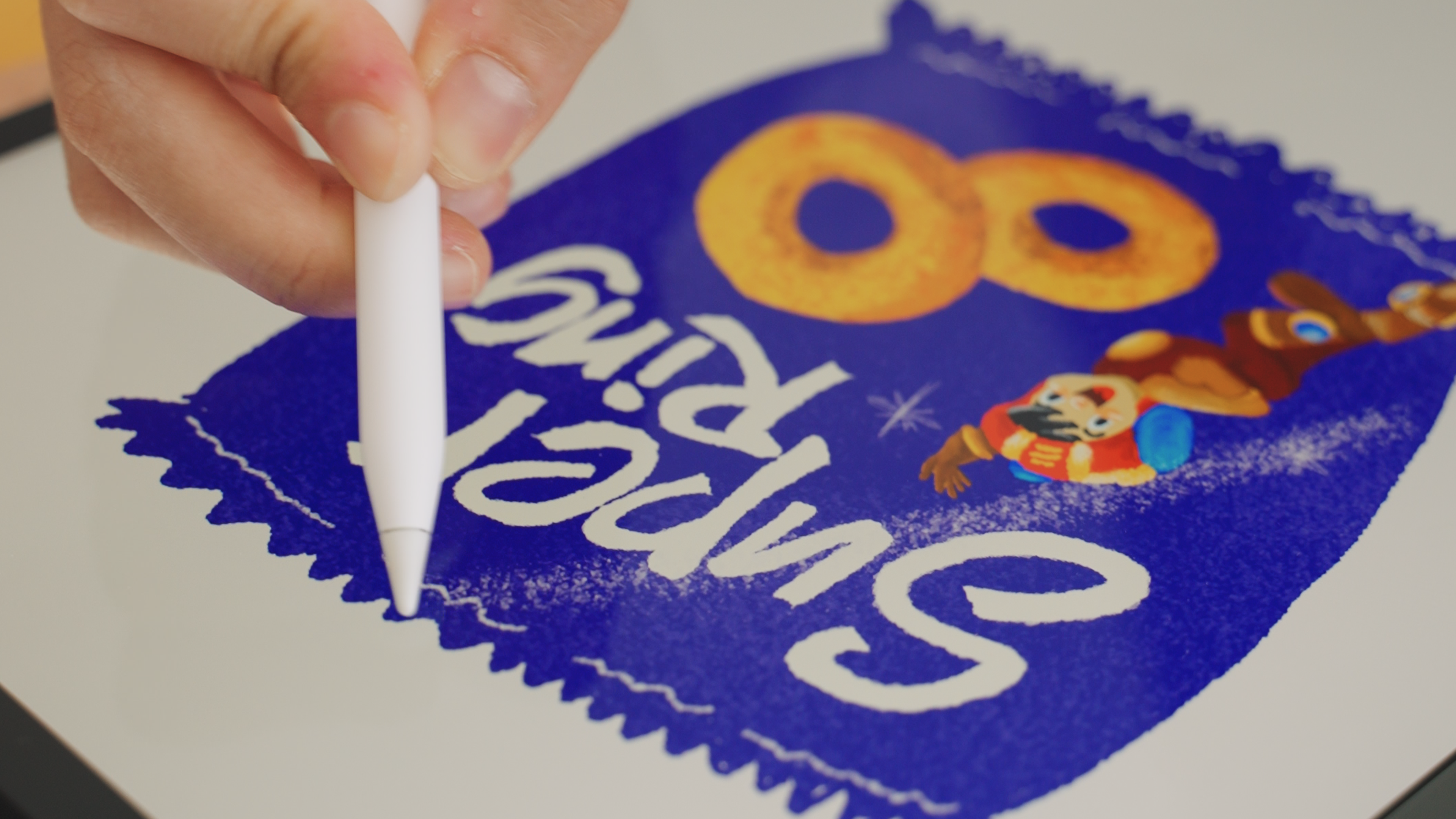
Rachel: Super Ring was the hardest one. It's been a beloved Malaysian snack since the 1970s and is still just as delicious today, so I felt the pressure to get it right. The tricky part was the colour. It has this purple-blue hue that shifts slightly depending on the lighting. So I went out, bought the actual snack, held it in one hand, and eyeballed the color under daylight until it felt right.
As for the art style, I wasn't going for realistic. I kept the lines loose, only illustrated the key elements of each snack, and let the imperfections sit. I think that's what makes them feel warm and human.
With Apple Pencil Pro, I can hover over the screen to preview exactly where each stroke will land before I commit, which gave me a lot more confidence. I used its Barrel Roll feature to rotate shaped brushes mid-illustration, and double tapped to switch between brush and eraser without breaking the rhythm. Tiny features that kept me in the flow.
Tilting Apple Pencil Pro gives a softer, shaded effect — kind of like using the side of a pencil on paper. I tried different Procreate brushes until something surprised me. There was no set rule. It felt like play!
SAYS Tech: How can digital projects like yours help younger Malaysians connect with our heritage in a way that modern convenience stores can't?
Rachel: I think there's something a modern convenience store lacks — the story behind each snack. You can buy Super Ring at 99 Speedmart today, but there's nothing telling you where it came from, what era it belonged to, or what it meant to the people who grew up with it.
A digital project can hold that story. On the site, you can drag snacks around, click on one and read about its history, where it came from, why it matters. Some of these snacks barely exist anymore. So, it helps to document them somewhere permanent, somewhere anyone can find. Whether you're in KL, Sabah, or a Malaysian living abroad who just wants to feel a little closer to home.
What I didn't expect was how it would bring people together. The other day, I showed the site to my parents and watched their eyes light up. They started pointing at snacks, laughing, finishing each other's sentences. Suddenly I was hearing stories I had never heard before — about their childhood, the neighborhoods they grew up in, the snacks they spent their pocket money on. It turned into one of the most precious conversations I've had with them. I built this to preserve memories, and I didn't expect it to create new ones.
Sharing it as video takes the story even further. Someone who never would have stumbled across it is suddenly watching and going, wait, I remember that.
SAYS Tech: For fellow Malaysians with a "passion project" in mind, what is your best tip for using tech to turn a nostalgic dream into a reality?
You asked for my best tip, I couldn't pick just one, so here it goes:
- Tip 1: Start with something personal. When your project is rooted in a story that only you could tell, it already stands out. Nobody can replicate your specific memory or your specific connection to it. That's what gives it personality, and that's what makes people feel something when they come across it. It also gives you a reason to actually finish it.
- Tip 2: Embrace the mess. The ideation process is messy and chaotic, and that's normal. The Freeform app supports that — just throw everything onto the canvas and organize it later. Once it starts to make sense, that's when you open your tools.
- Tip 3: Combine the old and the new. Hand drawn illustrations that live on an interactive website. Traditional snacks preserved through modern technology. That contrast is what gives a project like this its personality. It doesn't feel generated or templated. It feels human.
- Tip 4: Know that the barrier is lower than you think. Building something like this with hand drawn assets, design, code, animation and video — that's a lot to pull off alone, especially if you're not technical. But it's easier now than it's ever been. I used Figma and Claude Code to turn my ideas into a real, functioning website with animations in just 2 days, and it cost less than RM100. Whenever I got stuck, I just asked Claude to guide me through it.
- Tip 5: Just go build it. Your passion project doesn't have to be big. In an age of AI-generated everything, technology is no longer the barrier. Authenticity is your edge. That's what makes people stop and care.
