


 Cover image via turner.com
On 25 April 2015, a 7.8-magnitude earthquake occurred in Nepal, destroying large parts of it. At the time of writing this story, official death toll has crossed 1,890 with more than 4,700 people injured!
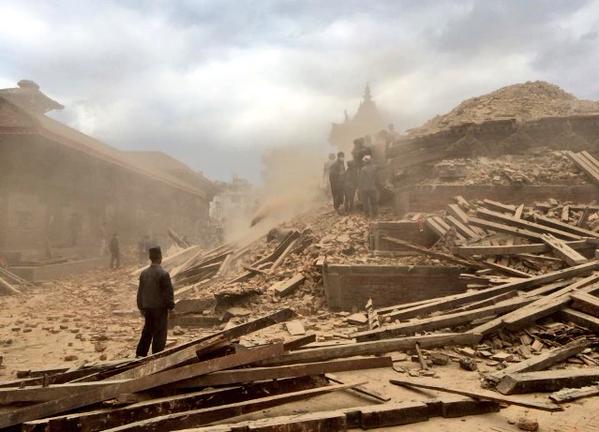
"Still can't believe what I witnessed in #NepalQuake today. History crumbling, a nation in despair."
Image via Siobhan Heanue
According to a Statistic Brain report, earthquakes kill more than 13,000 people each year, and almost 5 million lives are affected by injury or loss of property around the world. Understandably, the question that — Whether or not we have Technology that can Accurately Predict a Looming Earthquake? — comes to the mind!
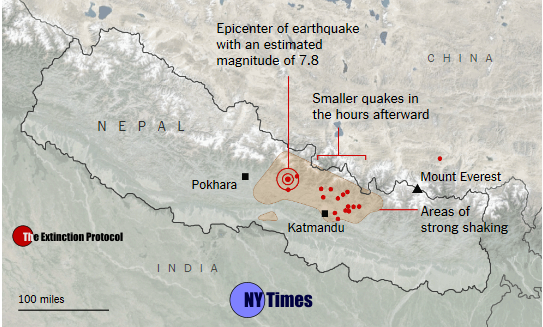
Image via NYT
Unfortunately, despite the immense technological advancements in today's world, humans still cannot predict earthquakes. At least not so that an advanced warning could be issued for a specific time at a specific location that would allow for an orderly evacuation!
As Pacific Disaster Center notes, although some major earthquakes are preceded by foreshocks, there is currently no reliable method to accurately predict the time, location, and magnitude of a quake.

So, will we ever be able to predict earthquakes? Maybe!
However, as Slate's John Dvorak suggests, the question of earthquake prediction can be reduced to a more tractable and straightforward question: What triggers a large earthquake?
While today's scientists understand earthquakes a lot better than we did even 50 years ago, they still can't match the quake-predicting prowess of the common toad, which can detect seismic activity days in advance of a quake. So maybe studying their behaviour can help predict earthquakes more accurately?
[A 2010 study](http://www.sciencedaily.com/releases/2010/03/100330210949.htm) published in Journal of Zoology found that **96 percent of male toads in a population abandoned their breeding site five days before the earthquake** that struck L'Aquila, Italy, in 2009, about 46 miles (74 kilometers) away. Researchers aren't quite sure how the toads do this, but it's believed that they can detect subtle signs, such as the release of gases and charged particles, that may occur before a quake.
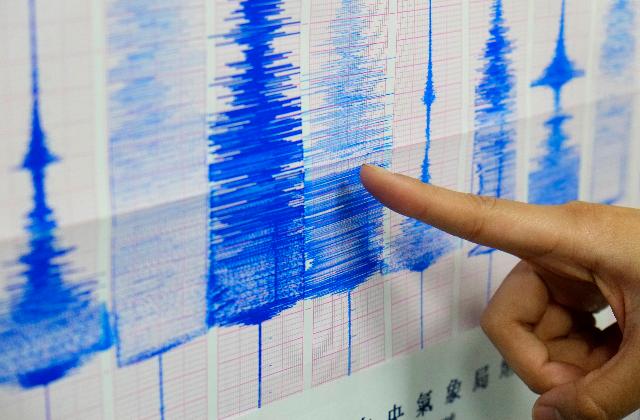
Seismic chart of the 6.3 magnitude earthquake that struck offshore of Taiwan.
Image via AP Photo/Wally Santana
