


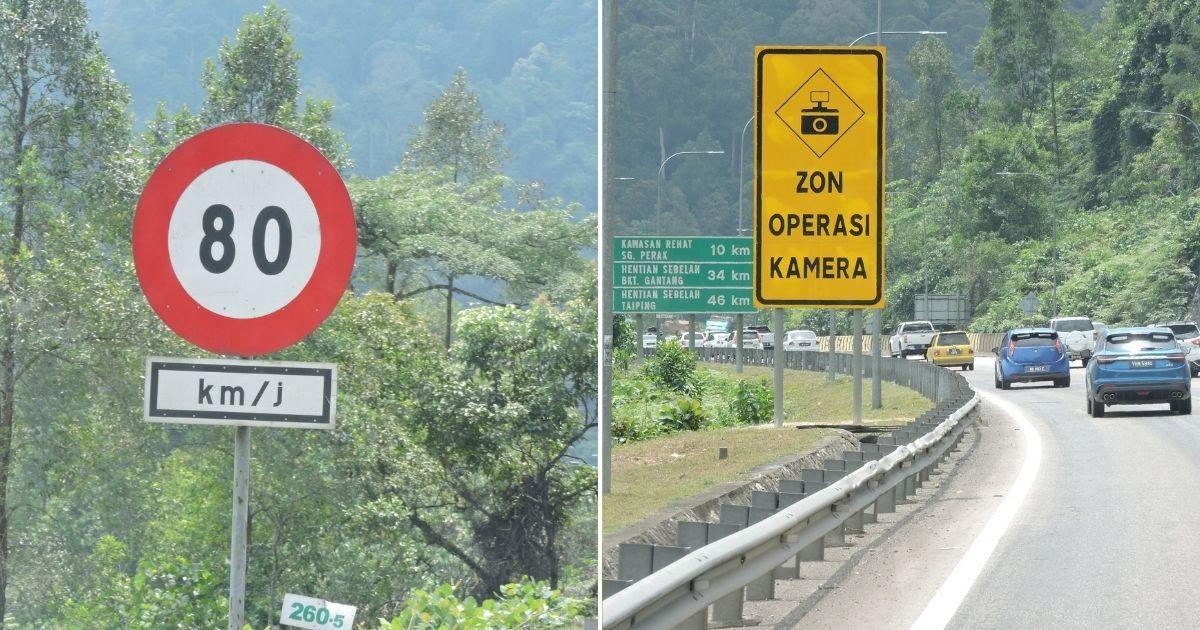
 Cover image via Anthony H S Law (Facebook)
Follow us on Instagram, TikTok, and WhatsApp for the latest stories and breaking news.
Driving in Malaysia is almost like an extreme sport, especially on the North-South Expressway (PLUS), when you feel like the next Max Verstappen
We've all been there: speeding on the highway to get to your destination faster or trying to make it to Mid Valley before the LDP turns into a crawl.
But here's the question: Does breaking the speed limit actually get you there faster?
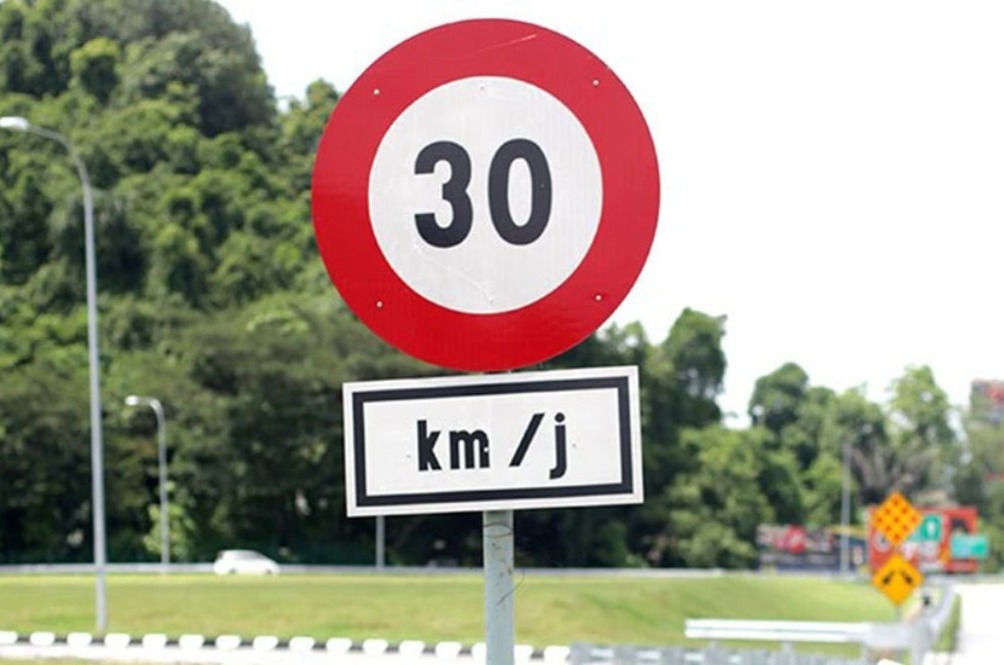
Image used for illustration purposes only.
Image via Ipoh EchoWe did the maths, and here's what we found:
Let's consider a standard 100km journey. Sticking to the 110km/h speed limit — using the formula time = distance ÷ speed — it takes you about 54 minutes and 30 seconds.
Now, if you decide to push it to 130km/h, you'll reach it in about 46 minutes.
Guess what? You only saved eight minutes.
Eight minutes. That's barely enough time to order a teh tarik and wait for the foam to settle. If you're heading from KL to JB — which is roughly 330km — the "time saved" looks bigger on paper, but it assumes you never hit traffic at the Skudai toll or slow down for a truck overtaking another truck at 80km/h. Even experts corroborate this equation.
In reality, the "bursts" of speed usually get negated by the flow of traffic.
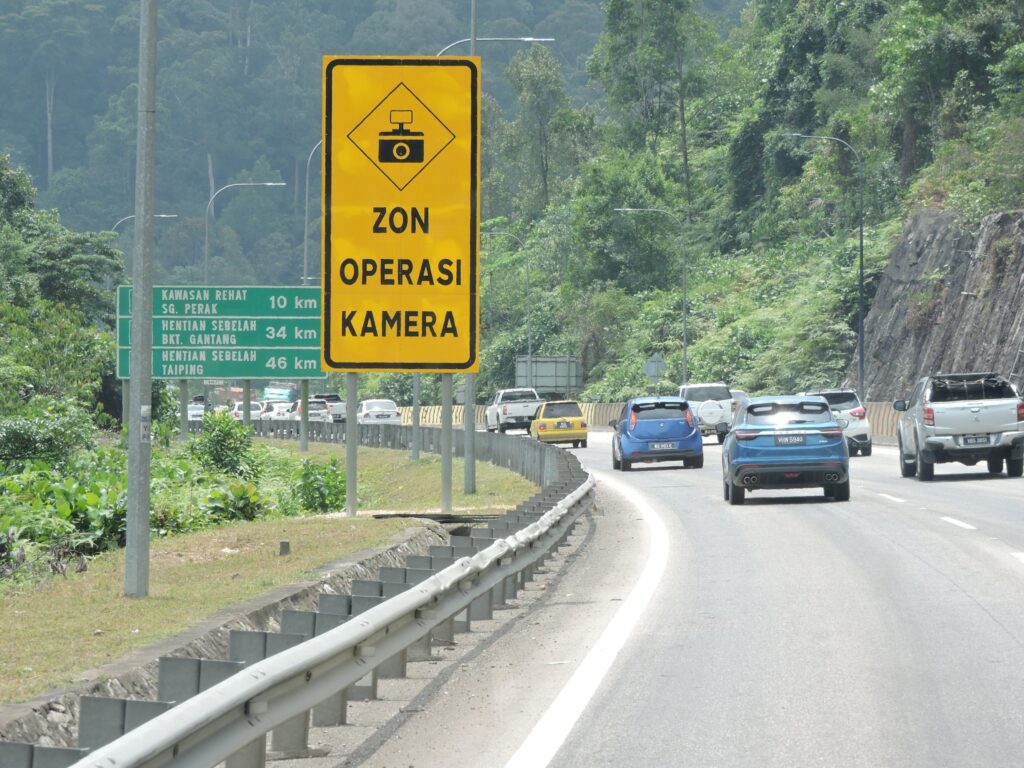
Image used for illustration purposes only.
Image via Anthony H S Law (Facebook)Speeding isn't just about fines; it's worse than that. Here are some reasons why drivers shouldn't break the speed limit:
1. Your car becomes a thirsty monster
Engines have a "sweet spot" for fuel economy. For most cars in Malaysia, the engine's viscosity management and gear ratios are optimised for cruising.
Once you cross that 110km/h threshold, wind resistance increases exponentially.
You aren't just driving faster; you're pushing a wall of air. Your fuel consumption can jump by 20% to 25% just to gain those measly eight minutes.
Image used for illustration purposes only.
Image via Pixabay/Pexels2. The new 2026 summons system
The police and Road Transport Department (JPJ) aren't playing around anymore. Since 1 January 2026, the tiered discount system is the law of the land.
If an AWAS camera catches you doing 130km/h in a 110km/h zone:
– RM150 fine if you pay within 15 days.
– RM300 if you wait more than a month.
– Blacklisted if you wait 60 days, meaning no road tax renewal, and good luck explaining that to your boss when you can't drive to work.
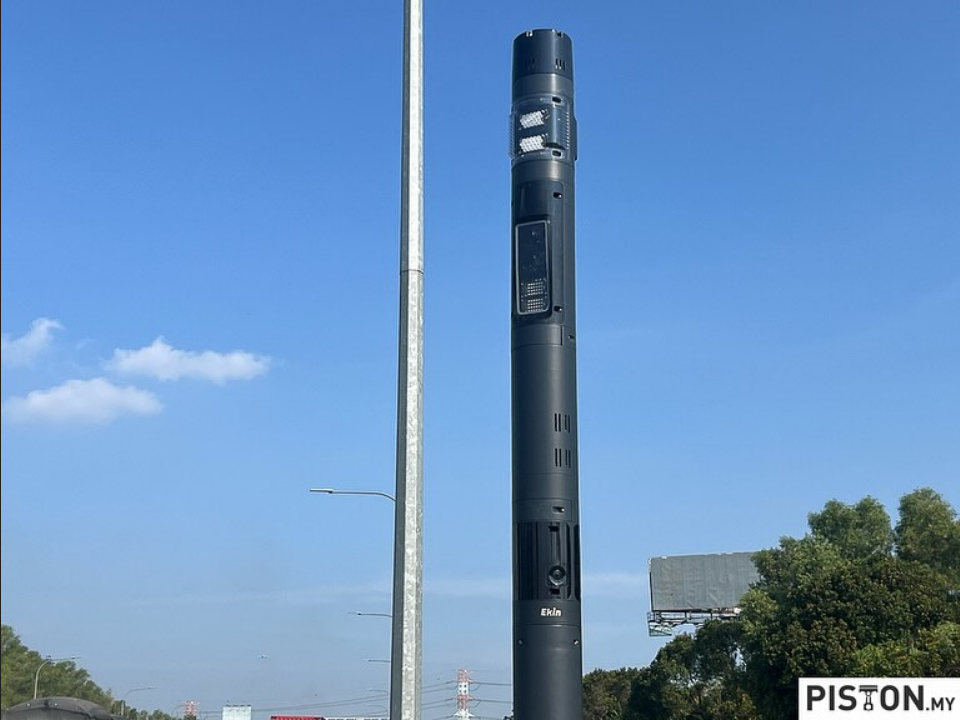
The Automatic Awareness Safety System (AWAS) camera system.
Image via @keshydhillon (Instagram)3. While gaining time on the road might seem efficient, the physical risks of speeding grow at an alarming rate
A key factor in this risk is the total stopping distance, which increases almost exponentially as speed increases.
This distance is comprised of two critical phases: the reaction distance, which is the ground covered in the roughly 1.5 seconds it takes a driver to process a hazard and hit the brakes, and the braking distance, which is the physical space required for the vehicle to come to a complete halt once the brakes are engaged.
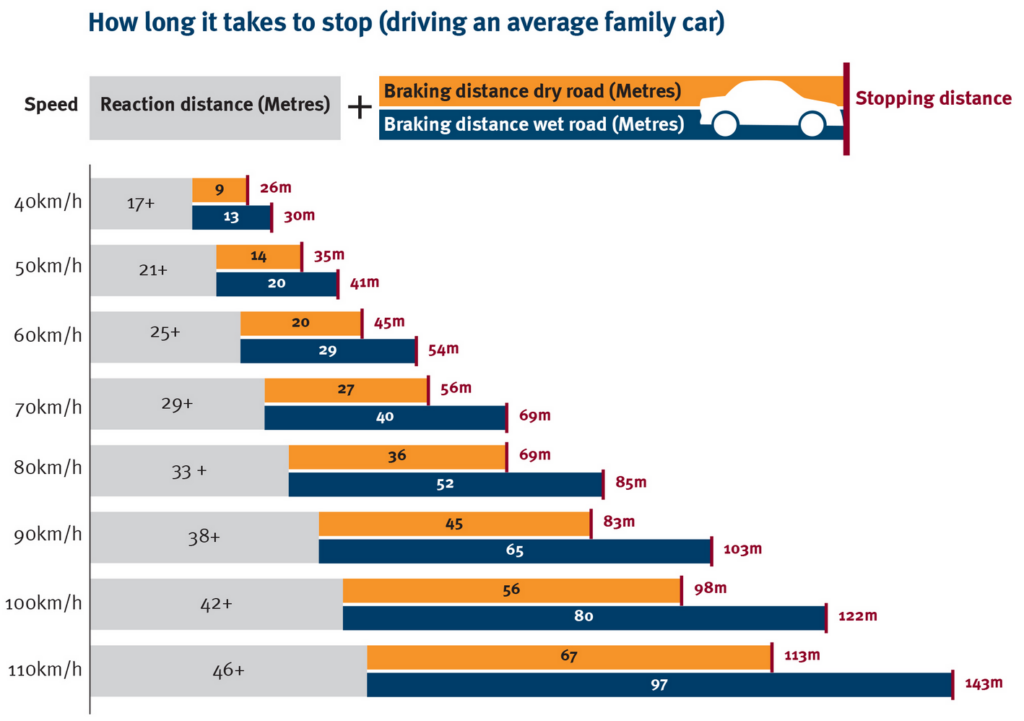
Approximate braking distance based on driving speeds.
Image via Queensland GovernmentThe physics behind braking is governed by the formula: displacement = velocity² ÷ (2 × acceleration).
Because speed (or velocity) is squared in this equation, the distance required to stop does not increase linearly; in fact, doubling your speed actually quadruples the braking distance.
Under ideal dry conditions, a car travelling at 80km/h requires approximately 66m to stop. However, increasing that speed to 100km/h pushes the distance to about 93m, and at 120km/h, the distance stretches to around 124m.
Is the risk worth the "reward"?
Here's the thing: speeding creates a false sense of progress.
You feel like you're "winning" because you're overtaking people, but the moment you hit a traffic jam at the Sungai Besi toll, everyone you passed catches up anyway.
Plus, there's the insurance "nightmare" factor. If you're involved in an accident and the police report notes you were significantly over the limit, your insurer might start asking very uncomfortable questions about your Own Damage (OD) claim.
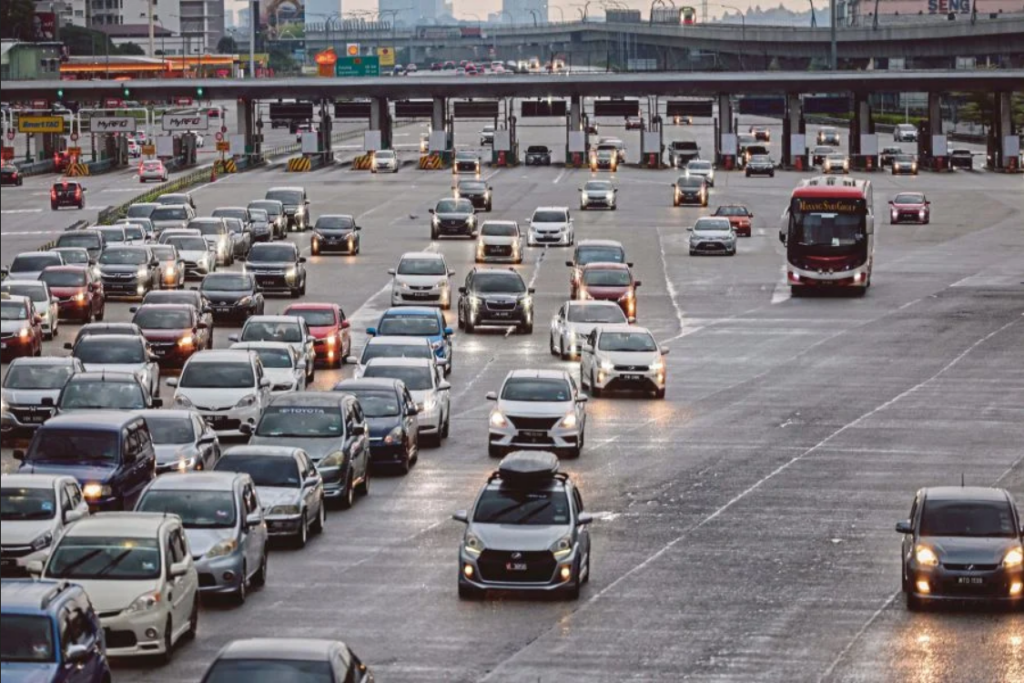
Image used for illustration purposes only.
Image via New Straits TimesLet's be real: reaching your destination 10 minutes early isn't worth a RM300 fine or, worse, a trip to the hospital
Stay in the middle lane, put on a good podcast, and save that "racing" energy for your next go-kart session at Shah Alam.
