 Cover image via Prime Minister’s Office of Malaysia & AFP
Follow us on Instagram, TikTok, and WhatsApp for the latest stories and breaking news.
India's Unified Payments Interface (UPI) is set to enter the Malaysian market, marking a major step in deepening digital payments cooperation between the two countries
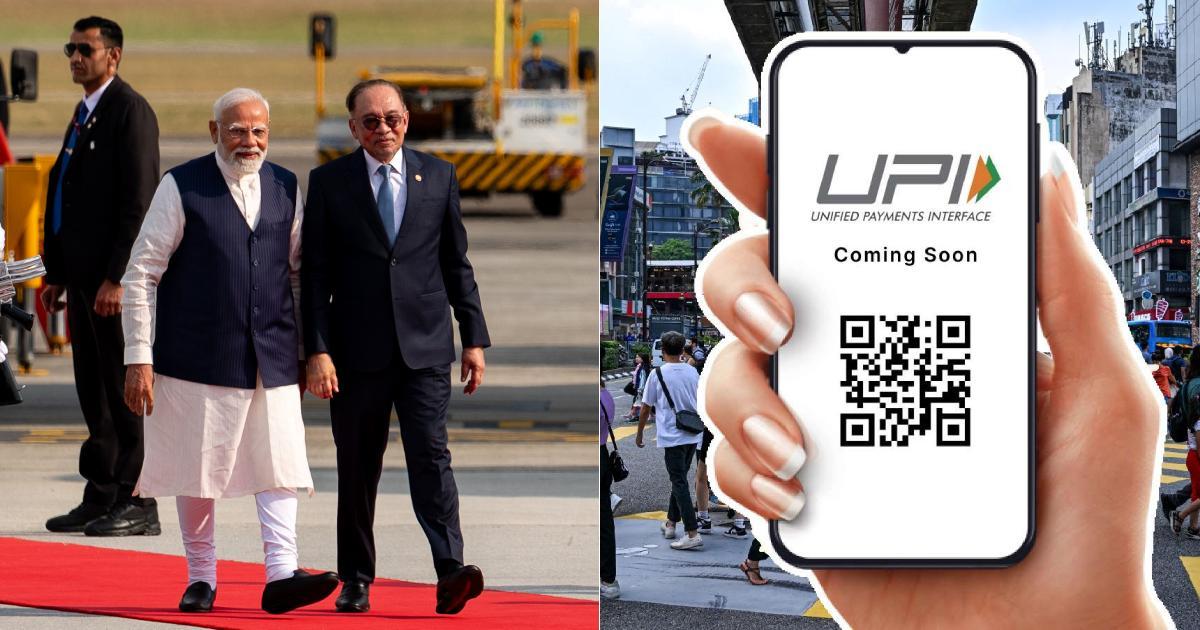
Indian Prime Minister Narendra Modi announced the move while addressing the Indian diaspora during a reception held in conjunction with his two-day official visit to Kuala Lumpur on Saturday, 7 February.
"The Malaysia-India Digital Council is paving new pathways for our digital collaboration. I am happy to share with you that India's UPI will come to Malaysia soon," Modi said.
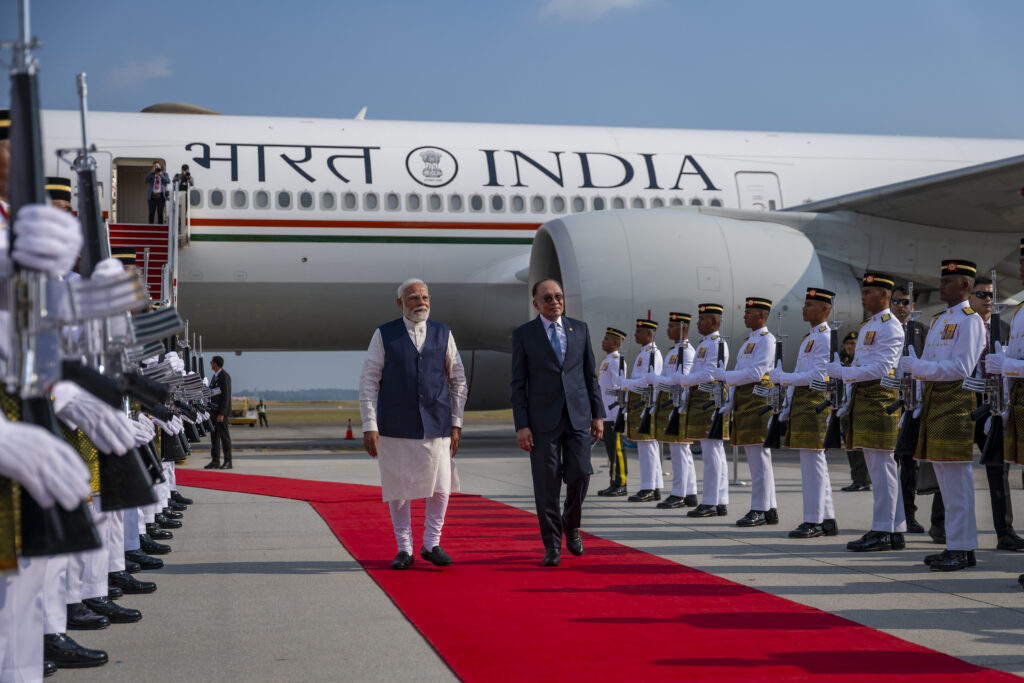
UPI will be linked with Malaysia's national payments network, PayNet, enabling cross-border payment interoperability
Modi noted that nearly half of the world's real-time digital transactions take place in India through UPI, underscoring the scale and maturity of the platform. He added that Indian companies have long been keen to work with Malaysia.
"It is a privilege that we played a part in creating Malaysia's first and Asia's largest insulin manufacturing facility. Over 100 Indian IT companies operate in Malaysia, generating thousands of jobs," he said.
India-based Biocon Biologics, a major insulin supplier to Malaysia, currently operates a USD350 million (RM1,374 billion) integrated insulin manufacturing facility in Johor, the largest in Asia.
Prime Minister Datuk Seri Anwar Ibrahim said the two countries are now deepening cooperation in sectors that will shape long-term economic growth.
"The Malaysia-India Digital Council reflects this shared ambition. The linkage between India's UPI and Malaysia's PayNet system will make cross-border payment simpler for businesses, students and clients," Anwar said.
He added that semiconductors, advanced manufacturing, digital finance, artificial intelligence and cybersecurity present strong opportunities for collaboration, given Malaysia's established electronics ecosystem and India's expanding market and design capabilities.
"As global supply chains reconfigure, there is real potential to make the region a more resilient and trusted hub for high-tech manufacturing," Anwar said.
The planned UPI–PayNet integration is expected to streamline retail payments and remittances
The integration will benefit Indian tourists, students, and migrant workers in Malaysia, as well as Malaysian businesses dealing with Indian partners.
According to the Malaysian Associated Indian Chambers of Commerce and Industry (MAICCI), the move will also support broader trade ambitions between the two countries.
MAICCI deputy president Datuk Dr A T Kumararajah said total bilateral trade between Malaysia and India reached RM79.49 billion last year.
"Both [Modi and Anwar] have agreed to accelerate local currency settlement in ringgit and rupee to facilitate trade and reduce dependence on third-party currencies.
"A strong trade base and local currency settlement ambitions support the case for complementary payments infrastructure like UPI," he told Bernama.
What is UPI?
UPI, developed by the National Payments Corporation of India, is a real-time digital payment system that allows instant peer-to-peer and merchant transactions using mobile phones. Payments can be made via virtual payment addresses, QR codes or mobile numbers, without sharing bank account details.
Kumararajah said UPI is recognised as the world's largest retail fast payment system by transaction volume, processing between 20 billion and 21.6 billion transactions monthly in 2025.
"In 2025, it recorded 228.3 billion transactions compared with 172.2 billion in 2024, indicating rapid year-on-year growth," he said, adding that cross-border UPI transactions grew more than 20-fold last year.