


 Cover image via Sukhbir Cheema / SAYS
I have zero coding knowledge. So, when I learned that you can build AI agents via simple drag and drop actions, I jumped at the chance.
AI agents are all the craze at the moment. They're smart assistants that can think for themselves, make decisions, and do tasks for you — like answering questions, booking appointments, or sorting your emails — without you having to tell it exactly what to do each time.
In my case, I needed an AI agent that sends a daily tech news roundup directly to my email. It should be able to scour the Internet for the latest tech news, compile and curate it with proper citations, organise everything neatly, and deliver a daily roundup to my email inbox by 7am — while I'm still in bed.
Basically, I intended to shave off roughly two-hours worth of searching time for articles to cover on a daily basis.

Image via Sukhbir Cheema / SAYS
I used n8n, an impressive German-based open-source platform that allows you to connect apps to build AI agents for a myriad of tasks
The setup involved Claude 3.5 Sonnet, Gmail integration, SerpAPI for web searching, and a simple memory node to avoid repeating stories.
Since I was still new to the platform, it took me around four hours to build a working AI agent from scratch.
I followed Futurepedia's step-by-step tutorial (the most helpful so far currently on YouTube) and I highly recommend following his steps here:
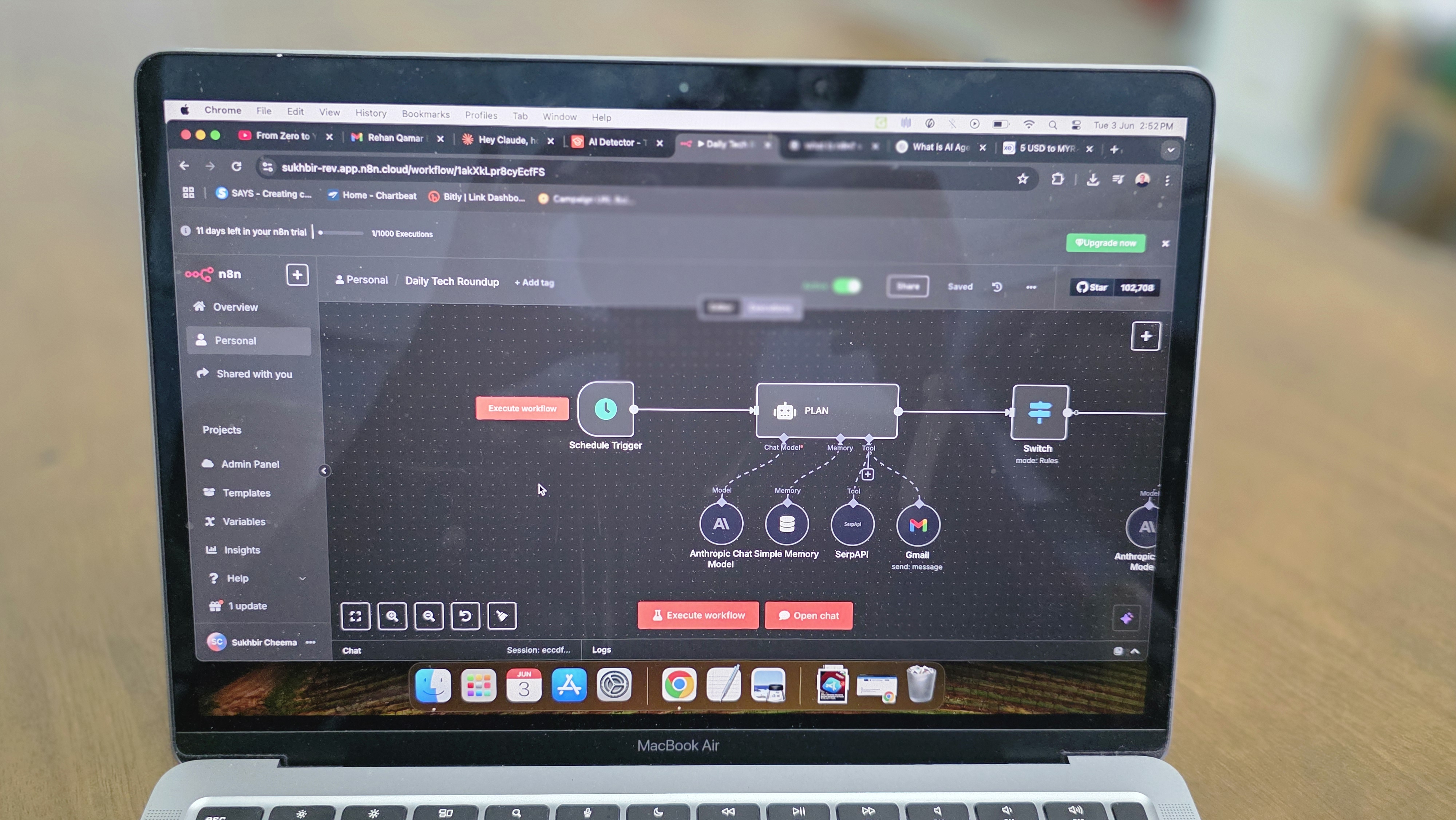
Image via Sukhbir Cheema / SAYS
Four hours later, I had a working AI agent (sort of). And I encountered several issues which were interesting and slightly terrifying.
First up, hallucination. My AI agent emailed me "breaking news" about tech that never happened and resurrected stories from 2019 as if they were yesterday's headlines.
Next, broken links. Multiple times, the agent provided links that led straight to error pages. Nothing kills credibility faster than sharing a "must-read" article that doesn't exist.
But the most jarring of all was the reality about coding. Despite marketing claims about user-friendliness, you'll need basic coding knowledge. I found myself constantly asking ChatGPT for help and debugging line by line whenever something broke. Not exactly the "no-code" experience promised.
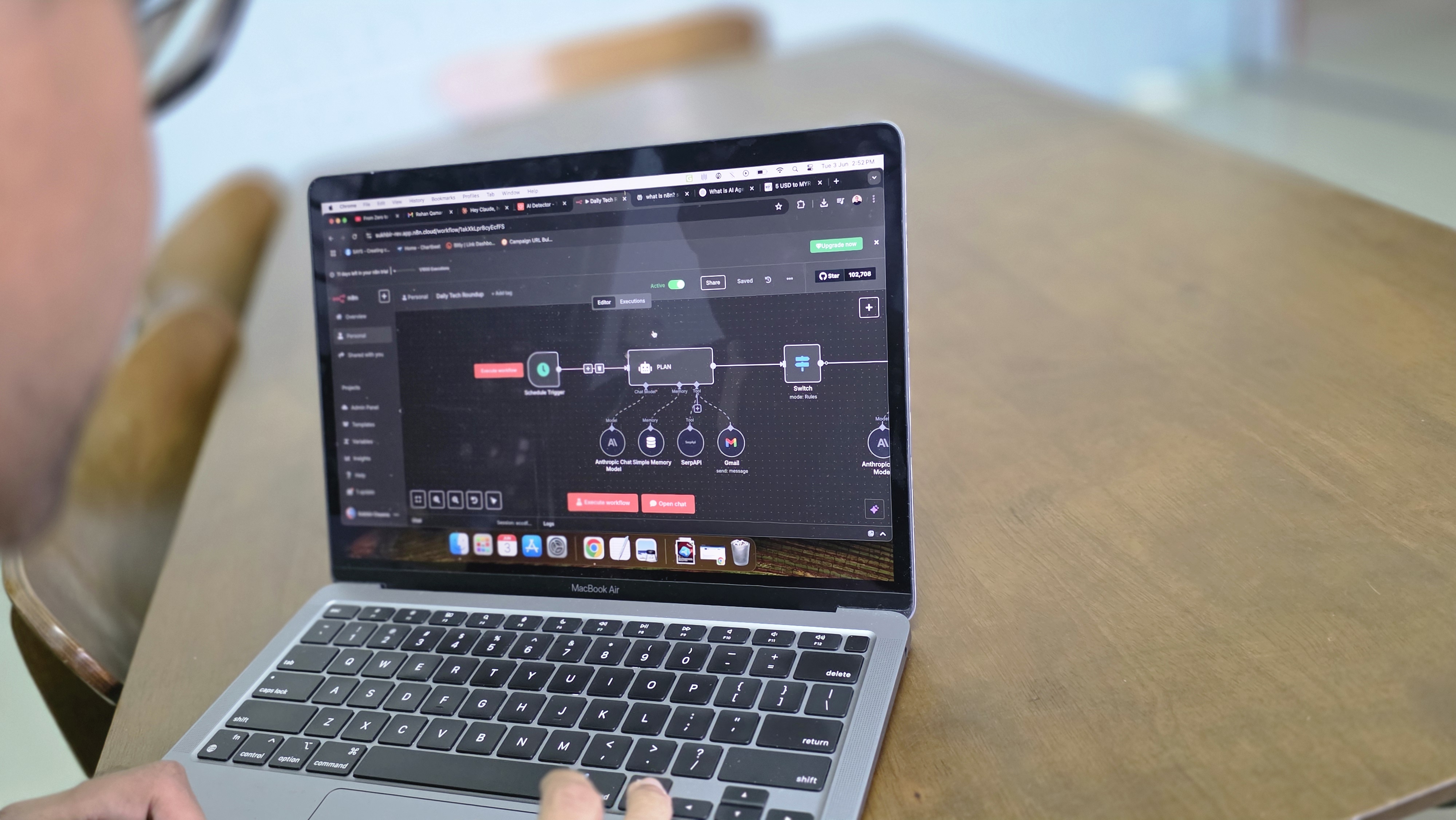
Image via Sukhbir Cheema / SAYS
If you're a business owner or a key decision maker considering building AI agents to cut costs, I would suggest to dig deeper because there are hidden costs involved
At USD 5 (RM21) per complex task, these AI agents aren't exactly cheap for individual users. n8n can also be costly. It starts at USD24 (RM102) a month (if you opt for annual payment, the fees drop to USD20 (RM85)) and goes up to more than USD60 (RM255). To unlock more features, you'll have to fork out more money. You can view the pricing here.
However, for Malaysian SMEs looking to automate content curation or customer service, the cost could quickly pay for itself by reducing manpower needs.
In other words, these AI agents do have big potential. I can see Malaysian startups leveraging this technology brilliantly. For example, a local e-commerce business using AI agents to monitor competitor pricing or track trending products across Southeast Asian markets.

Image via Sukhbir Cheema / SAYS
However, the most unsettling part is privacy. Granting my AI agent permission to read, edit, and delete emails felt like handing over the keys to my digital life.
For Malaysians increasingly concerned about data privacy (especially post-PDPA), this raises serious red flags.
What happens when these agents access sensitive business communications or personal information?
In my case, I used a throw-away email to conduct my tests and experimentations. I suggest you do the same until you gain further clarity on the privacy bit.
Experimenting with my AI agent also got me thinking about its impact, specifically on misinformation and the environment
In Malaysia's diverse media landscape, where fake news spreads faster than durian season updates, AI agents could amplify misinformation risks.
Without proper fact-checking protocols, these tools might inadvertently spread false information across communities, particularly dangerous during politically sensitive periods.
There are also hidden costs involved on the environment. With Malaysia's growing focus on sustainable technology, the environmental cost of widespread AI adoption is concerning. Each AI query consumes significant energy — multiply that by millions of users, and we're looking at a substantial carbon footprint that could impact our climate goals.
But the biggest elephant in the room (and also the main reason I experimented with an AI agent) is this: Will AI replace us?
The good news is that AI won't replace us entirely, but jobs will definitely evolve.
Based on my experiment, AI still needs human oversight, fact-checking, and creative input. The winners will be those who learn to manage, maintain, and maximise AI tools.
For fresh graduates and mid-career professionals in Malaysia, this means upskilling in AI literacy is essential. You don't need to become a programmer overnight, but understanding how to work alongside AI will become as important as basic computer literacy was in the 2000s.
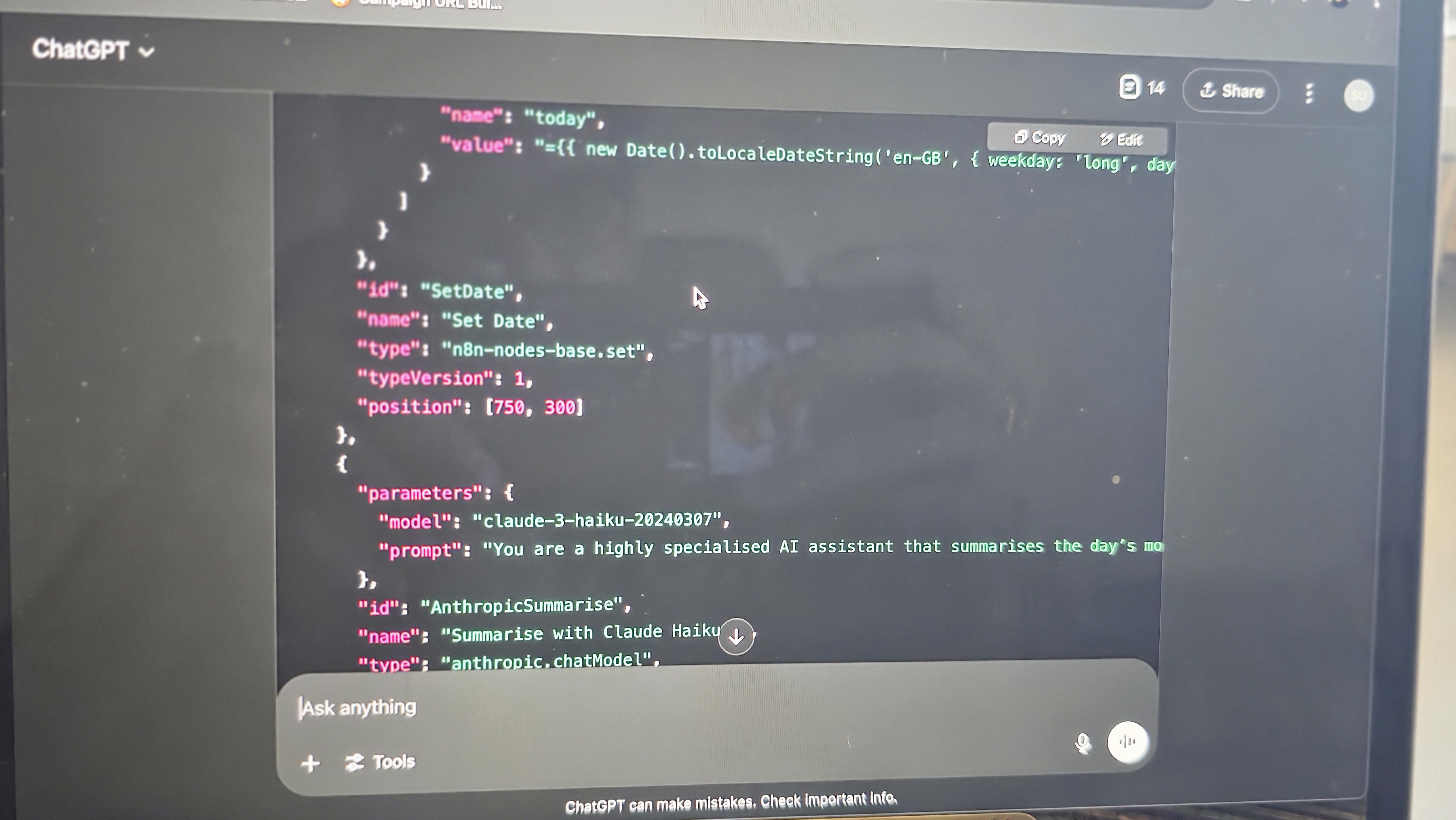
Image via Sukhbir Cheema / SAYS
Despite the challenges, I remain cautiously optimistic. AI agents will likely become as common as smartphone apps within the next decade (possibly even in the next couple of years).
The key is ensuring we develop them responsibly, with proper safeguards for privacy, accuracy, and environmental impact.
For Malaysian businesses and individuals, the question isn't whether to adopt AI agents, but how to do it safely and effectively. Start small, test thoroughly, and always maintain human oversight.
The future of work is about humans working smarter with AI, and that future is arriving faster than you might think.

