


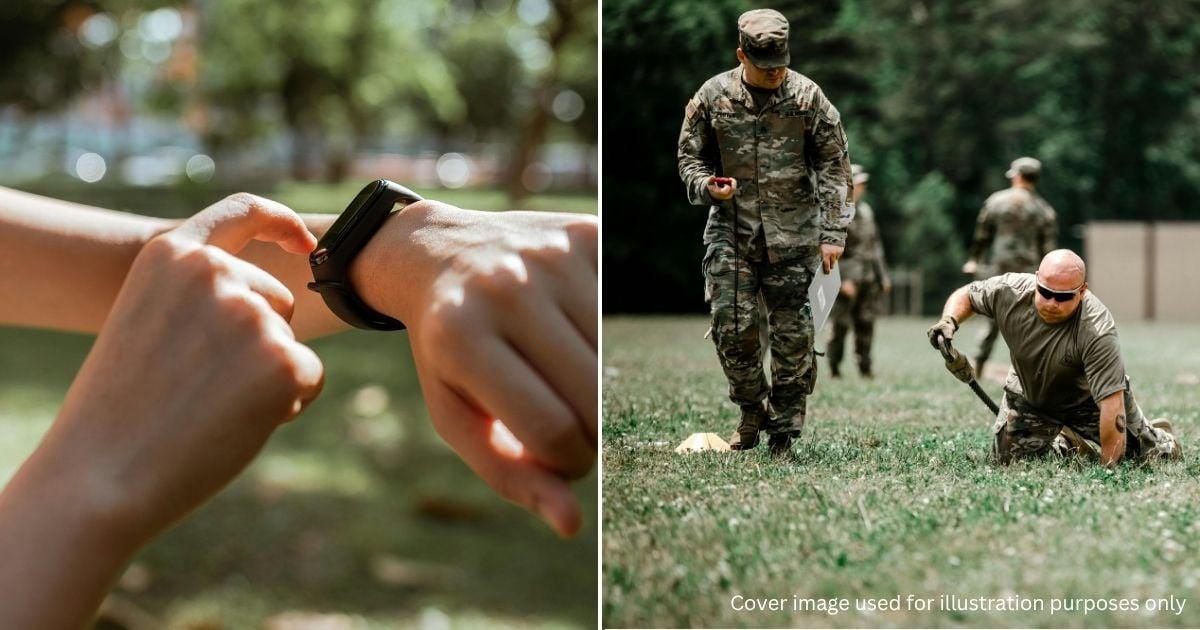
 Cover image via
Follow us on Instagram, TikTok, and WhatsApp for the latest stories and breaking news.
While fitness tracking apps like Strava remain popular among Singapore Armed Forces (SAF) personnel, defence observers have warned that they may pose security risks by exposing the movement patterns and daily routines of those inside military installations
Although military locations in Singapore are often already inferable from open sources, experts said "pattern-of-life" data — such as activity levels, movement frequency, and internal patrol routes — could be exploited by bad actors to identify security vulnerabilities.
In response, Singapore's Ministry of Defence (MINDEF) said it is aware of these risks and is conducting ongoing assessments
Rather than implementing an outright ban, the SAF employs a risk-managed approach to fitness trackers, according to Channel News Asia.
Specific restrictions are in place for sensitive or classified operations, where personnel must store devices in designated areas to prevent information leakage.
MINDEF also noted that in Singapore's context, information derived from these devices does not pose added security risks compared to other open-source data. It said fitness trackers are permitted because they help servicemen maintain physical health and monitor exercise intensity.
Despite MINDEF's assessment, experts advise caution
Defence analyst Ridzwan Rahmat noted that repeated runs and patrols can pinpoint frequently used internal roads and facility perimeters.
On the other hand, defence observer David Boey warned that seemingly harmless individual data sets can be compiled by hostile intelligence services or terror threats to build a complete picture of activities inside a base.
While Singapore's military sites are already well-mapped via public imagery, experts maintain that "low risk" does not equate to "no risk", especially given the current global geopolitical climate.
