


 Cover image via Syazwan Bahri/SAYS
Follow us on Instagram, TikTok, and WhatsApp for the latest stories and breaking news.
SAYS was recently invited to speak with the finalists of the James Dyson Award's Malaysian chapter
The James Dyson Award, an international design and engineering competition, was launched by the James Dyson Foundation in 2005 to celebrate and support problem-solving inventions created by university students and recent graduates.
This annual award serves as a vital platform for young inventors, helping them to commercialise their ideas by offering significant prize money and global media exposure to the winners. To date, the competition has supported over 400 student inventions that address real-world issues.
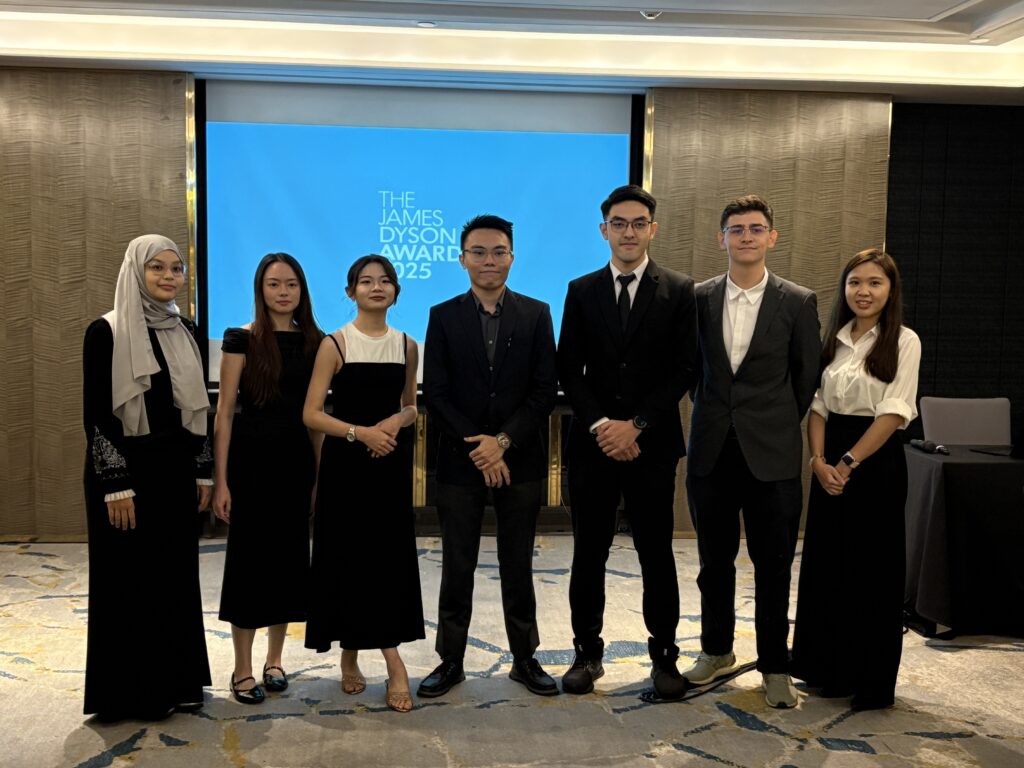
The award spans 28 countries this year, offering over RM5.7 million in prize money.
We spoke to all the finalists about their creations, and the inspirations that fuel their drive to create a better world.
Here's what they shared with SAYS:
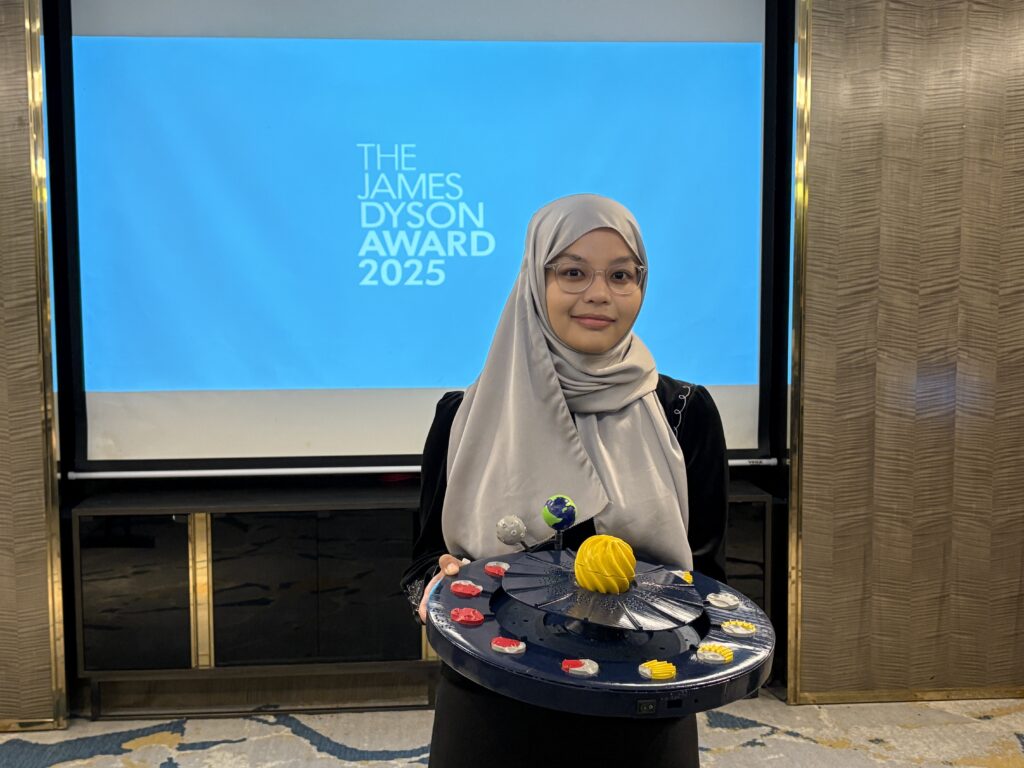
1. Nuha Annisa made the solar and lunar eclipse tactile for the visually impaired
The 24-year-old student from Universiti Sains Malaysia set out to bring the final frontier to vision-impaired students.
For visually impaired students, science education is often difficult to access because most teaching tools are designed for sighted learners.
This creates a reliance on descriptions and imagination, particularly in subjects like astronomy, where concepts such as solar or lunar eclipses can be hard to grasp. This lack of accessible, multisensory resources contributes to educational inequality and makes it difficult for teachers to create truly inclusive classrooms.
"I was inspired by the blind astronomer, Wanda Díaz-Merced, and I was also inspired by a project led by Harvard in which they let blind people listen to the eclipse," Nuha told SAYS.
"I then realised that astronomy is such a powerful topic to start with because it challenges the norm: We usually observe astronomy, we see," she added.
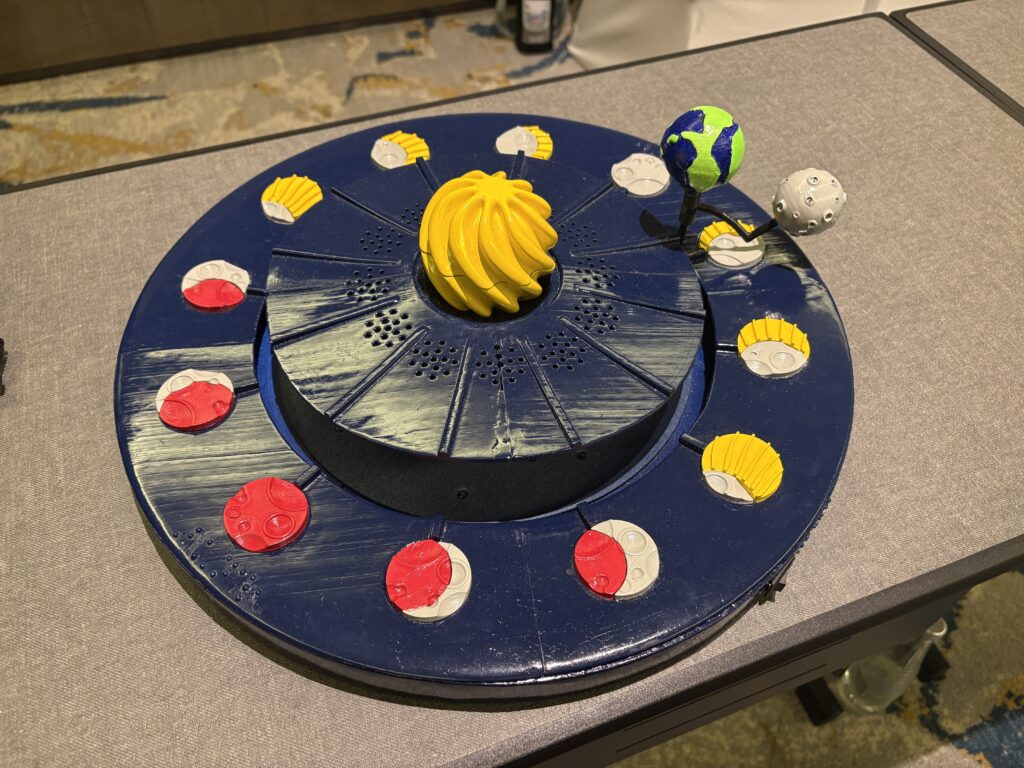
To address this, the Ecliptica system was created as a tactile and audio-based learning tool to make astronomy accessible for B2 and B3 visually impaired students.
The system uses textured 3D models of the Sun, Earth, and Moon, combined with high-contrast visuals, spatial movement, and future audio guidance, to clearly explain how eclipses work.
2. Chow Ming Fong, Magnus Gin Xiang Short, and Wong Zhi Ying aim to simplify search-and-rescue missions with their creation
These three 24-year-old students from Universiti Teknologi Malaysia came up with a brilliant solution to tackle flood crises.
To address this, the trio designed FMAS (Flood Monitoring Alert and SOS System) as an affordable, easy-to-use network to keep flood-prone communities safe.
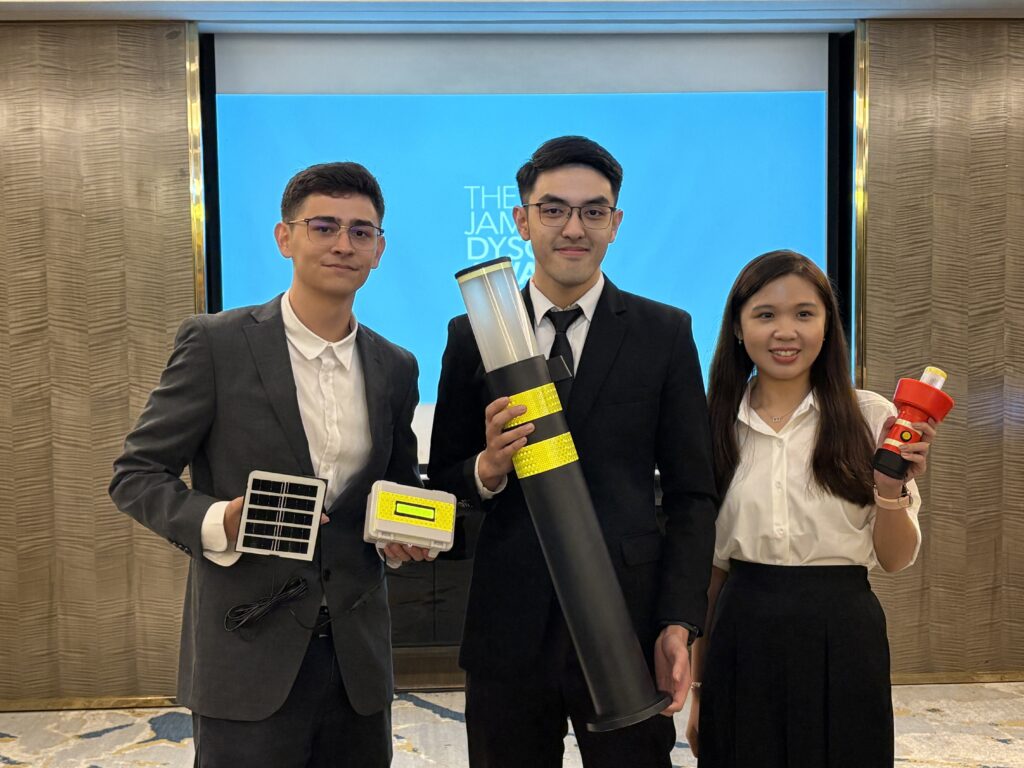
Flooding is a devastating, recurring issue in Southeast Asia, but the real danger often stems from a lack of reliable communication. Many communities are left vulnerable during critical moments because emergency hotlines become jammed, alert systems are too broad, and underserved areas lack the infrastructure for timely warnings.
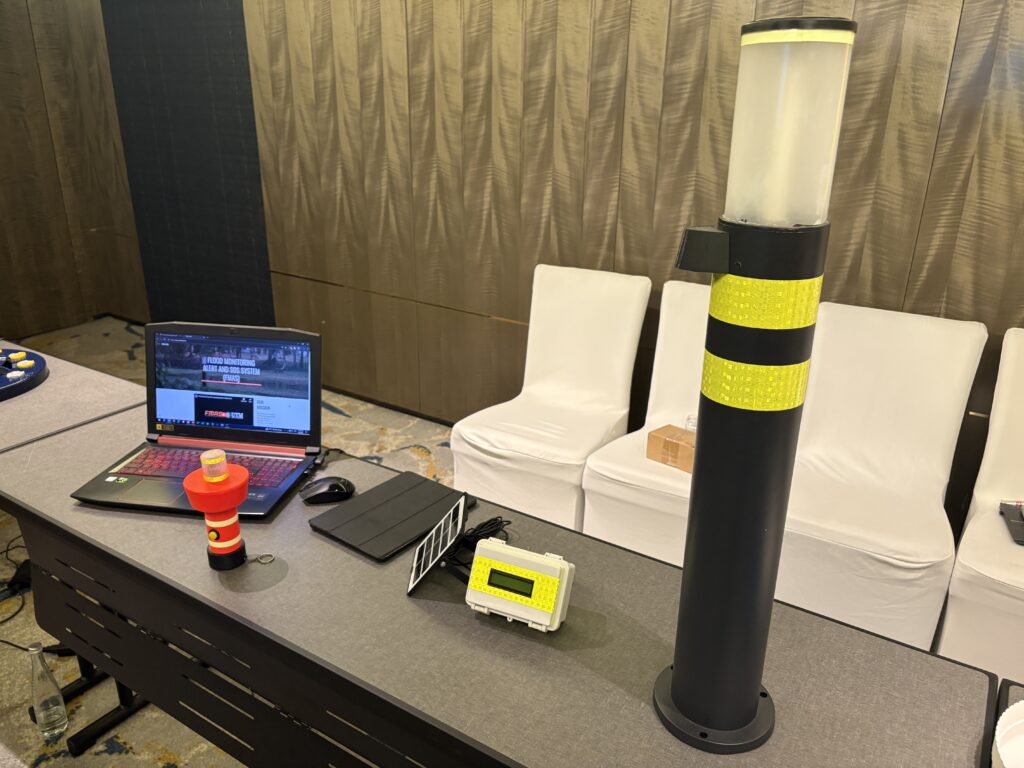
To address this, FMAS (Flood Monitoring Alert and SOS System) was designed as an affordable, easy-to-use network to keep flood-prone communities safe. The system consists of three key parts: a solar-powered Flood Detection Sensor that tracks rising water levels, a web-based dashboard that provides real-time data and sends alerts, and a household SOS beacon that warns residents and allows them to signal for rescue with their GPS location.
A major advantage of FMAS is that it runs on LoRa, a low-power, long-range communication technology that ensures it remains reliable even when mobile networks fail during a disaster. By seamlessly combining an early warning system with a direct SOS channel, FMAS ensures families are alerted in time and can quickly call for help when they need it most.
"This system will let the rescuers know exactly where victims are rather than needing to search the entire area for the victim," Chow explained to SAYS.
"So, this is the gap that we are trying to bridge because conventionally, we have a lot of monitoring systems available, but there's nothing like this system that signals the rescuers to let them know where victims are," he added.
3. Ong Jing Rou, Natalie Tham, and Ng Wen Kai want to ensure fat, oil, and grease will never clog your kitchen sink again
In a country where local dishes are often rich and oily, fat, oil, and grease are a persistent issue that clogs pipes and creates fatbergs in sewage systems.
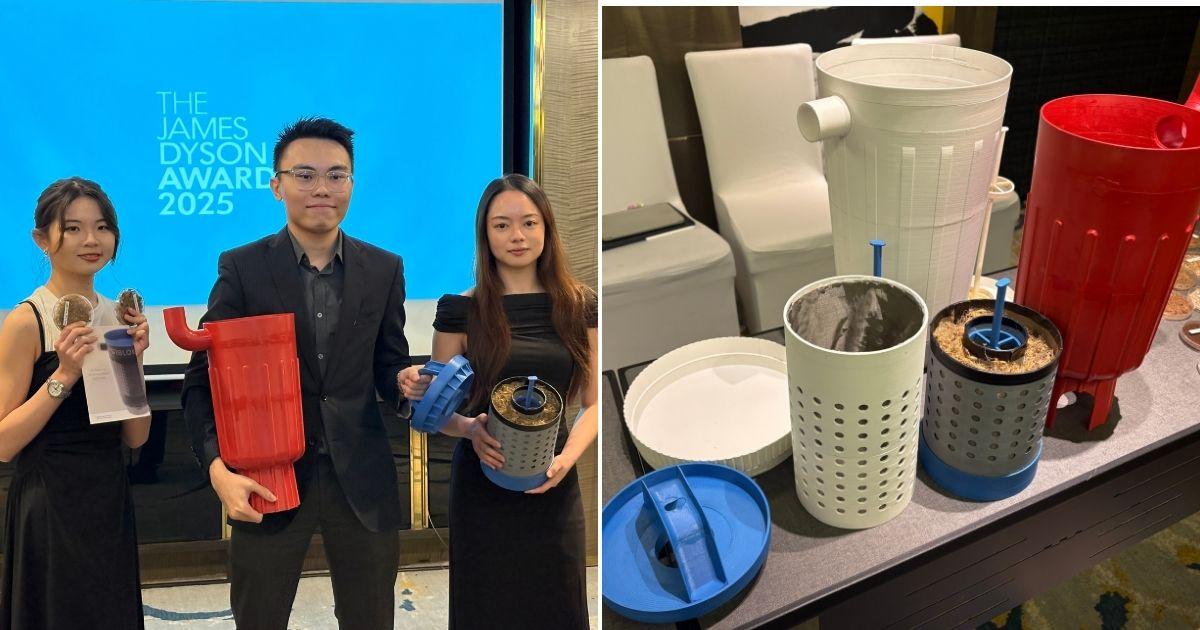
Ong, Tham, and Kai, all students of Asia Pacific University, developed UNBLOK, an under-sink filter system, after struggling with a clogged kitchen drain and hearing a plumber's warning about this hidden crisis.
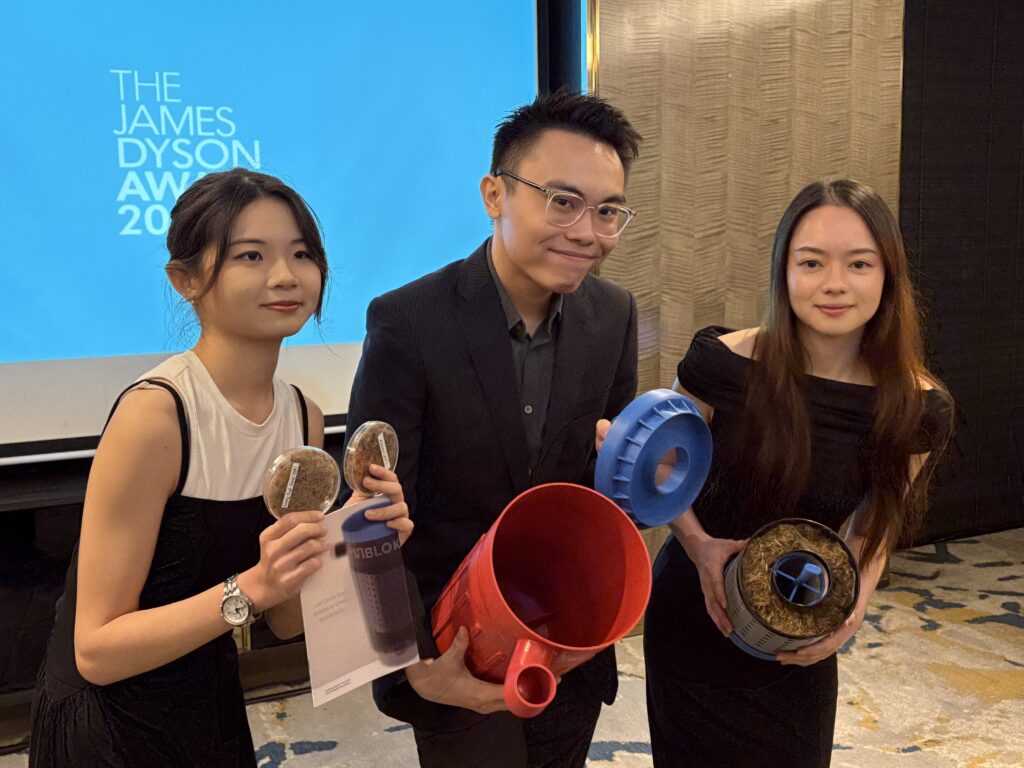
The UNBLOK system is placed beneath the sink, where its replaceable core, made from natural palm fibre — an agricultural by-product that is often discarded — traps fats and grease from wastewater. The compact system is designed for simple, tool-free installation and maintenance, with the core easily replaced once it is full. This design effectively protects both private and public infrastructure from blockages.
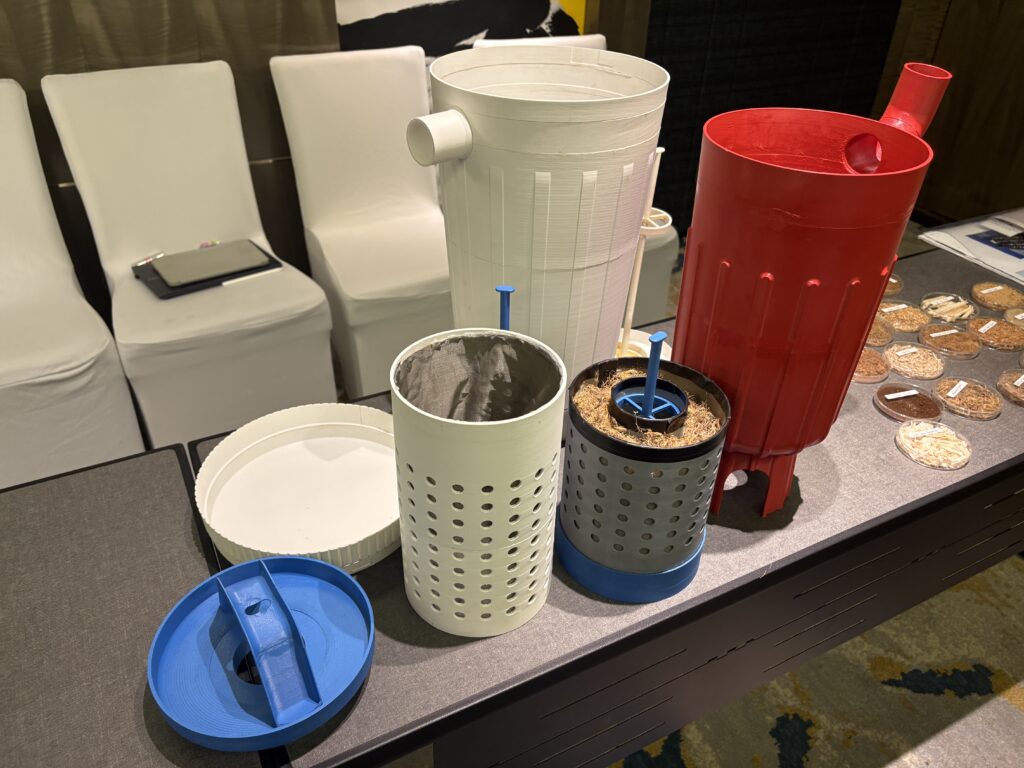
As Malaysia's National Winner for the James Dyson Award, the UNBLOK team took home RM27,800 to further refine its design, expand pilot testing, and secure partnerships.
The team has a long-term vision to create a closed-loop ecosystem by collecting and processing the used filter cores into valuable resources like fertiliser, biodiesel, or fuel pellets.
The finalists also shared their advice for Malaysia's aspiring creators and problem-solvers
"Honestly, just go for it! Don't wait for your prototype to be perfect. If you feel like your idea can have an impact, whether on the world, your country, or even just in helping fellow citizens, start now," said Ecliptica's inventor, Nuha.
Meanwhile, Chow urged inventors to prioritise solving problems over aesthetics.
"If you have a firm problem statement and you know it's the problem you want to solve, then by all means, you'll be able to solve it eventually," he added.
Ng from the UNBLOK team noted that the problems most worth solving often reveal themselves in the most obvious places.
"People always say they want to solve problems for the future, but when is the future, if they don't start now?
"You can look into small daily problems that can accumulate and contribute to bigger problems. These are the things people take for granted," he added.
