
What Is Oil Palm Biomass & How It’s Helping Generate Clean Energy For Malaysia
Oil palm waste is one of the most valuable types of waste.

Published For Ministry of Plantation Industries and Commodities - 06 Aug 2025, 04:33 PM


 Cover image via
 Follow us on Instagram, TikTok, and WhatsApp for the latest stories and breaking news.
When people think of oil palm, they usually think of cooking oil or exports. But did you know, oil palm is also a big contributor for energy?
If you didn't already know, Malaysia's oil palm plantations are among the largest sources of biomass in the country, producing organic material that can be turned into renewable, carbon-neutral energy.
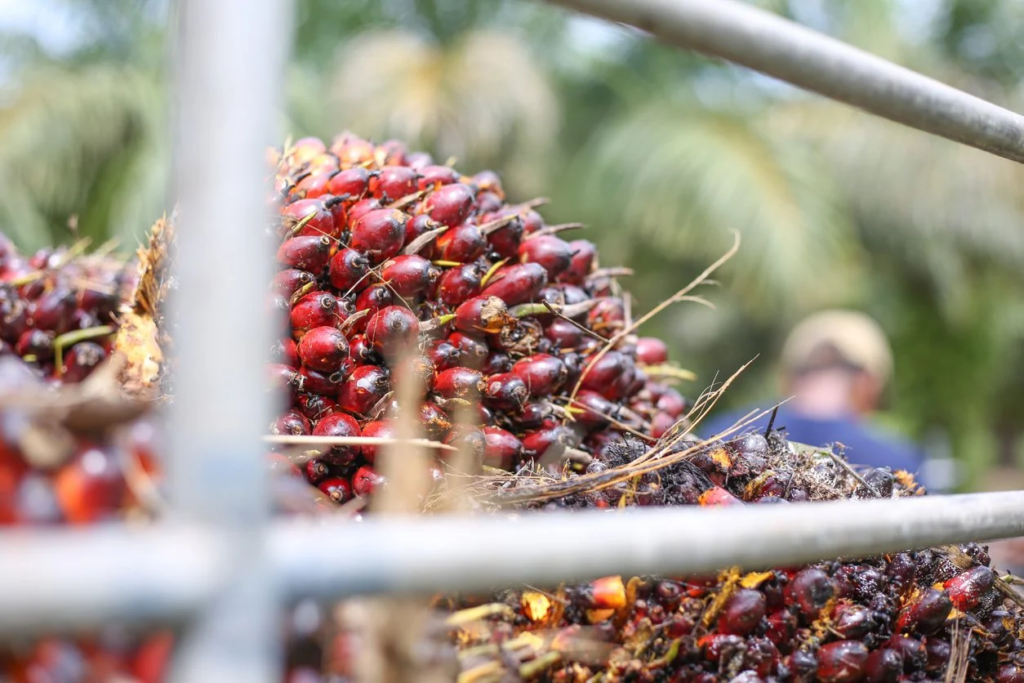
In 2022, oil palm biomass accounted for 89.8% of Malaysia's total biomass output in 2022, which equals 164 million tonnes out of a national total of 182.6 million tonnes.
Now, Malaysia is positioning this agricultural "waste" as a key driver of its clean energy future and green economic transformation.
But firstly, what is biomass?
Biomass refers to any organic material, like plant waste or animal by-products, that can be used to generate energy or create other value-added products. You can think of it as energy from nature's leftovers.
Here's why biomass is so important:
- Renewable: Unlike fossil fuels, biomass can be replenished naturally over time.
- Carbon-neutral: The carbon dioxide released during biomass combustion was already absorbed by the plant while growing.
- Reduces waste: Instead of dumping agricultural leftovers into landfills or burning them, we can turn them into power, fertilisers, or even construction materials.
In short, biomass helps close the loop in a circular economy, reducing emissions, minimising waste, and unlocking new economic value.
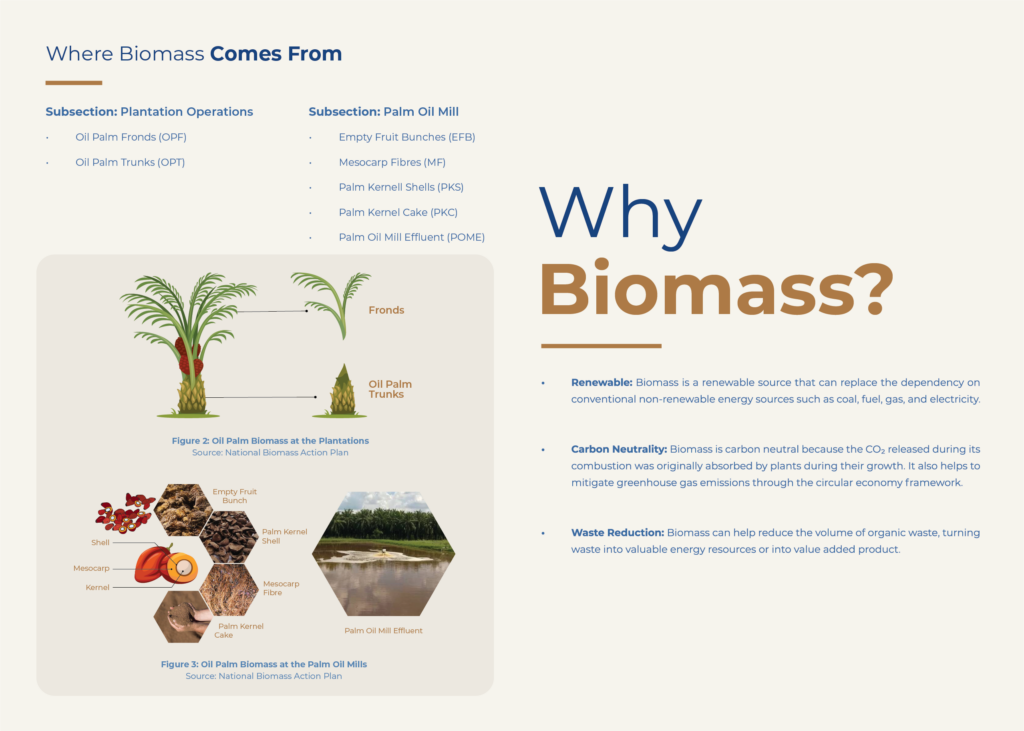
And with over 5.67 million hectares of oil palm plantations, it's no surprise that Malaysia's biomass sector is dominated by the oil palm industry
What might be more surprising, however, is just how much "waste" oil palm actually produces, and how diverse it can all be.
Here's a breakdown of the types of oil palm by-products:
- From the fields:
- Oil palm fronds: Pruned regularly, plentiful, and often overlooked.
- Oil palm trunks: Harvested during replanting cycles.
- From the mills:
- Empty fruit bunches: What's left after removing the palm fruit.
- Mesocarp fibres: From the pulpy flesh of the fruit.
- Palm kernel shells: The hard shell protecting the kernel.
- Palm kernel cake: What's left after extracting oil from the kernel.
- Palm oil mill effluent: Liquid waste from processing.
Instead of getting thrown away, these by-products are now treated as valuable feedstock for green energy, organic fertilisers, and sustainable materials.
Thanks to advances in biomass tech, Malaysia can now convert oil palm waste into renewable energy products
Here are some examples:
- Electricity: Generated through direct combustion or advanced methods like gasification.
- Biogas: Extracted from palm oil mill effluent using anaerobic digestion.
- Biomass pellets: Compressed and used for industrial heating.
- Bio-fertilisers and compost: Enriching soils without chemicals.
- Eco-materials: For green packaging, building materials, and more.
These sustainable energy products not only help reduce pollution from open burning or landfills, they also support local economies, especially in rural areas.
And more importantly, they're crucial to Malaysia's goal of creating a low-carbon, circular economy, aligning with national agendas like the 12th Malaysia Plan (12MP) and the National Agricommodity Policy (DAKN) 2021–2030.
A national plan is already in motion to scale up Malaysia's biomass potential
To coordinate and accelerate progress, the government launched the National Biomass Action Plan 2023–2030, which is a blueprint to turn biomass into a full-fledged economic engine, focusing on five major sectors: plantation, forestry, agriculture, livestock, and fisheries.
The end goal is to promote sustainable production and consumption, boost innovation in biomass tech, develop markets and value chains, and create new green jobs — especially outside major cities.
To make sure oil palm biomass is used responsibly, certification is implemented across the industry
The MSPO Chain of Custody (CoC) for Biomass, rolled out in March 2022, makes sure that oil palm biomass is used responsibly.
Under the Malaysian Sustainable Palm Oil (MSPO) framework, this certification ensures:
- Biomass comes from verified sustainable sources
- The entire supply chain, from harvest to end-product, is traceable
- Transparency for local buyers and global investors
- Stronger ESG (environmental, social, and governance) credibility
While solar power and EVs might dominate headlines right now, biomass is quietly getting sustainable results
The Malaysian Sustainable Palm Oil (MSPO) certification began as a voluntary initiative but was made mandatory by the government in May 2017, with full implementation required by 1 January 2020. This mandate covers all oil palm plantations, organised smallholdings, and palm oil mills, which must comply with the MSPO Standards by the specified date.
The updated MSPO 2022 or MPSO 2.0 standards have strengthened environmental, social, and economic criteria to align with global sustainability norms. These standards now include certification requirements for smallholders, plantations, mills, processing facilities, and dealers, ensuring full traceability within the MSPO framework.
You can learn more about MSPO here.
