


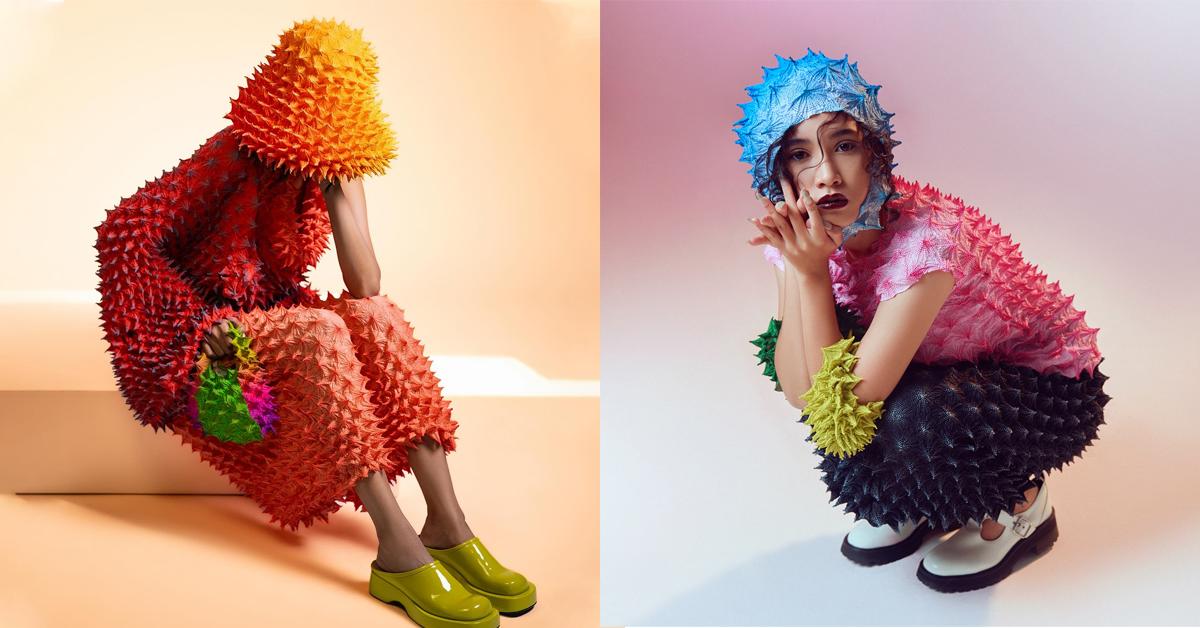
 Cover image via Fuguku
Follow us on Instagram, TikTok, and WhatsApp for the latest stories and breaking news.
Fuguku is flipping the fashion game with bold, spiky textures that are turning heads from Jakarta to New York
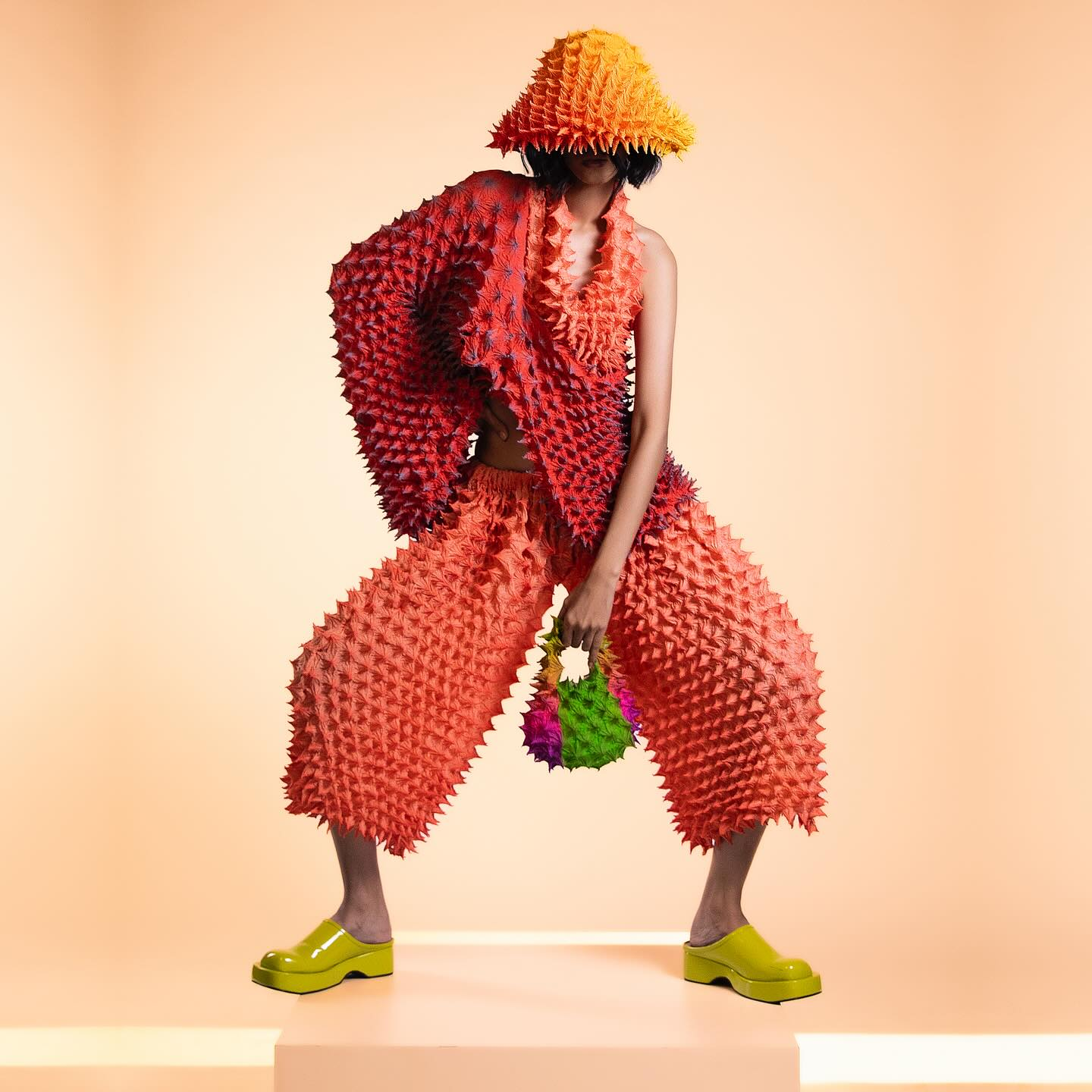
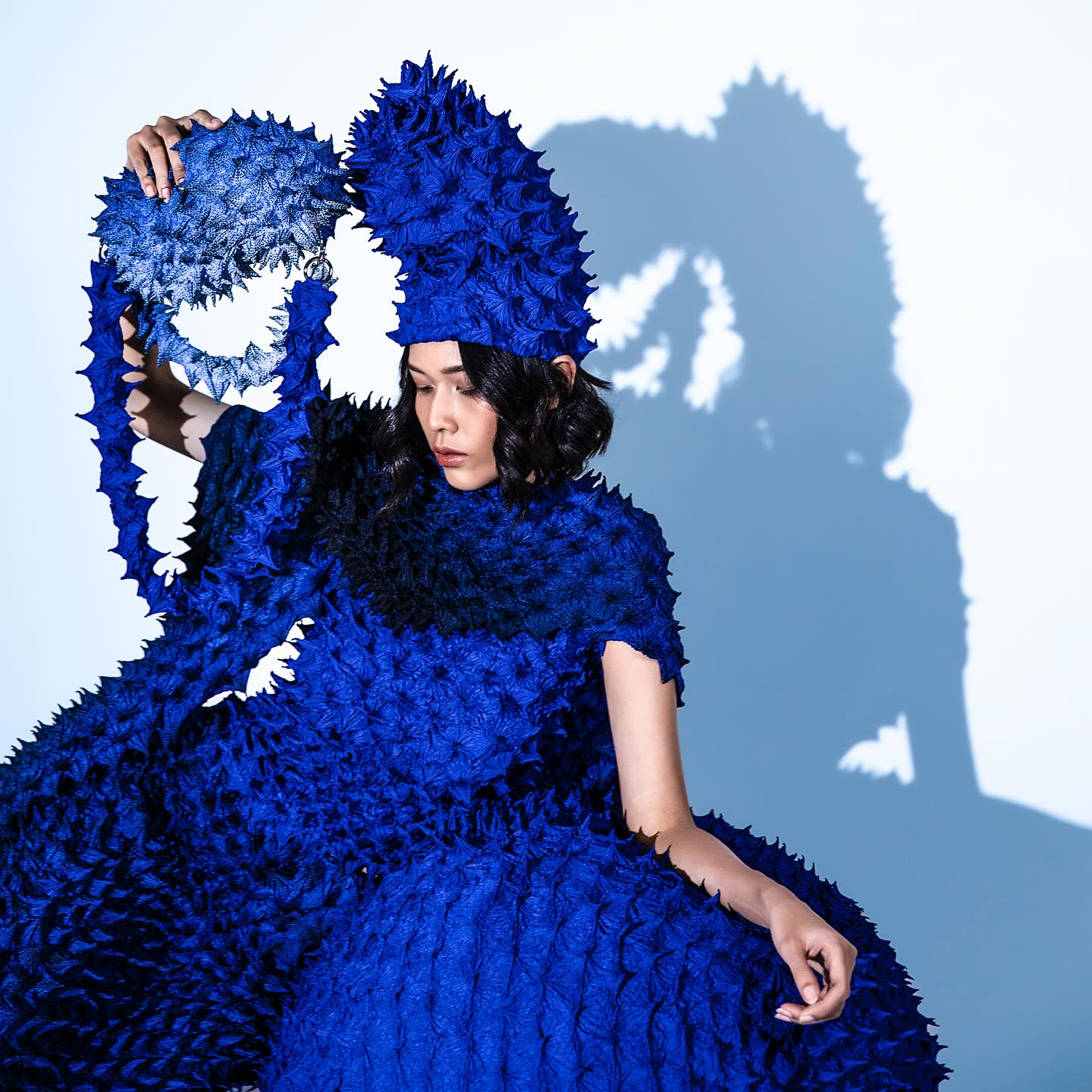
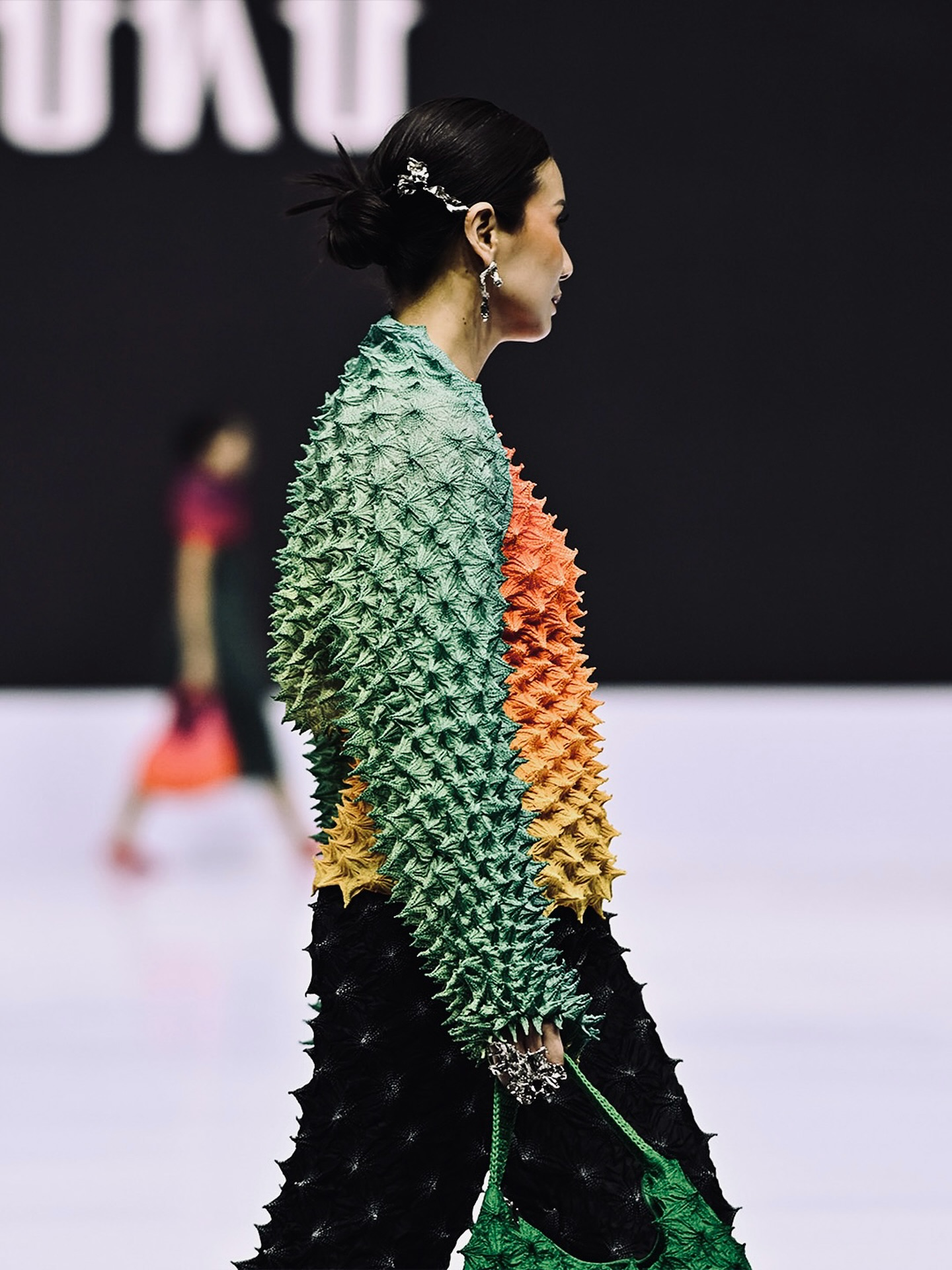
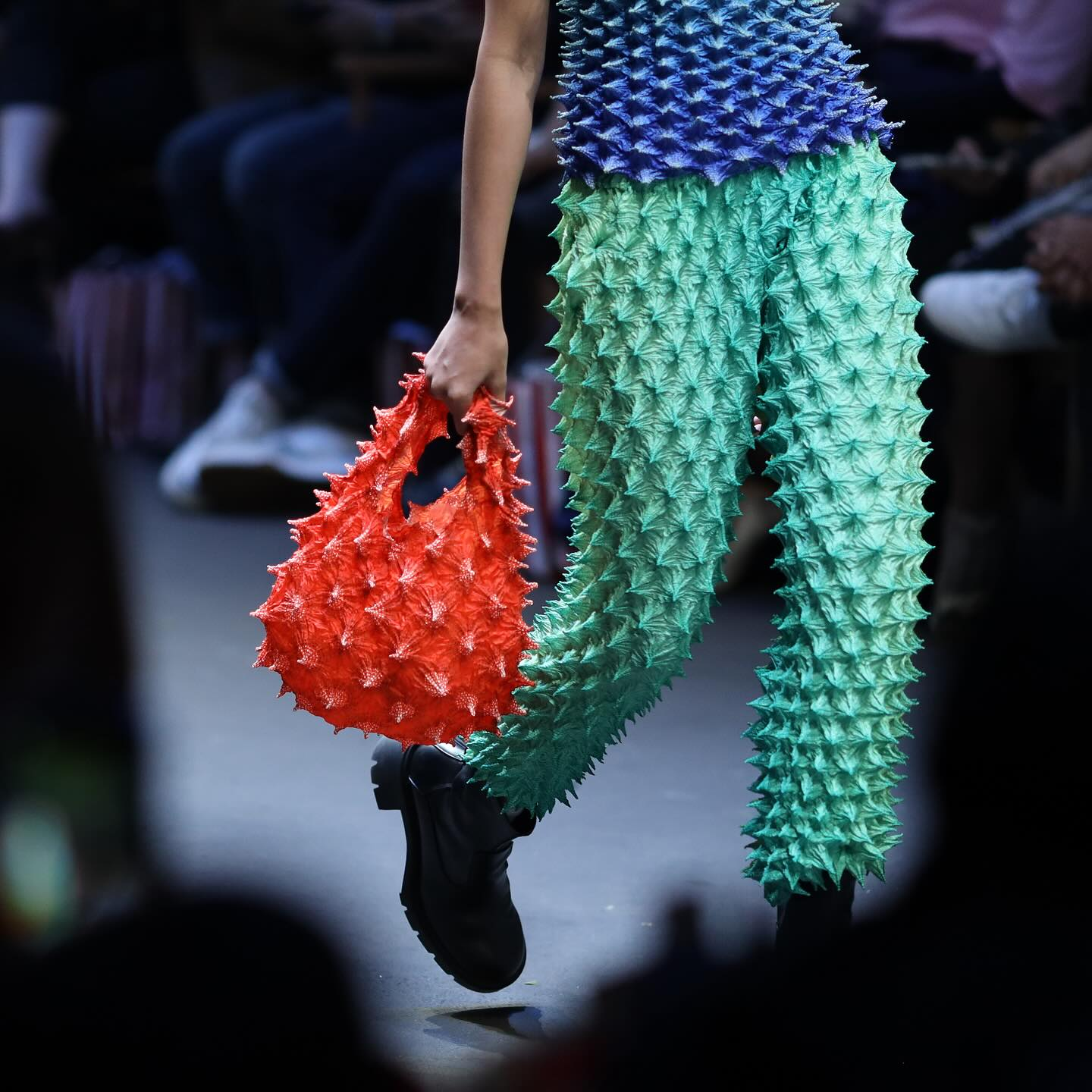
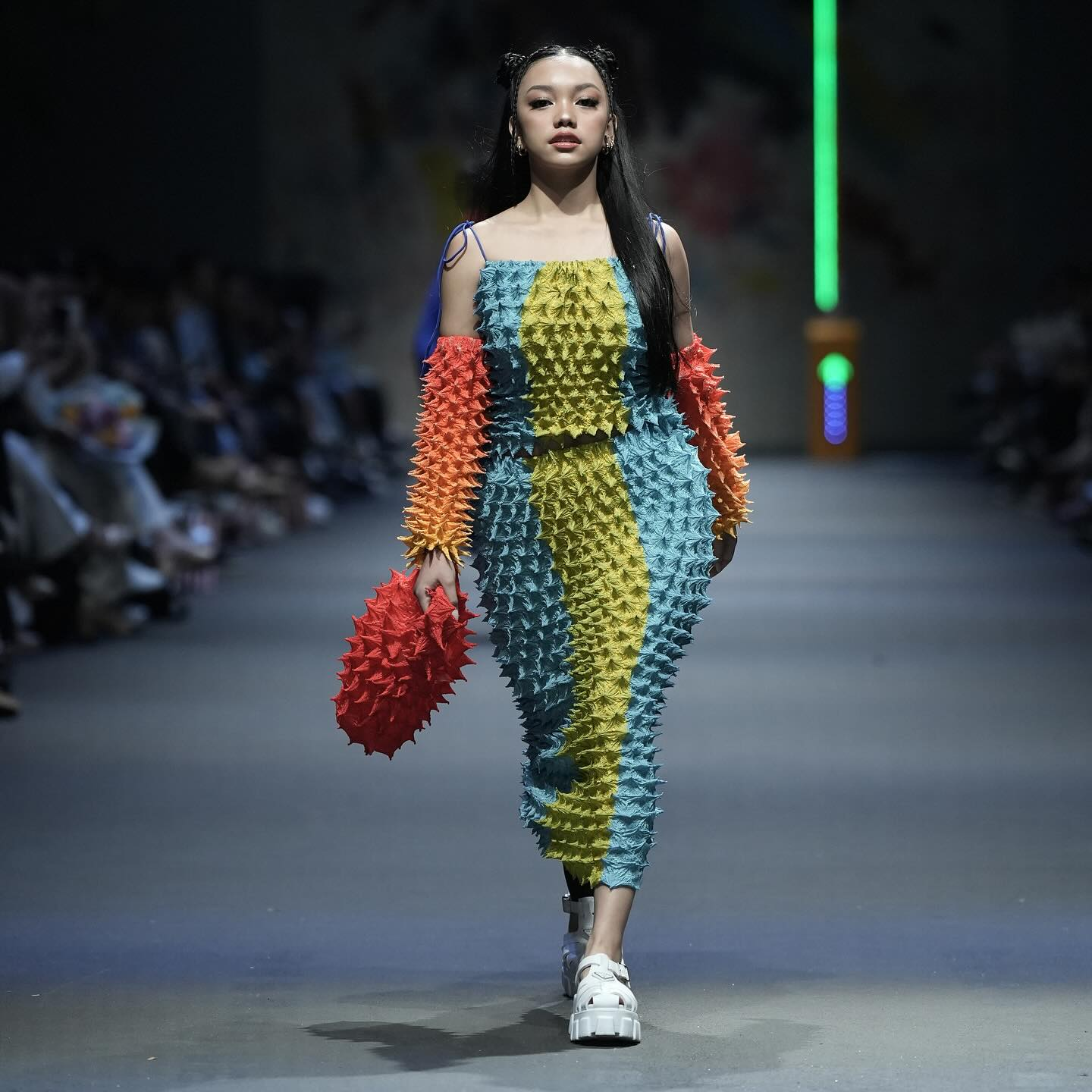
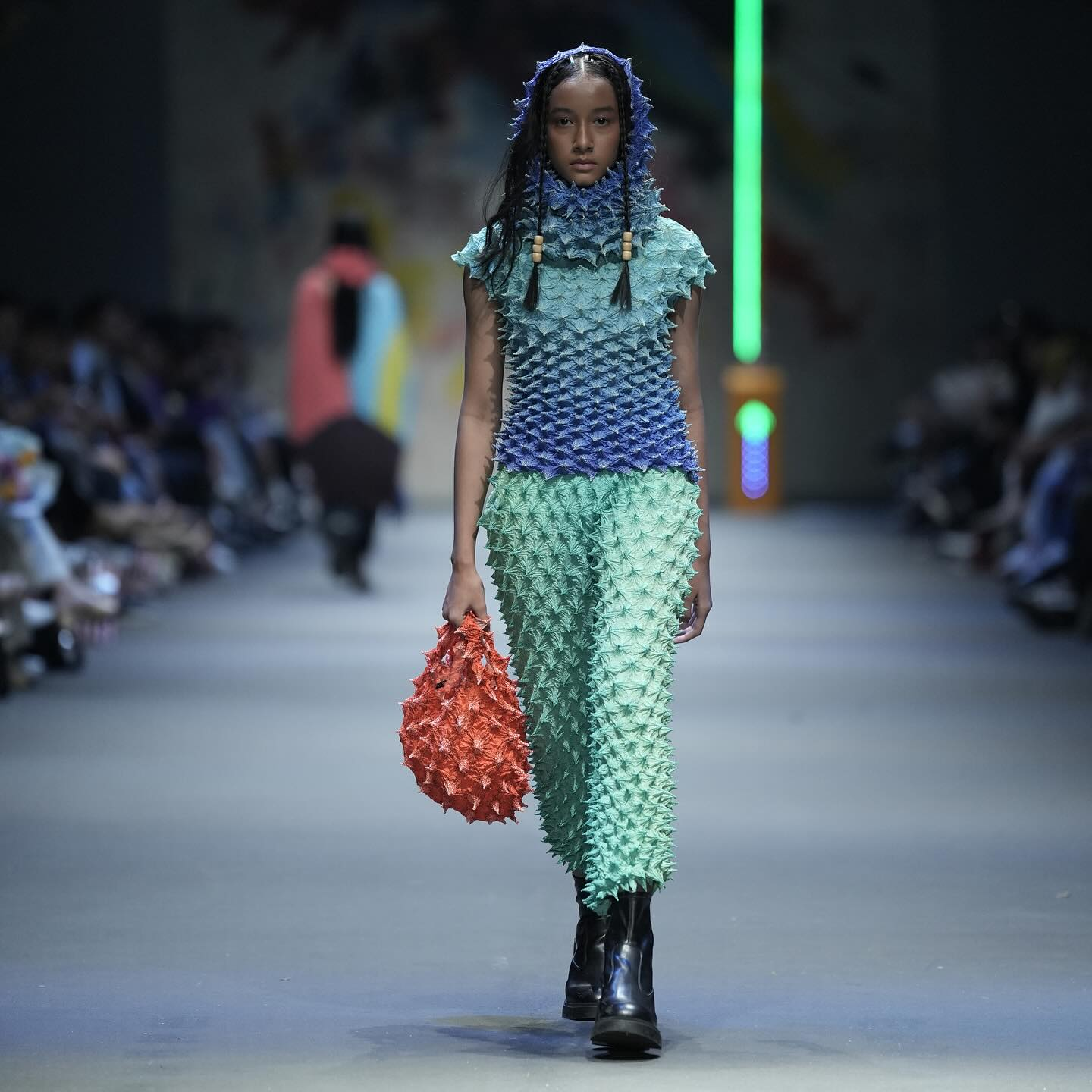
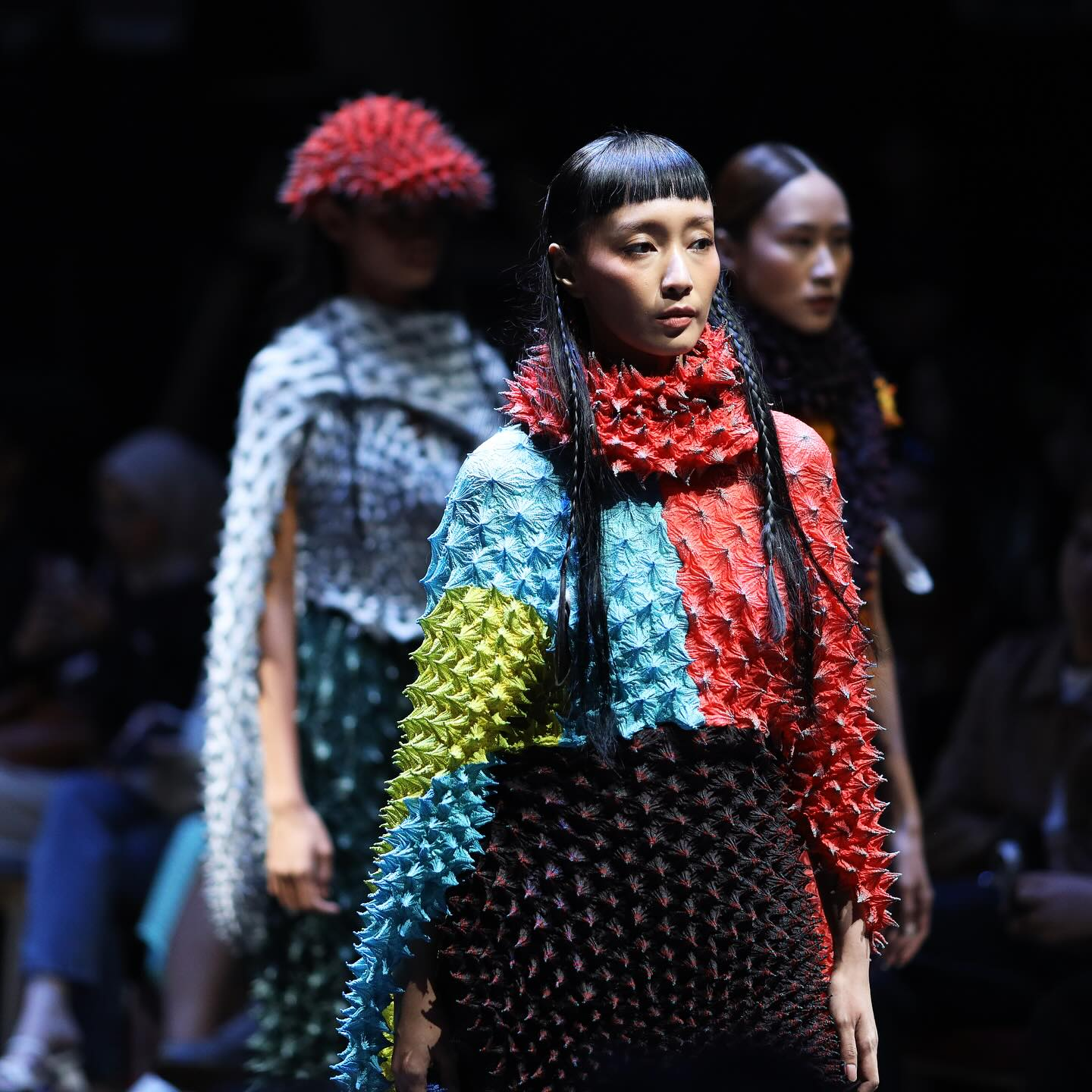
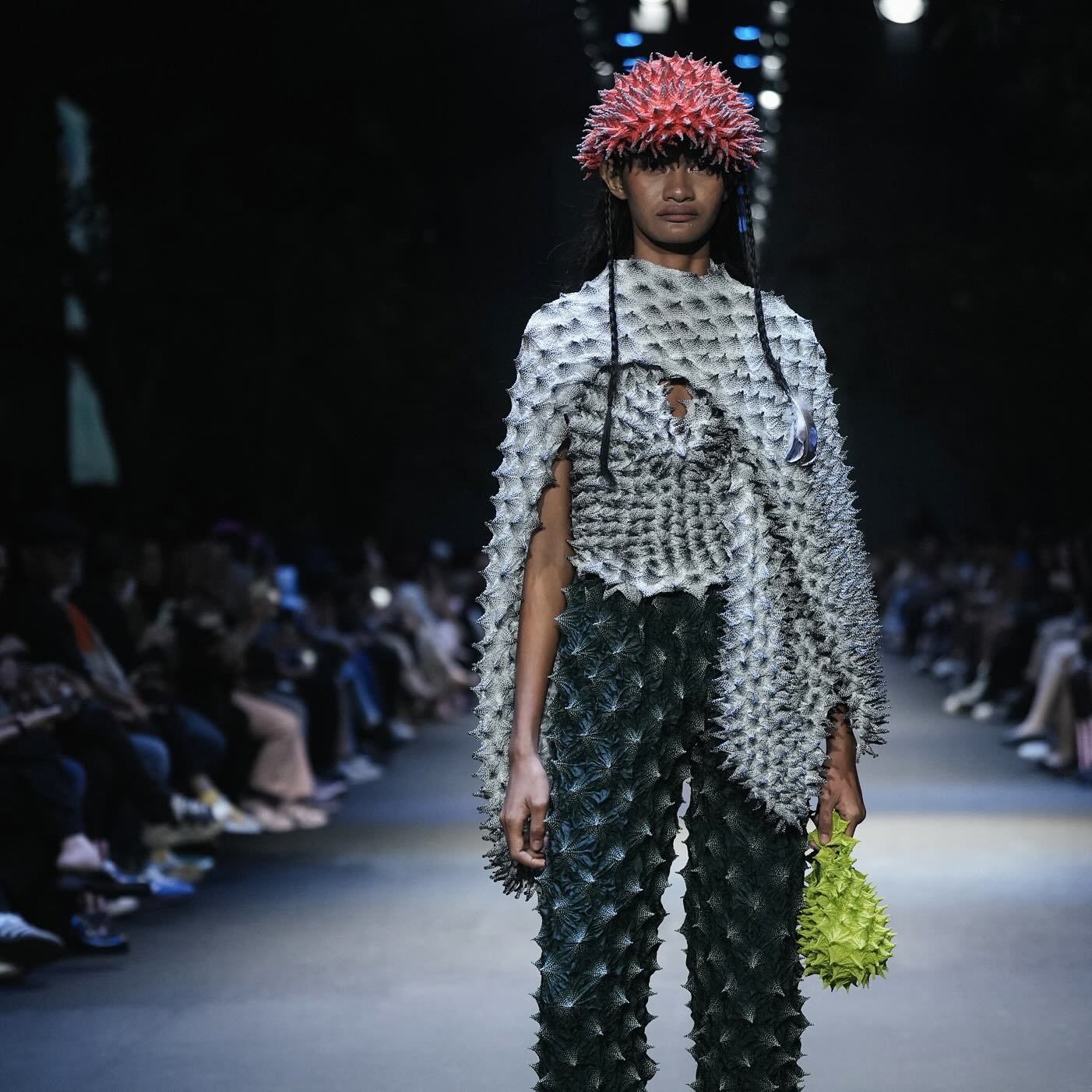
The rising Indonesian brand has made a name for itself by turning recycled plastic into vibrant, 3D designs that look part-sculpture, part-wardrobe essential.
They've got bags, dresses, outerwear, pants, skirts, tops, and even petwear, because obviously your cat deserves to match your chaotic fashion energy too.
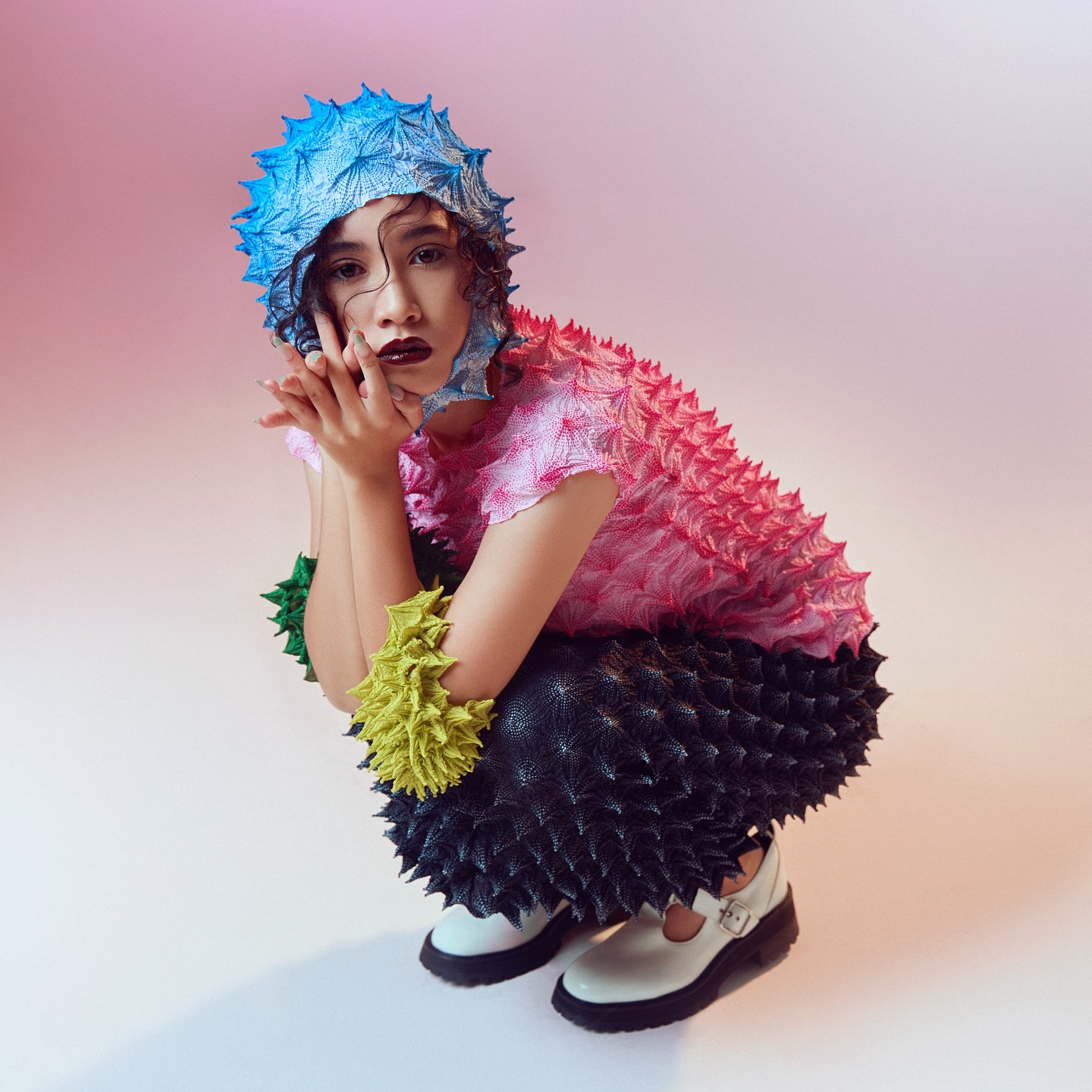
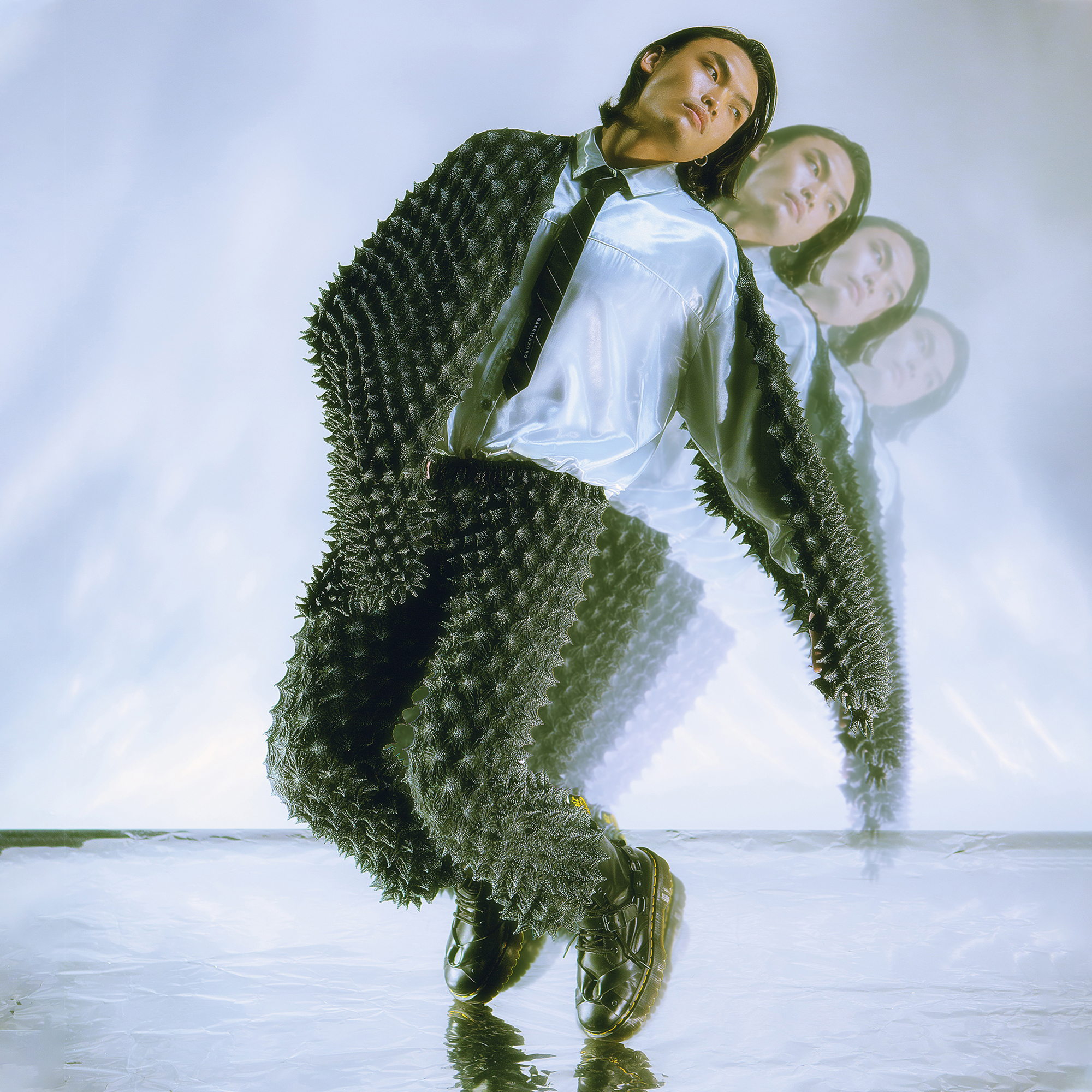
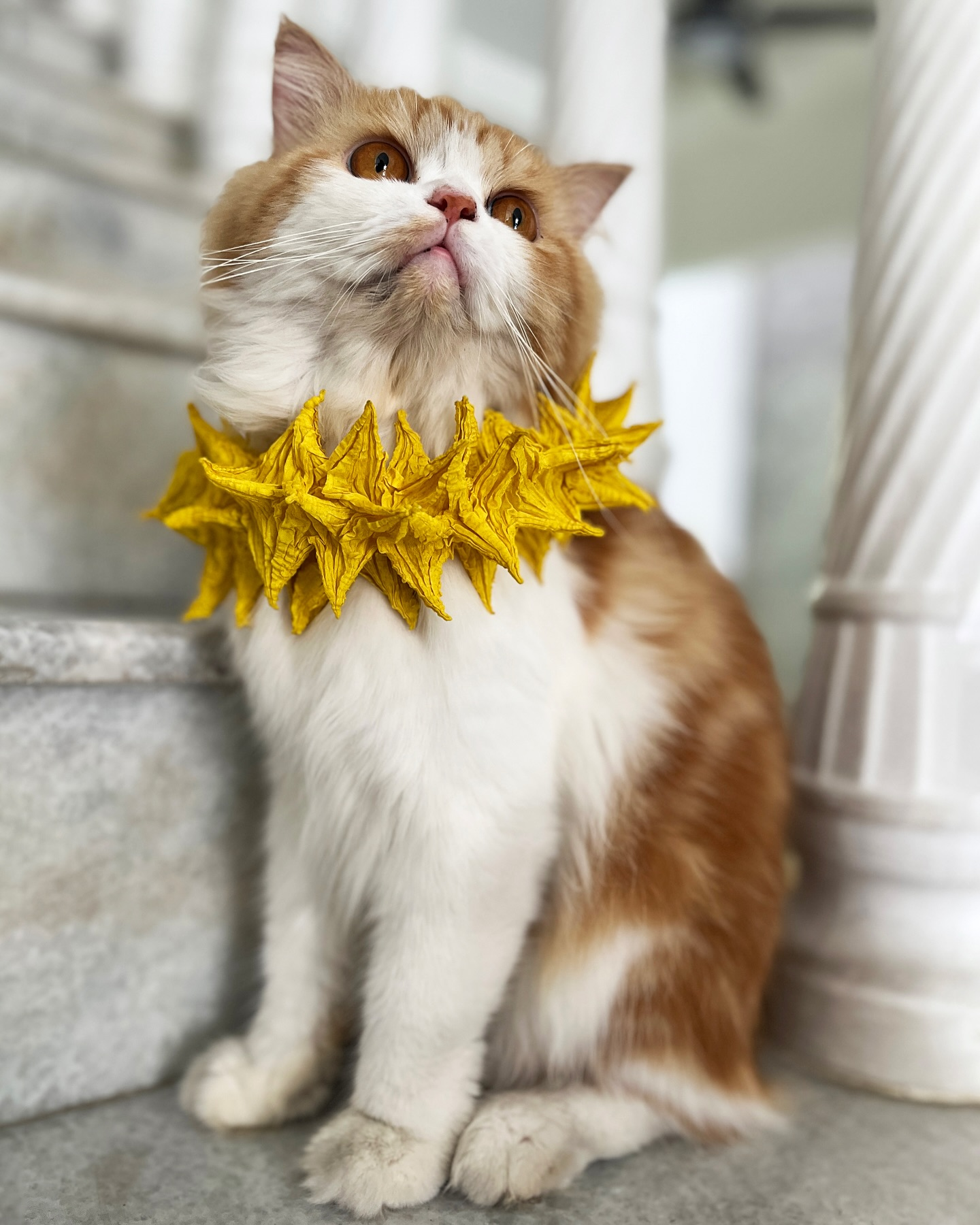
The brand's signature look reimagines Jumputan, a traditional Indonesian dyeing technique
Founder Savira Lavinia took the ancient resist-dyeing method and gave it a hyper-modern twist, layering in sculptural elements inspired by Japan's Bai Shibori.
The result is a series of expandable, spiky textures that almost look alive (in a cute, fashion-forward kind of way).
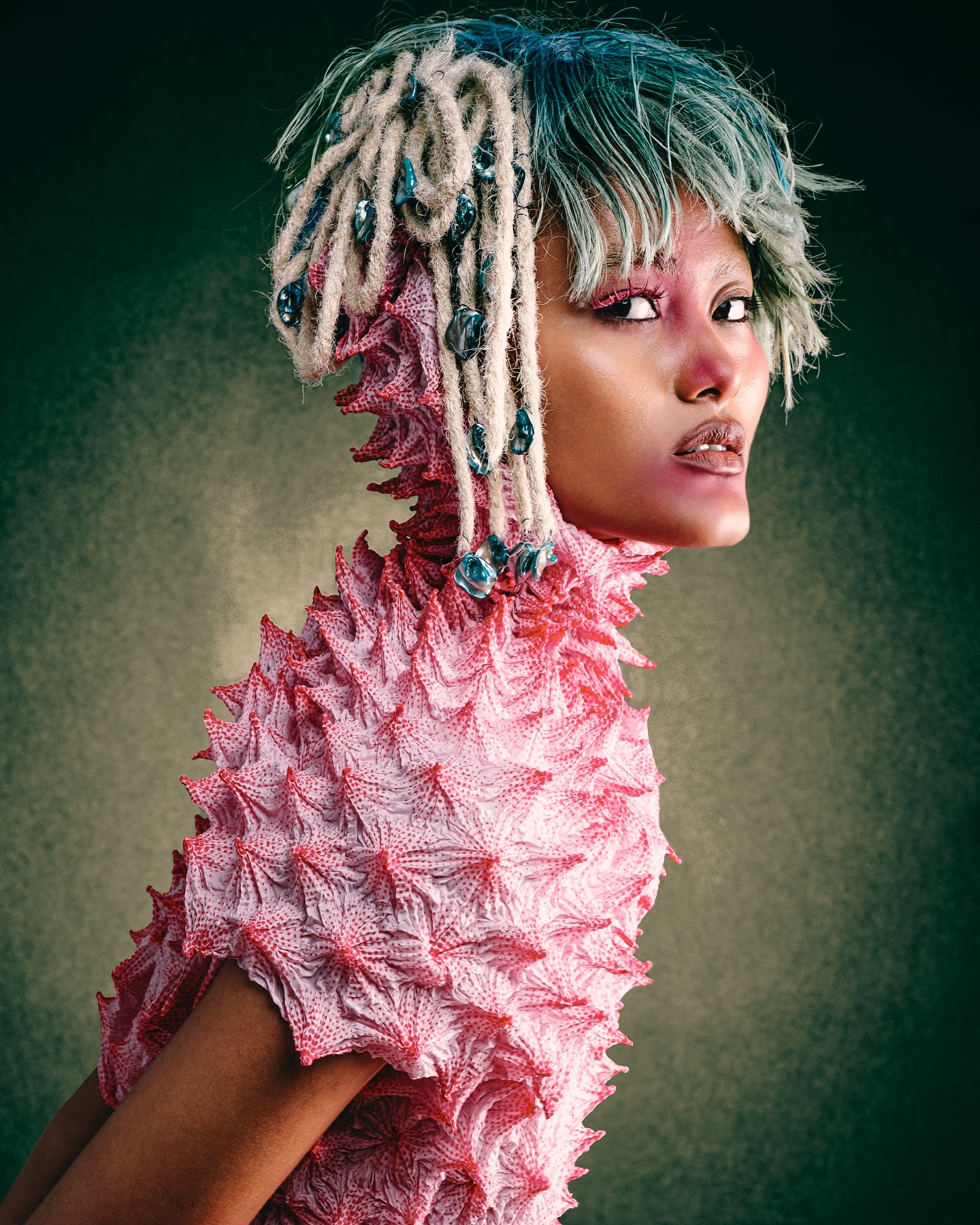
Using recycled plastic certified by the Global Recycled Standard, she developed this now-signature style during the pandemic.
It screams durian, but make it runway.
Fun fact: Before launching Fuguku, Savira interned with avant-garde Dutch designer Iris van Herpen, and you can definitely see the experimental influence.
It's technical. It's eco-friendly. It's… very fun to look at.
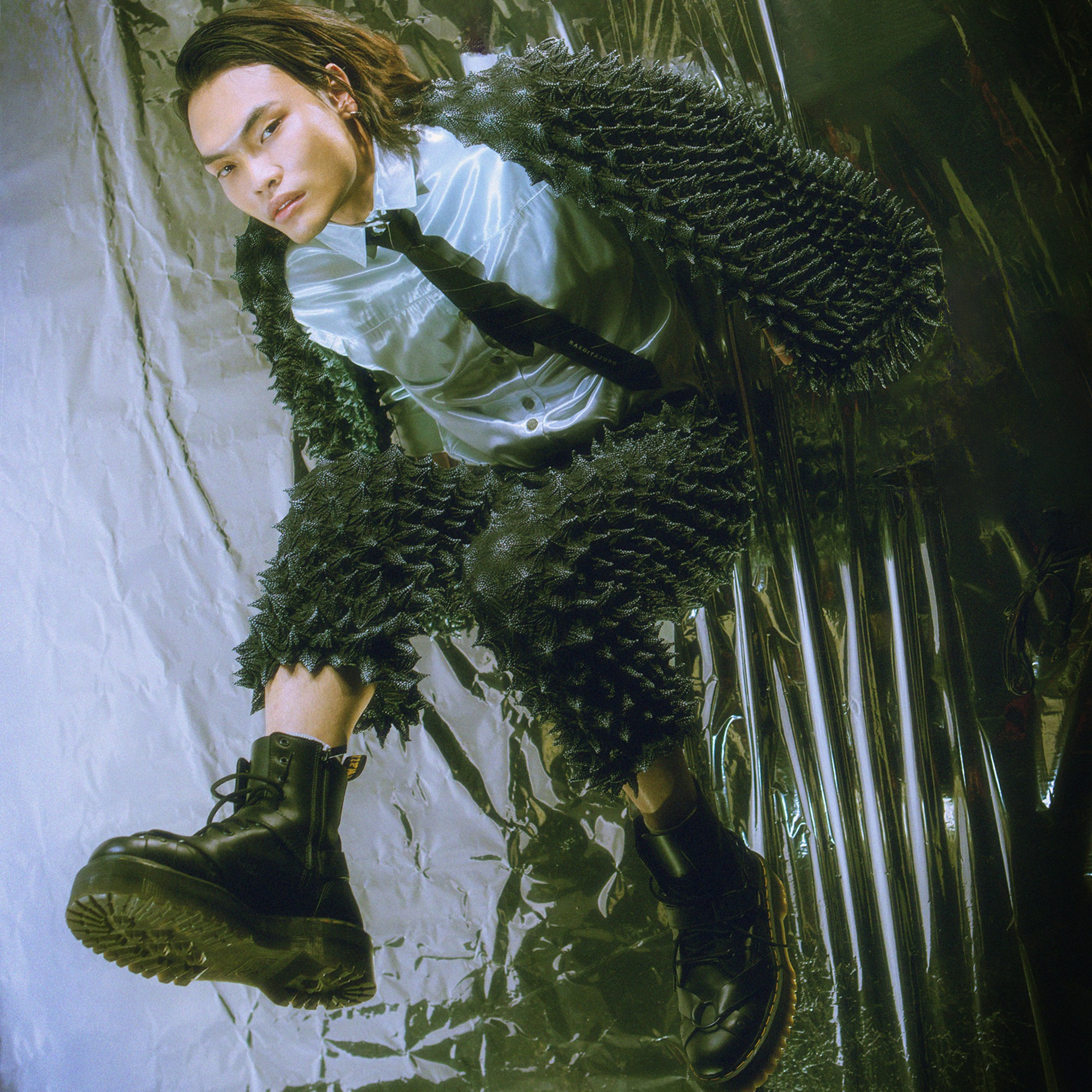
When Fuguku's spiky bags went viral, some eagle-eyed viewers accused them of copying Japan's heritage brand Bunzaburo.
However, Savira responded by explaining that while the two aesthetics might look similar, Fuguku's design is an original technique developed from Jumputan, and not a copy of Bai Shibori.
Bunzaburo gracefully agreed, saying they don't patent their designs so traditional crafts can stay alive and evolving.
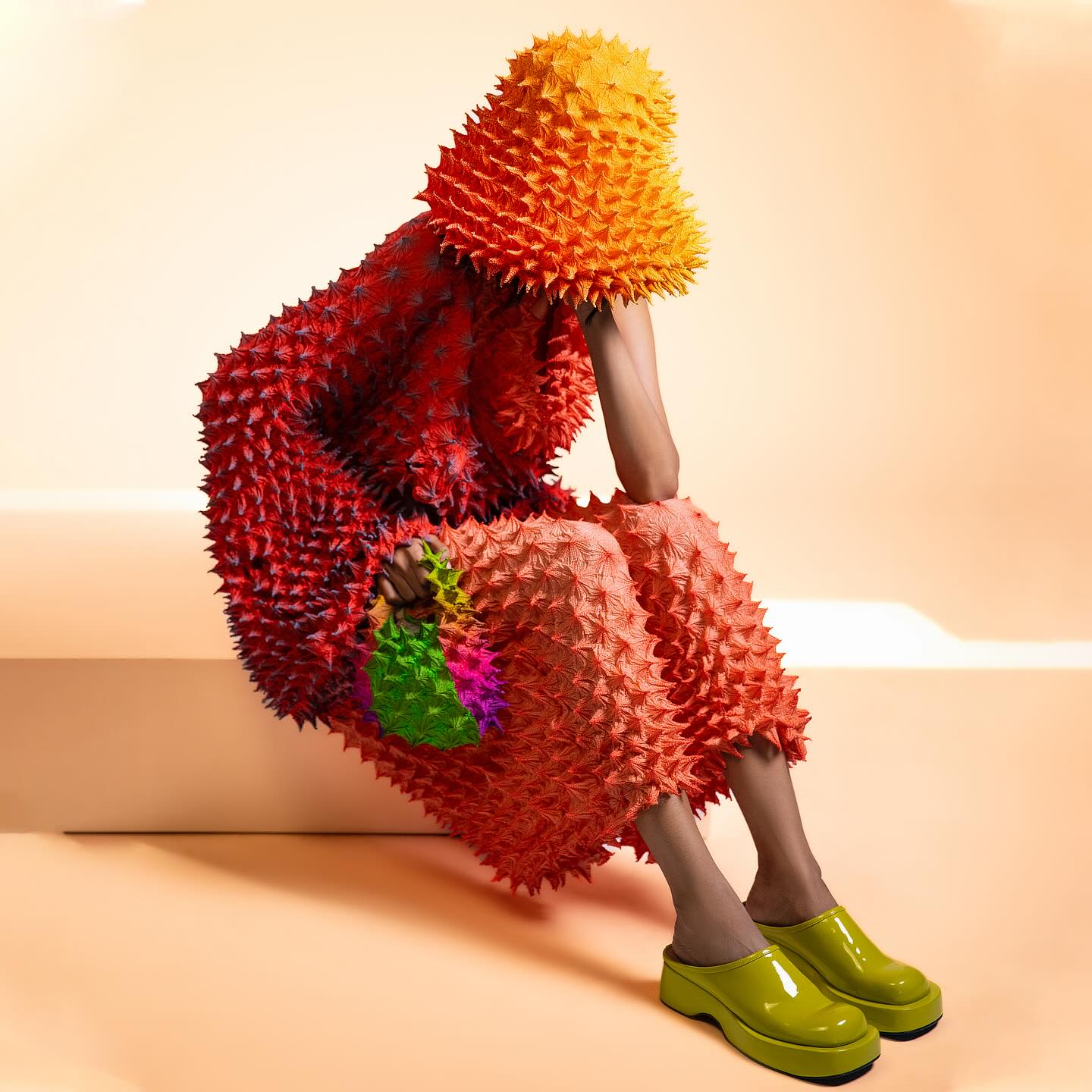
In 2024, Fuguku went international with a splashy debut in New York and Paris
Fuguku made its international debut with their Way of Water collection at Coterie New York, showing off 15 standout outfits and 30 spiky bags.
Then they hit Première Classe Paris like it was no big deal. Even though it was.
Beyond aesthetics, the brand is built on empowering its community
Around 90% of Fuguku's artisans are local women, elderly folk, differently-abled individuals, or caregivers, all working from home using custom equipment provided by the brand.
The brand's goal is to make fashion that empowers, not exploits.
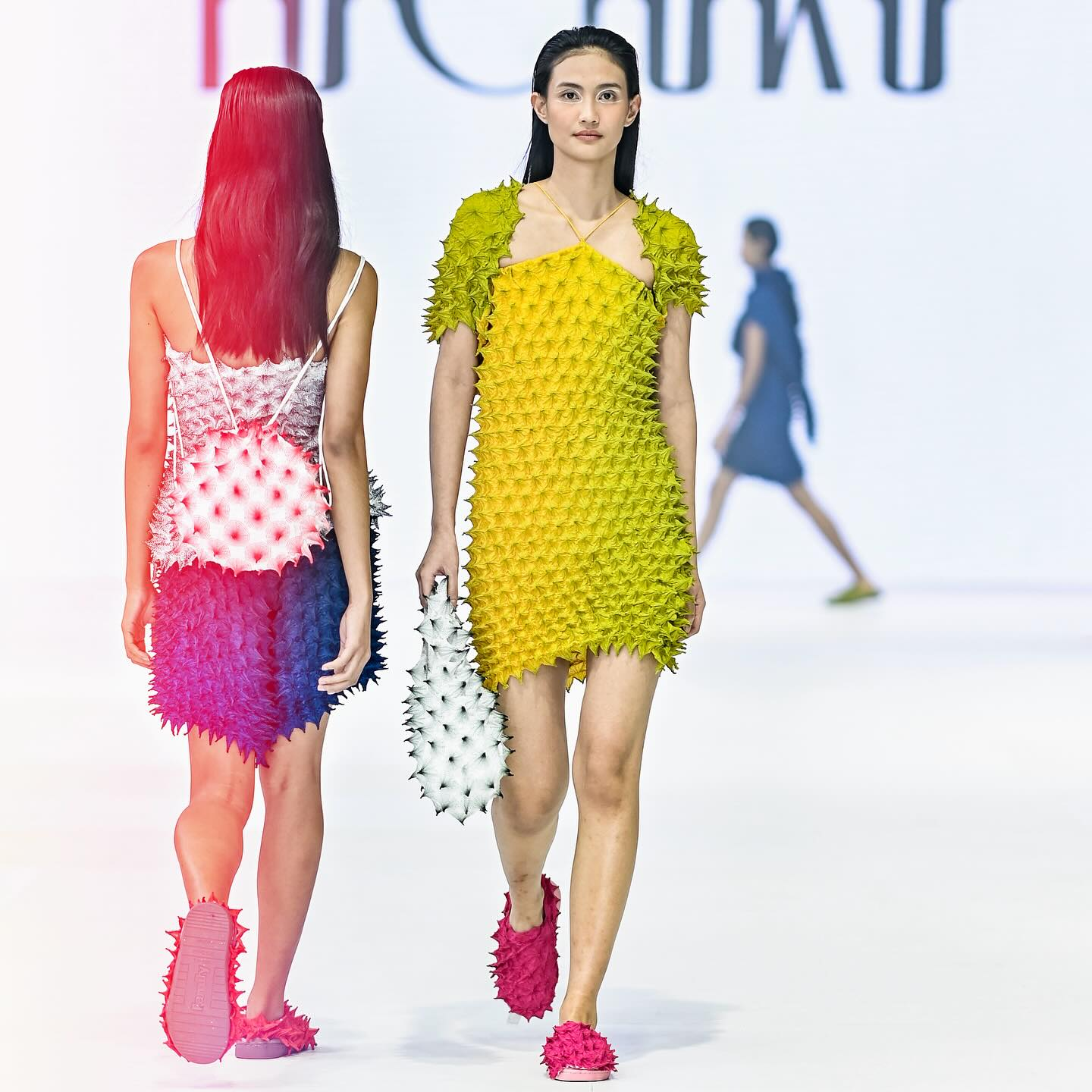
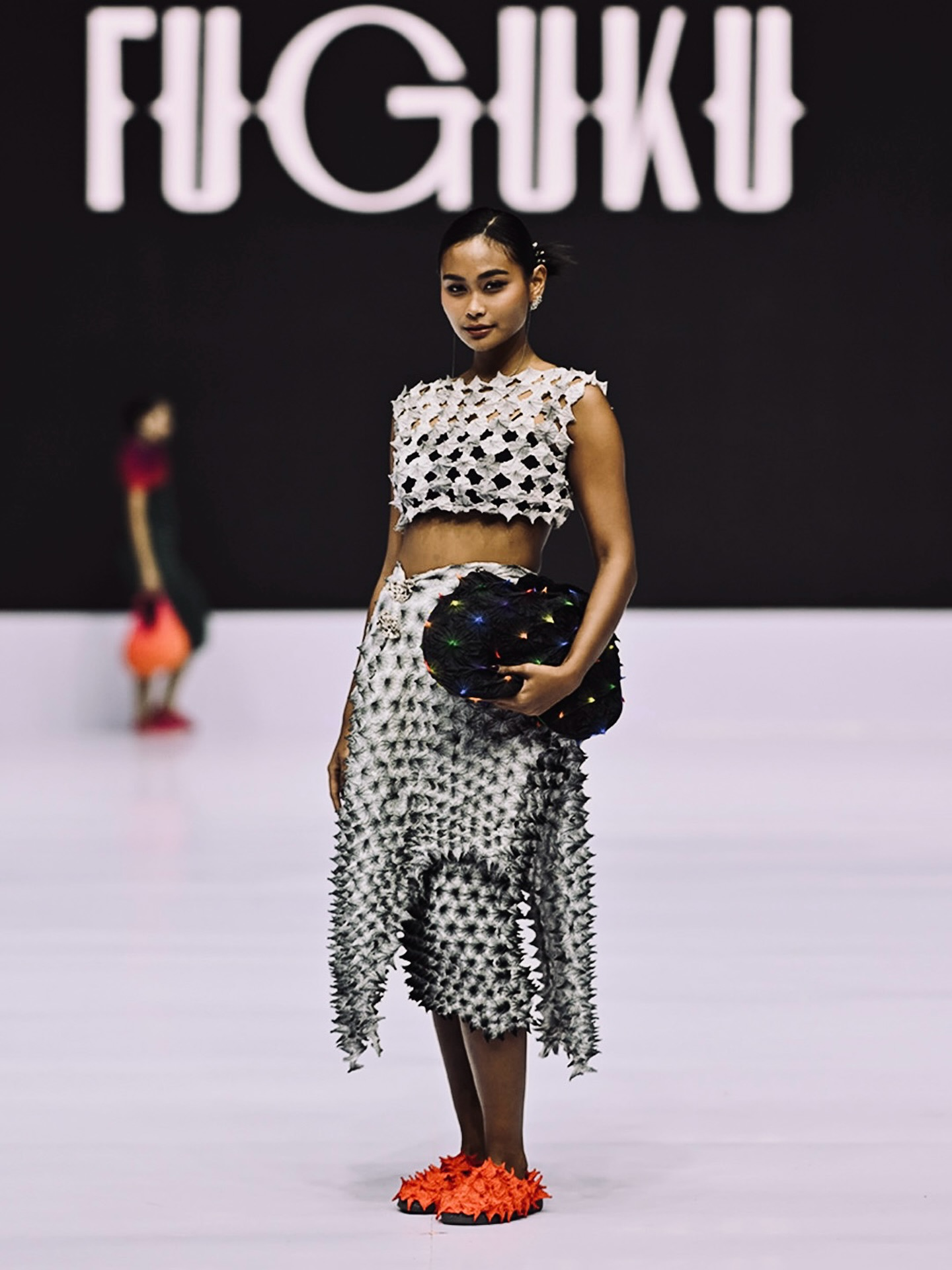
With every spiky puff and sculptural fold, Fuguku proves that fashion doesn't have to choose between art and ethics. It can be both. Loudly.
And if that means dressing like a technicolour durian, we say, go for it.
See the full collection here.
