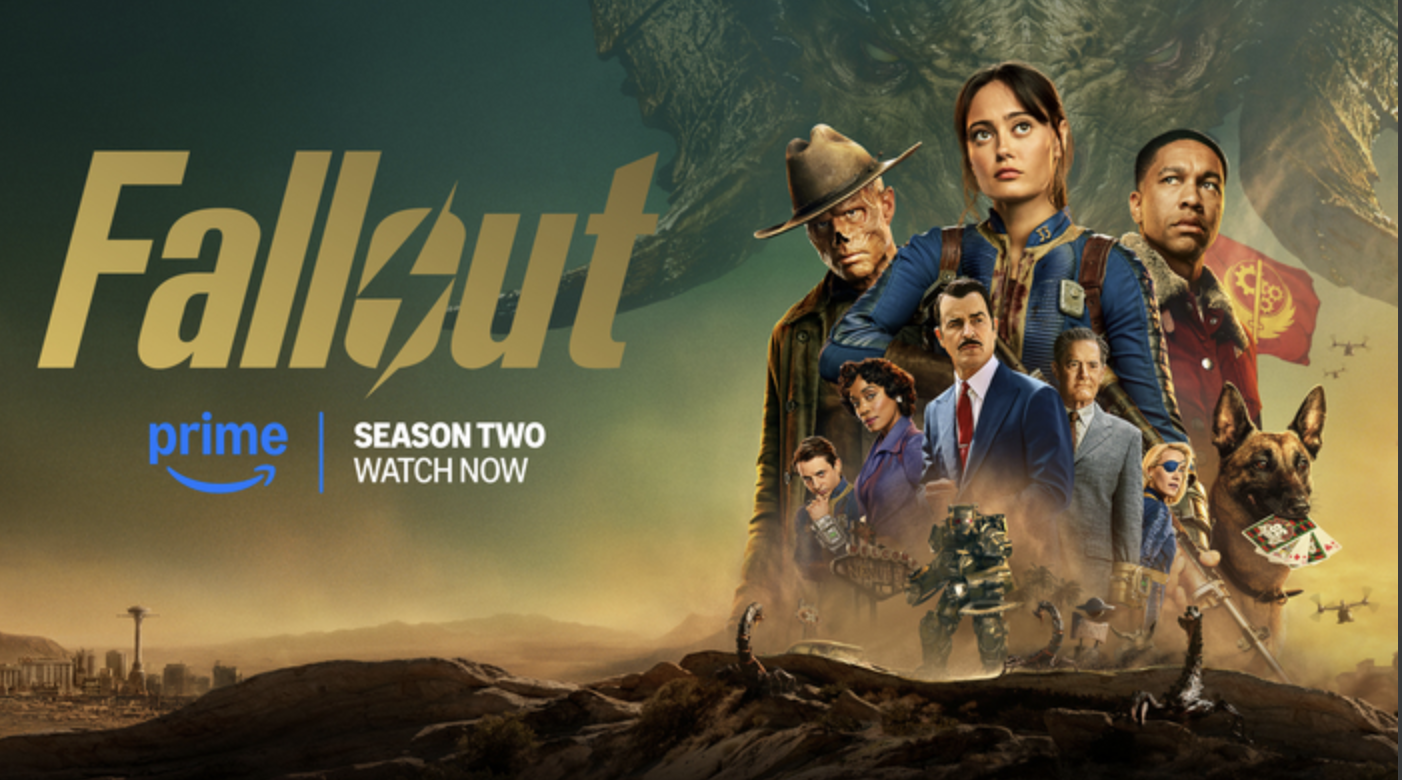
 Cover image via Amazon MGM
Follow us on Instagram, TikTok, and WhatsApp for the latest stories and breaking news.
Less than two years after Amazon MGM Studios' Fallout brought the hit role-playing game series to TV, a second season has arrived on screens
It's as surreal as it sounds, especially given the growing gaps between seasons of big-budget television shows (look at the three-year wait between Stranger Things Seasons 4 and 5, or that The Last of Us Season 3 hasn't even wrapped pre-production).
Picking up directly after Season 1, Season 2 follows Lucy (Ella Purnell) as she, accompanied by The Ghoul (Walton Goggins) pursues her father Hank (Kyle MacLachlan) to the city of New Vegas and its surrounding wasteland, last seen in the wildly popular Fallout: New Vegas.
Other plotlines follow Lucy's brother Norm (Moisés Arias), who takes on a leadership role over the naive, indoctrinated populace of Vault 31 after awakening from cryo-sleep; The Ghoul's past in the pre-war era before the nuclear bombs that destroy the world fall; and Maximus (Aaron Morten), a conflicted knight of the Brotherhood of Steel torn between loyalty to the religious order and doing what's right as a human being. A precarious position, especially since he may have accidentally started a civil war.
Another recurring plotline takes place in Lucy's home vault, Vault 33, which is grappling with an increasing sense of tyranny under Overseer Betty (Leslie Uggams), alongside a similar oppressive atmosphere emerging in Vault 32 under its secretive Overseer Stephanie (Annabel O'Hagan).
As you might imagine, the sheer number of plotlines can make things a bit hard to follow.

Lucy fires a shot at a feral monster.
Image via Amazon MGMWith so many plot lines to juggle, it is only inevitable that some are more interesting than others
This is further emphasised by the high stakes the show sets up — Hank, it turns out, is performing experiments with mind-controlling technology for malevolent reasons, and the wasteland is in grave danger, especially since the major factions capable of stopping him, like the Brotherhood and the New California Republic (NCR), are fragmented and weakened.
Despite this, Season 2 insists on giving equal attention to the Vault storylines, where few events of real impact occur, leaving me constantly wondering when we would return to the wasteland.
In that sense, it's not unlike a player's general experience in the games, where Vaults (with living, normal people) are usually limited to the opening sections, while the rest of the game is devoted to exploring the wasteland.
And even among the other plot ines, the quality and pacing can veer wildly. The strongest threads are arguably The Ghoul's pre-war scenes, which show the good man he once was and his efforts to prevent nuclear catastrophe, and Maximus' storyline, which expands considerably on Brotherhood lore while giving him an interesting personal conflict.
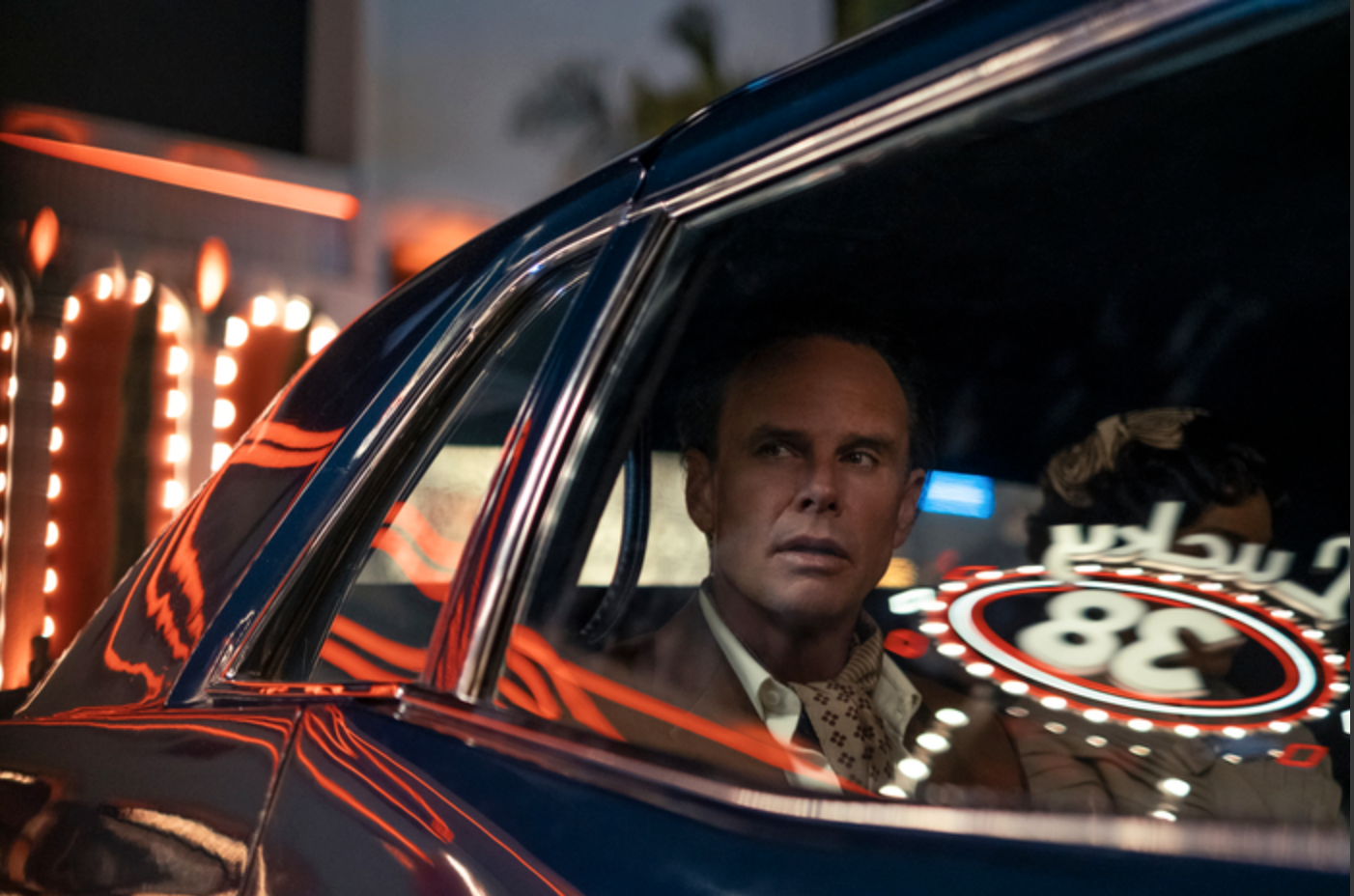
The Ghoul as a human in the pre-war days.
Image via Amazon MGMThat said, the fun value is undeniable, and in many ways surpasses Season 1 in explosive ways
It must emphasised how challenging it is to adapt the look and feel of the Fallout games with their strange mix of dramatic writing, philosophical discussions, and very dark action-comedy.
Yet, Season 1 exceeded all expectations and delivered something that felt undeniably Fallout even while still doing its own thing.
And as far as entertainment value goes, Season 2 may well have topped Season 1.
The season even opens with a full-blown action scene, forgoing the need to catch audiences up on the previous season. And all at once, it hits you with over-the-top gore, coupled with hilariously inappropriate 1950s pop music.
With beautiful set design, great costumes, and scenes of rich character drama — especially at their strongest in Maximus' arc — Fallout Season 2 is a delight.
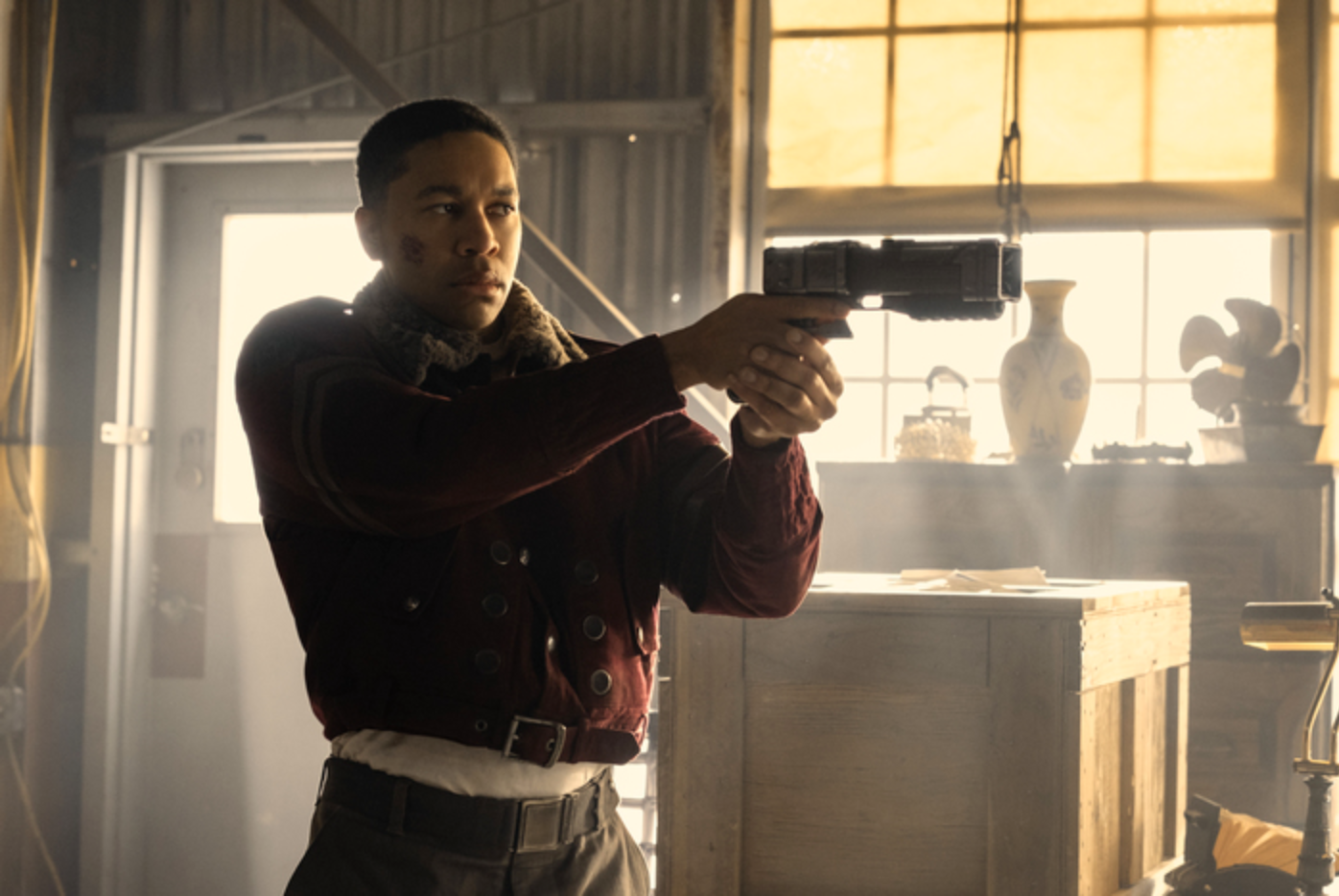
Maximus has to decide where his loyalties lie in a Brotherhood increasingly plagued by internal conflict.
Image via Amazon MGMAs with Season 1, there's plenty of delightful fan service for fans of the games
And it goes beyond bringing locations and cameos from Fallout: New Vegas to life, because diehard fans will spot plenty of small details carried over to the show.
The writing quality may not be consistent, but the production team's love for the games is undeniable.
The same goes for the characters and their actors. Lucy remains charming and entertaining, even if her arc is seemingly reset from Season 1, while side characters like the corrupt Brotherhood elder Quintus (Michael Cristofer) and Lacerta Legate (Macaulay Culkin) carry a strong sense of gravitas despite their limited screentime.
Other surprise actors appear in the later episodes, and it would be a crime to spoil their appearances.
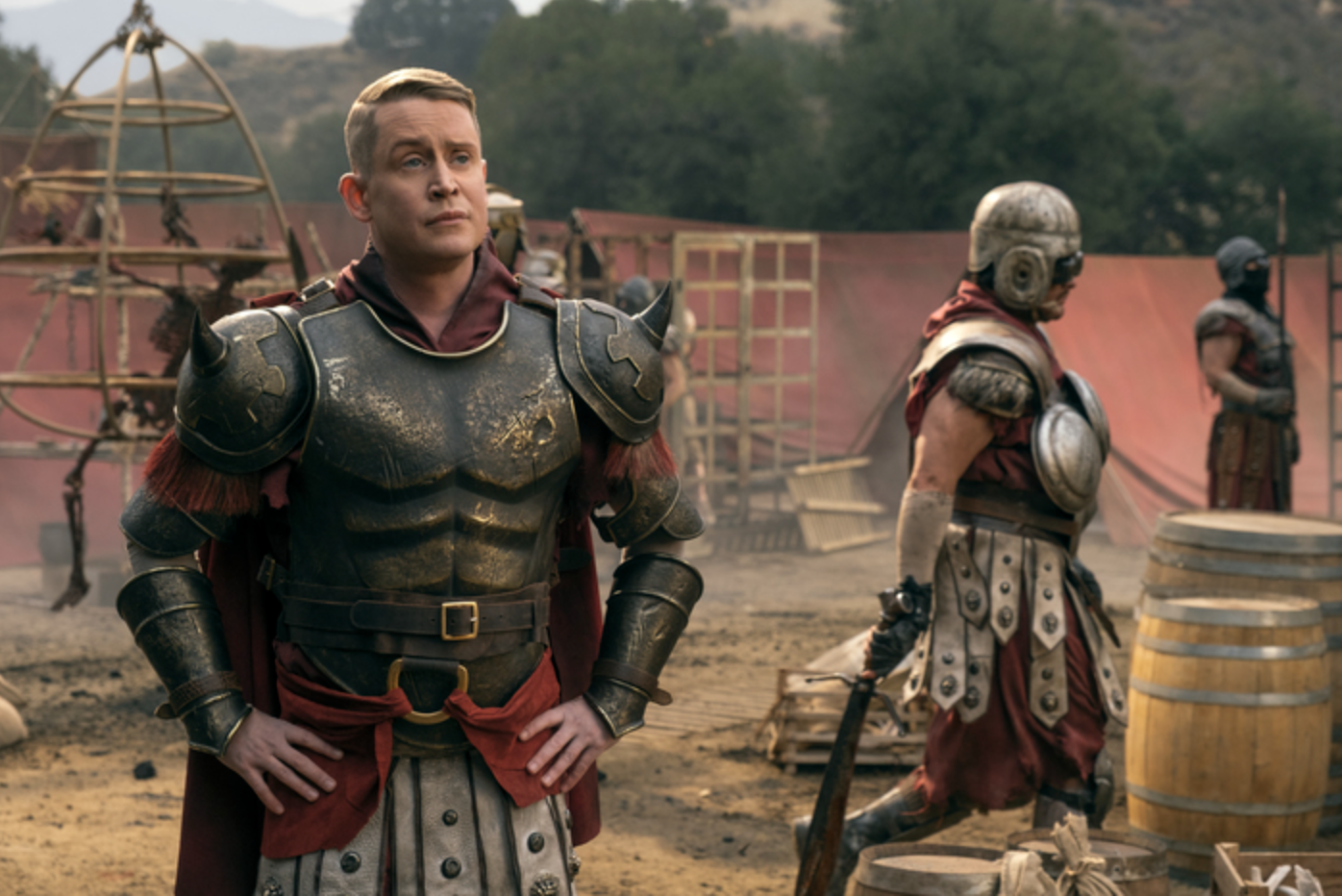
Macaulay Culkin plays the Lacerta Legate, a major figure in the violent army of Caesar's Legion.
Image via Amazon MGMDespite the entertainment value, there's a sense of "middle-episode syndrome" that looms over the show, especially towards the climax
This is where the odd pacing, caused in part by its sprawling plot, eventually causes a sense of disappointment in the climax.
The show sprinkles in multiple interesting stories along the way, from conflicts in the Brotherhood of Steel to a possible renewed conflict between Caesar's Legion and the NCR. But by the final episode, almost nothing is resolved, and several new mysteries are abruptly introduced for Season 3 to resolve.
And while some characters grow in satisfying ways, leaving room for further development next season, Lucy's arc backslides in the finale, reducing her to a damsel with little agency — a stark contrast to the strong arc she had in Season 1.
For a video game adaptation, the show's quality is remarkable. Yet, the disappointing ending makes me hope Fallout does not grow so large, with so many overlapping mystery boxes, that the writing starts to suffer.
Fallout Season 2 is streaming now on Amazon Prime.